Where is the line between seeing and being seen?
Overview
The mediation, the technical translation, that I am trying to understand resides in the blind spot where society and matter exchange properties. I live in the midst of technical delegates.
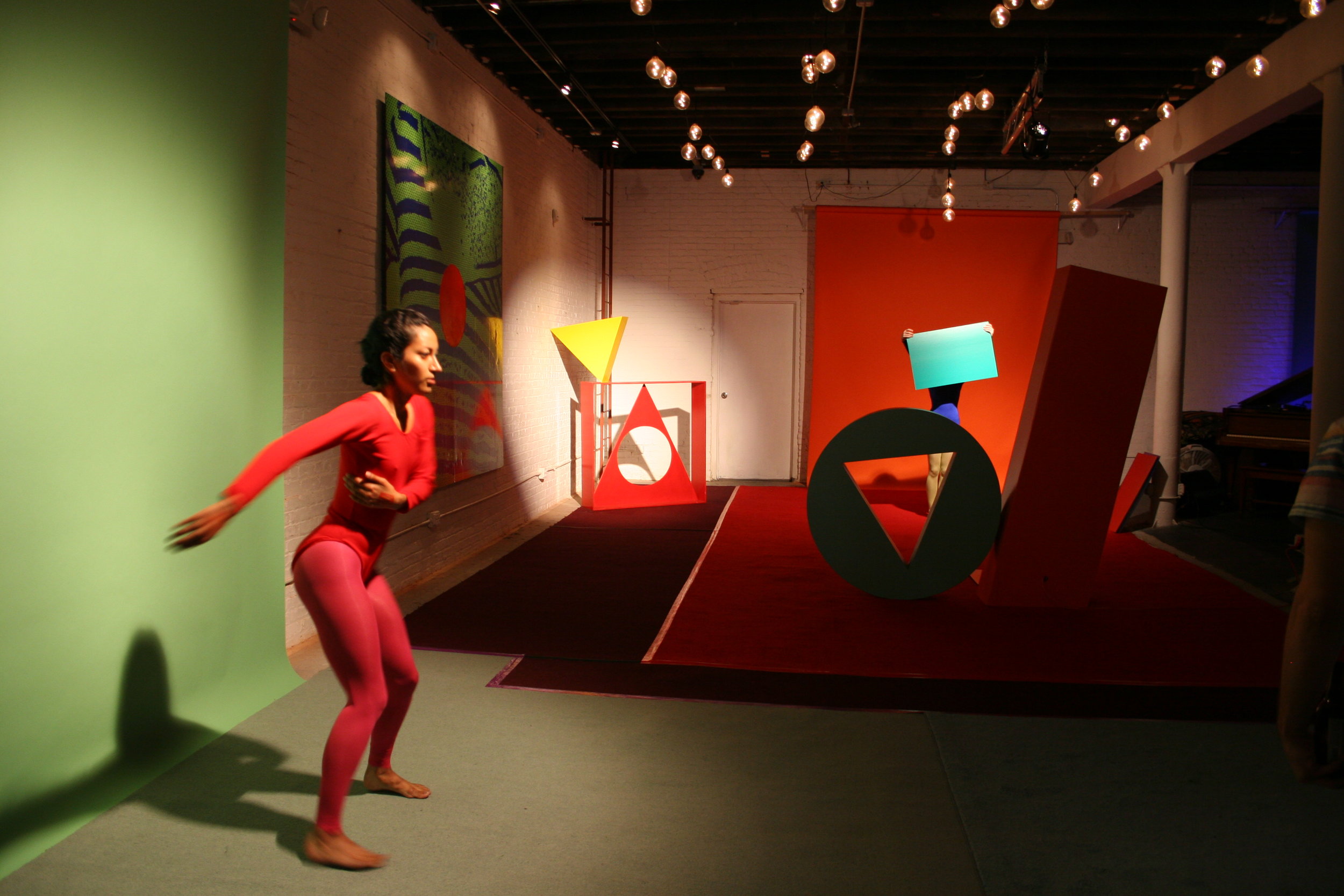
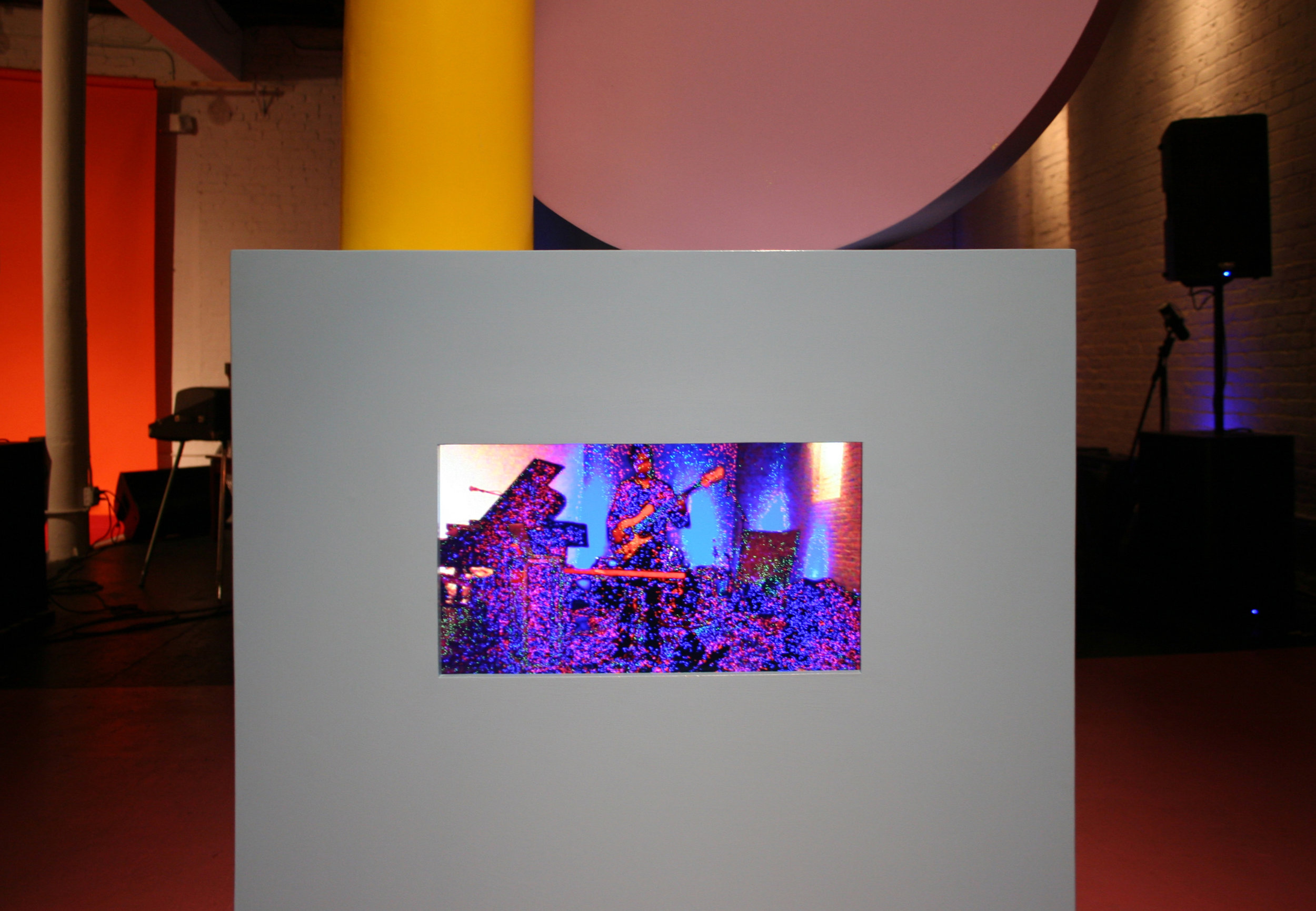
The Object Is Present is a live exhibition and performance environment by Max Lauter and Jonathan Peck at ShapeShifter Lab in Brooklyn, bringing together sculpture, painting, custom real-time video processing, improvisational dance, and live music by Matt Garrison, with performances by Natalie Walters, Sylvana Tapia, and Tommaso Petrolo.
Proposition
The work begins from a reversal of certainty: the human body is no longer the only site from which perception, intention, or interiority can be imagined. Subject and object become positions in motion, passing between dancer and sculpture as each becomes visible through the other. A body encounters a form that sees; a form encounters a body that learns how it is being seen. In this reciprocal field, neither remains intact as origin or receiver — each becomes the other’s condition of appearance, each leaves a trace in the other, each takes on something of what it encountered. This is the exchange Latour names: humans and nonhumans trading properties at the seam where intention meets material.
Presence
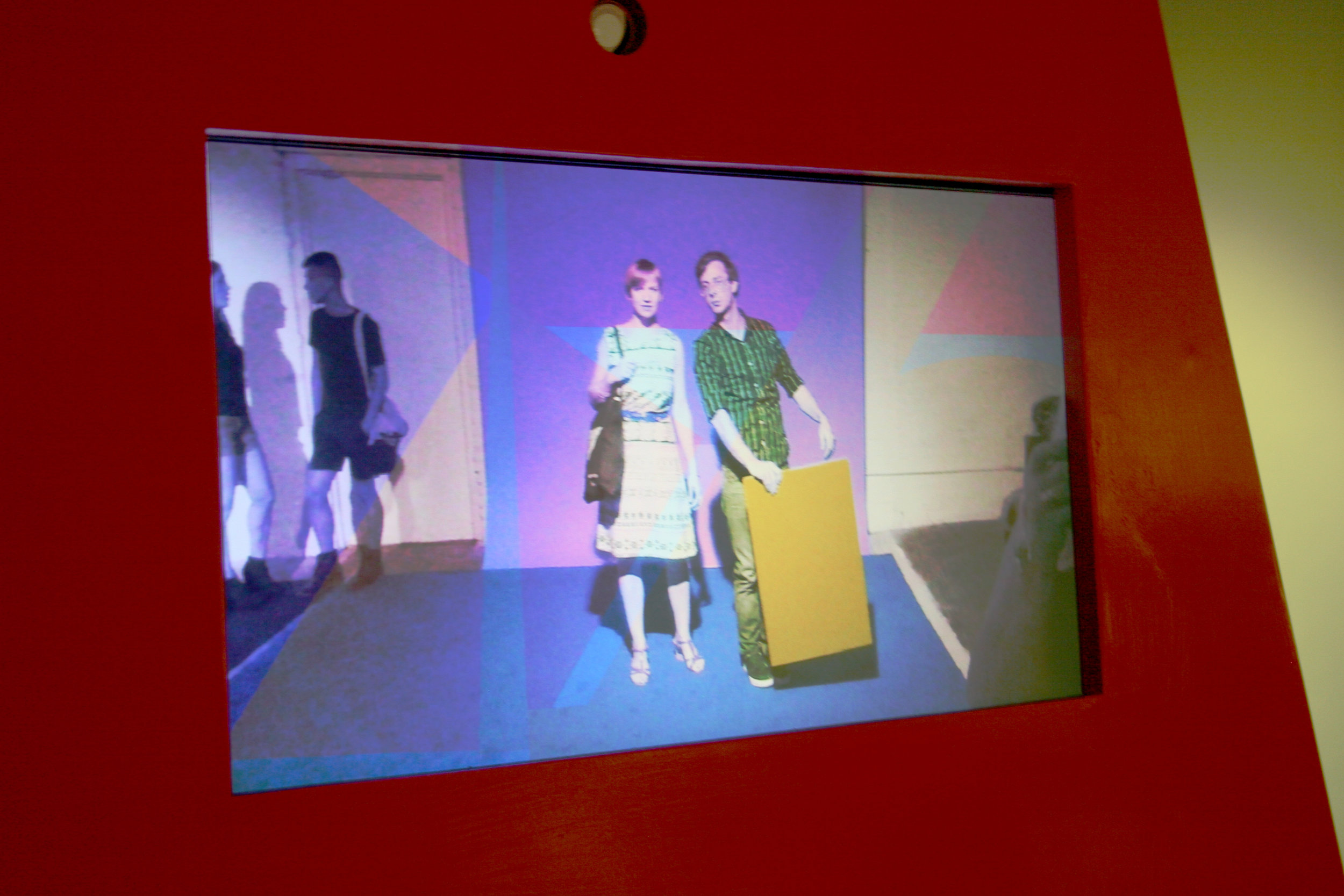
The title locates the work inside a longer history of performance as a problem of attention, endurance, and the gaze — the artist staged across from another body, time held open between them — and displaces that problem from the human face-to-face. Presence here is produced through a circuit in which dancer, camera, screen, sculpture, sound, and room continually exchange the roles of witness and witnessed. The dancer sees only because she is visible to the form across from her; the form sees only by way of her response to its image. What appears on the embedded display is neither mirror nor documentation. It is the sculpture’s way of giving form to an encounter.
Three Figures
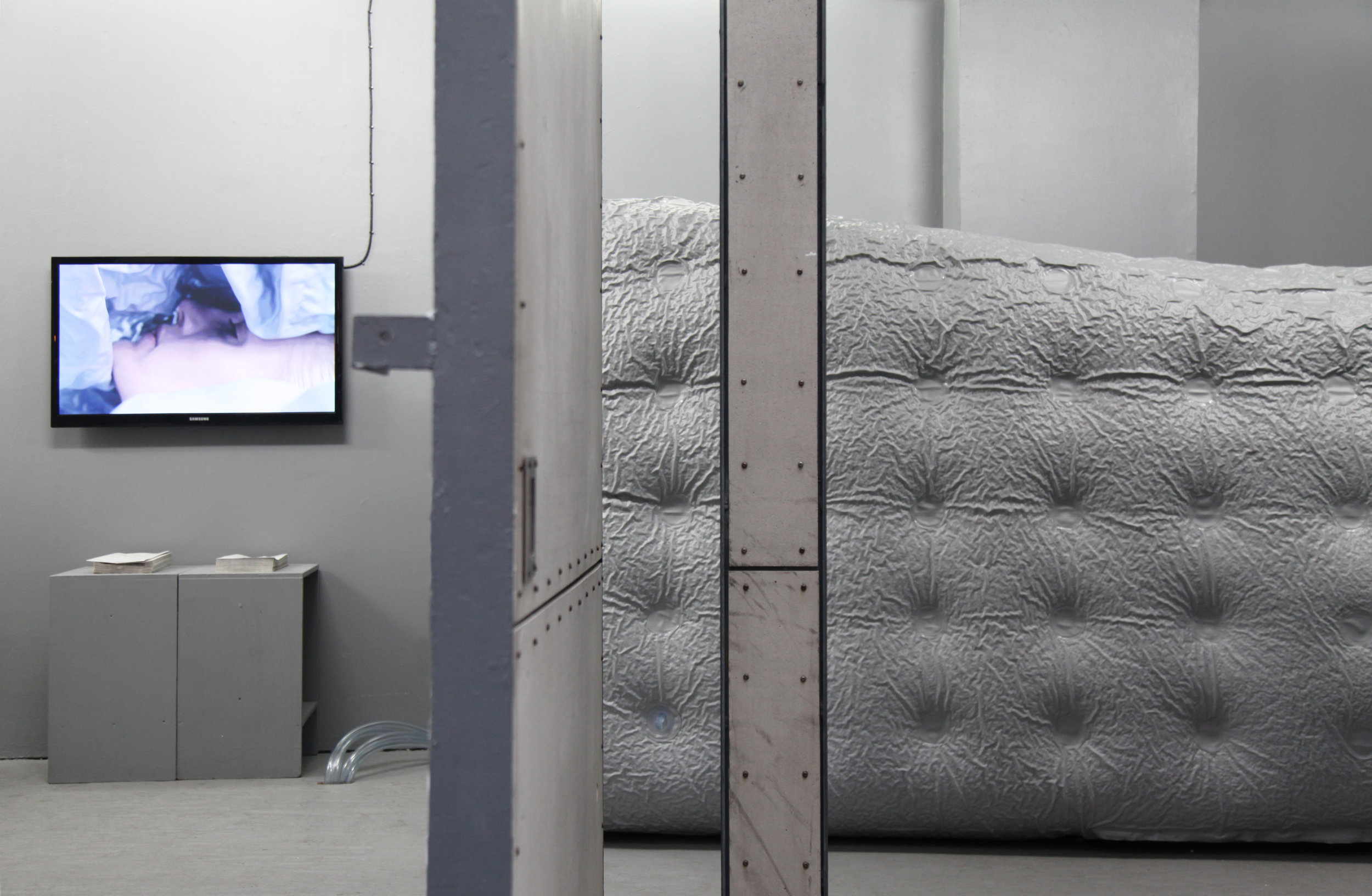
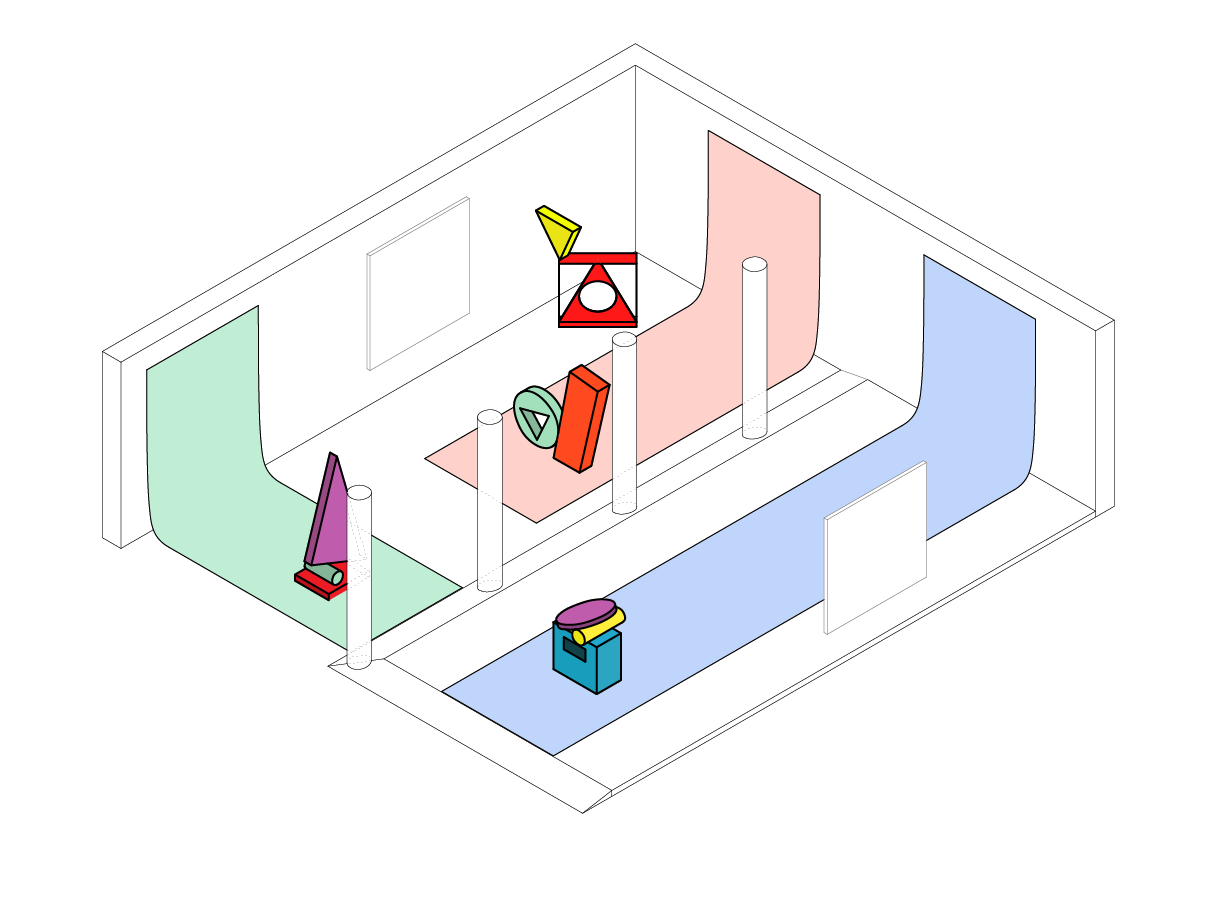
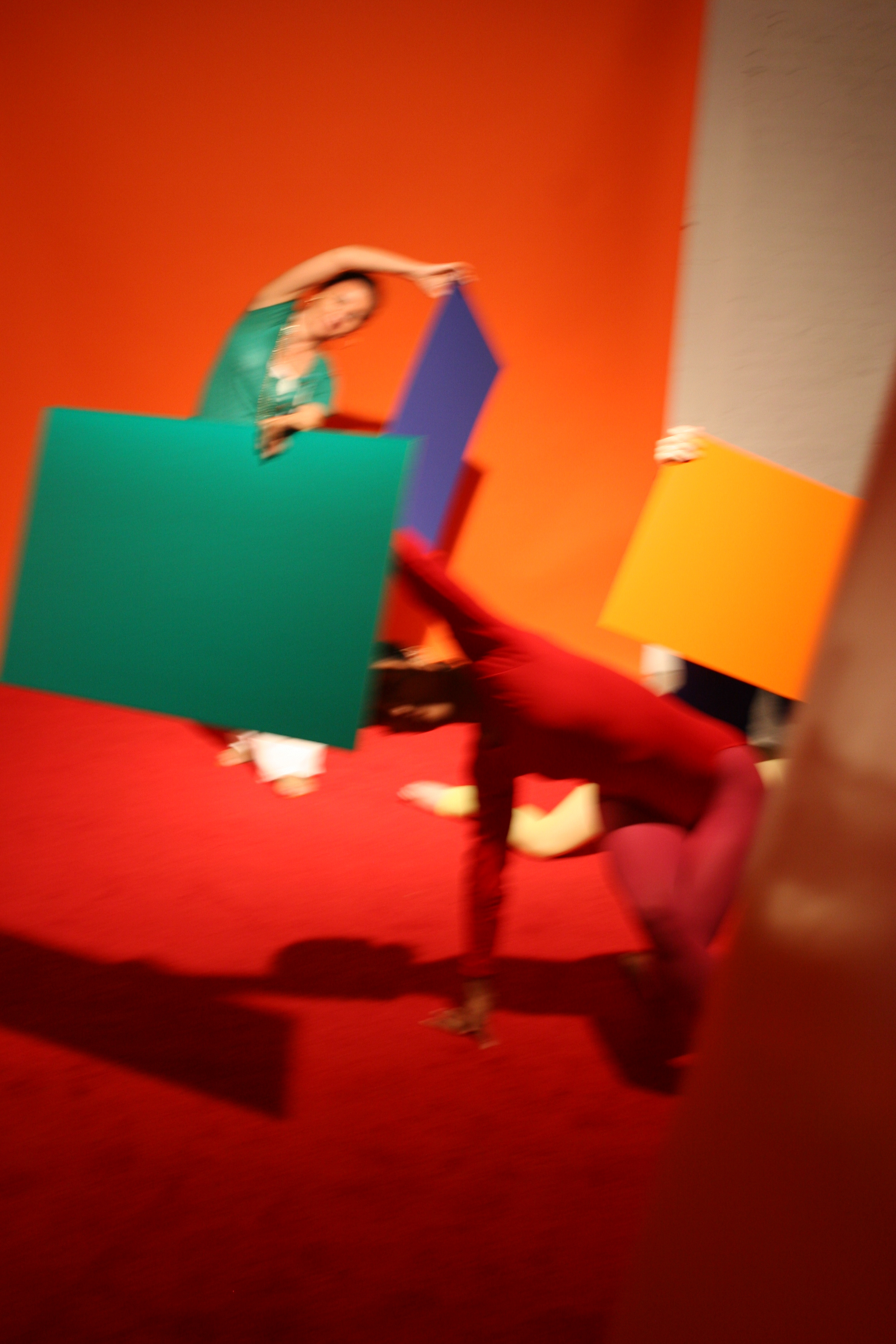
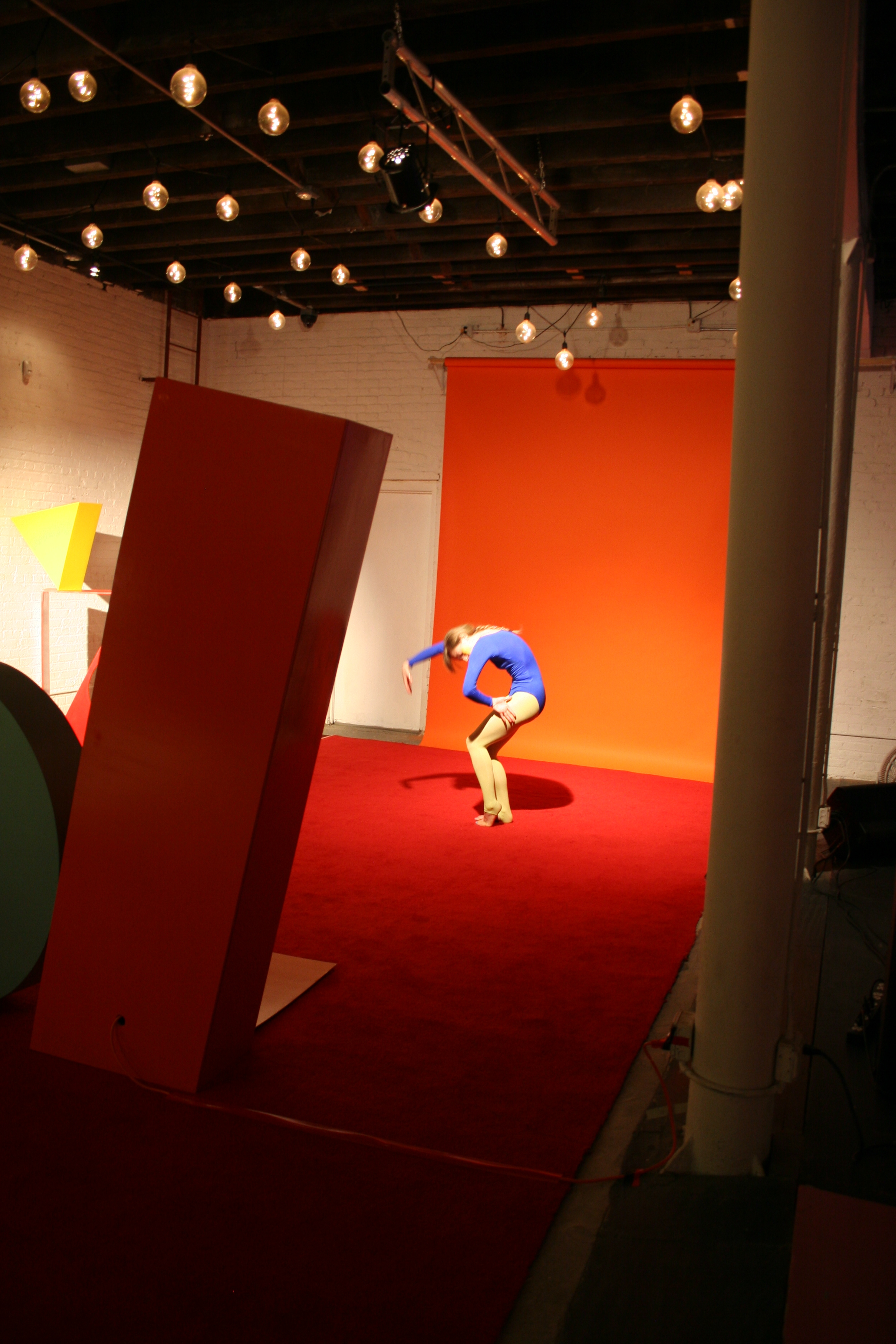
Three sculptural machines structure the installation, each with its own dancer, color field, geometric vocabulary, and real-time processing behavior. Cameras and embedded displays give each figure a perceptual surface and an expressive interior. Triangles, circles, rectangles, apertures, planes, and frames move across sculpture, cyclorama, painting, costume, and screen, forming a shared syntax through which human movement and machinic vision begin to address one another.
Performance
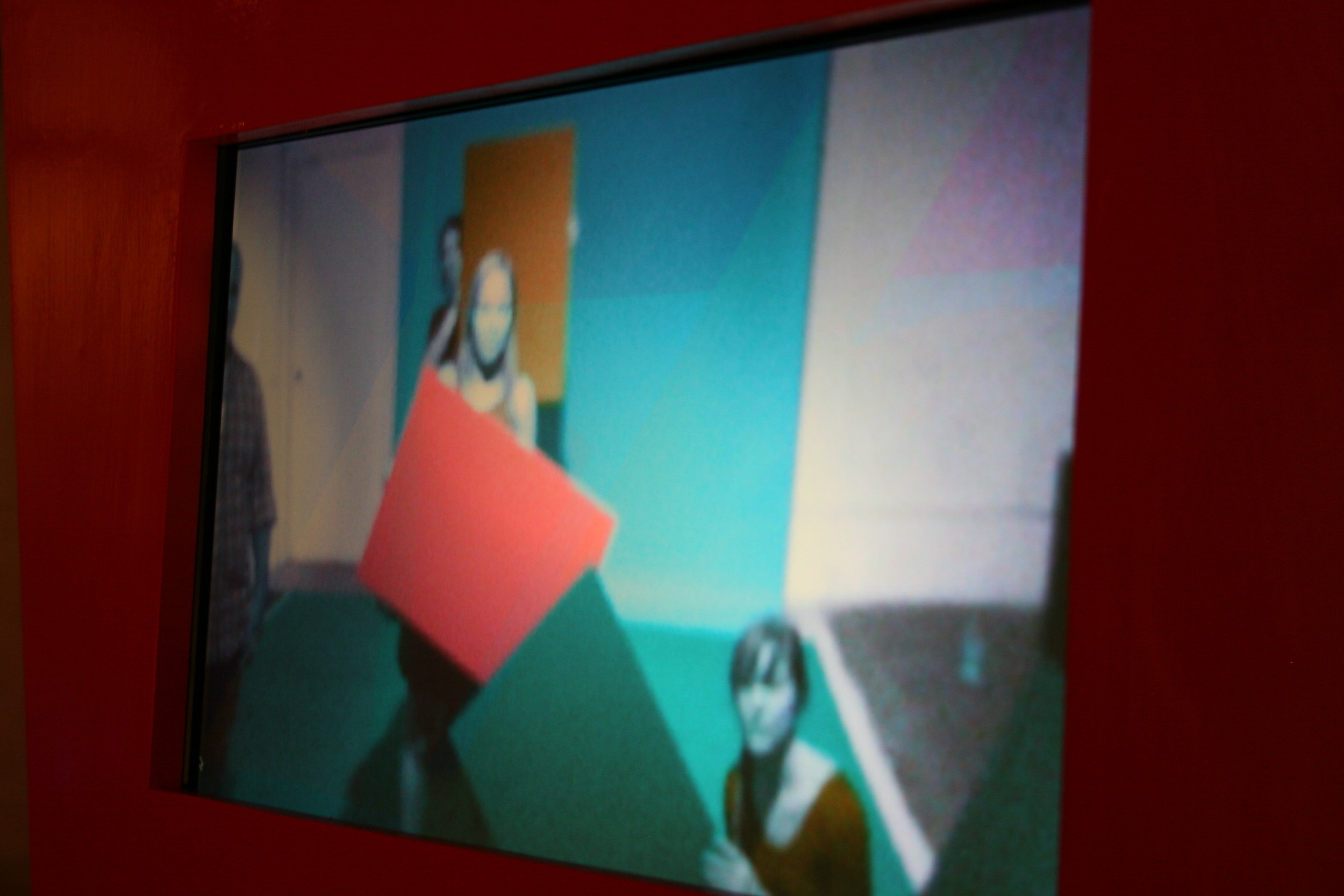
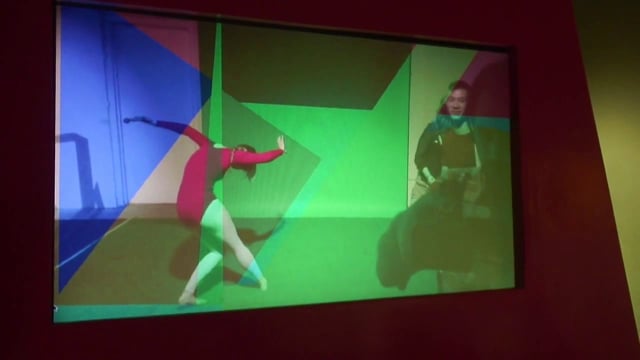
The dancer performs before the sculptural figure while studying how her gesture is received. A bent arm, diagonal lean, sudden pause, or sweep across color becomes a question posed in movement. The screen replies through contour, compression, saturation, delay, and rupture, making perception visible as an aesthetic act. The dancer adjusts to that reply; the system adjusts to her in turn. The loop is the work. Garrison’s live score threads through the three stations, answering what the systems are doing and absorbing what they answer back. None of these agents — body, sculpture, software, sound — pre-exists the encounter as a finished thing. Each takes shape against the others, composing the others’ history as it composes its own.
Set and Painting
Peck makes the sculptures and paintings; we collaborate on the spatial environment: colored cycloramas, primitive geometries, and staged fields of attention. A cyclorama traditionally isolates a human subject so the camera can render it cleanly; here the relation flips. The dancer enters the chromatic enclosure as the studied subject, and the sculptural figure takes the camera’s position — the apparatus has its own program, its own grammar of what counts as an image, and the dancer enters that program the way a photographer normally enters the camera’s. The paintings carry the same inversion into stillness, reading as portraits and still lifes from the sculpture’s side of perception. Even so, the form never fully delivers itself. It returns a face on the screen and a surface in the paintings; what it is beyond those returns stays withdrawn.
My Role
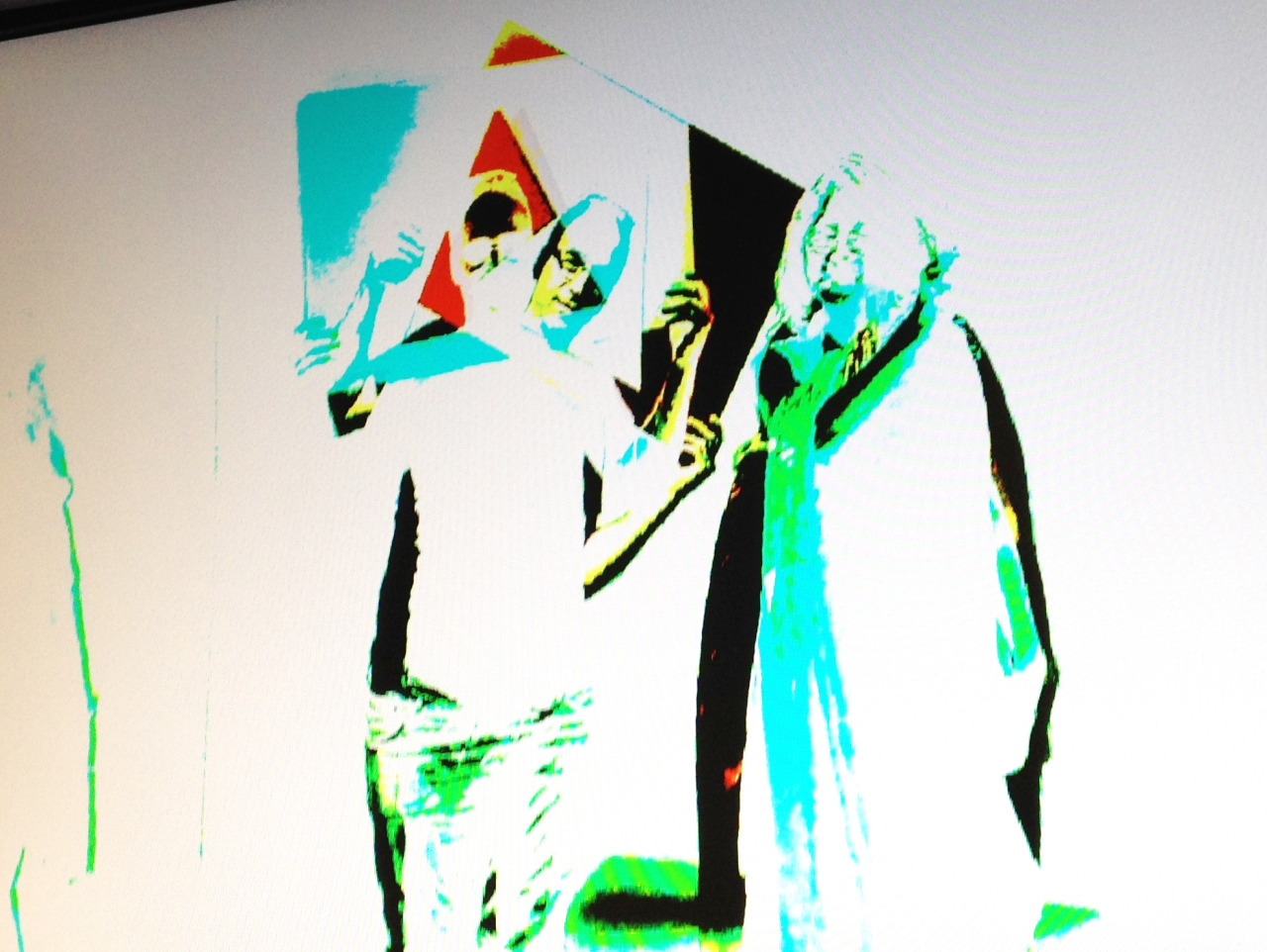
I co-designed the exhibition environment with Peck — the set, cycloramas, and spatial structure — and built the technical system that gave each sculpture its way of seeing. I built the embedded camera-and-display assemblies inside each figure and wrote three custom Max/MSP patches — one per figure — each with its own grammar for processing live video and audio: distinct treatments of color, contour, frequency, and decay. The processed video fed directly into the embedded displays within each sculpture.
Afterimage
Garrison’s score moved between jazz and electronic improvisation, shaping the room as a responsive field of rhythm, tension, and release. The screen outputs were recorded with the music, producing a final video composed from within the sculptural systems themselves. What remains is a record of reciprocal alteration: the dancer becomes image for the sculpture; the sculpture becomes subject for the dancer; perception becomes material, and material learns to look back.
Project Credits & Information
- Project type
- Exhibition
- Partner
- Shapeshifter Lab
- Agency
- —
- Role
- Artist, Curator, Coding, Installation
- Credits
- Exhibition by Maximilian Lauter and Jonathan Peck. Music by Matthew Garrison. Dance by Natalie Walters, Sylvana Tapia, and Tommaso Petrolo.
- Press
- —
- Website
- —
- Date
- 2011