What is autonomy in a world of mechanized mobility?
Navigating an Autonomous World
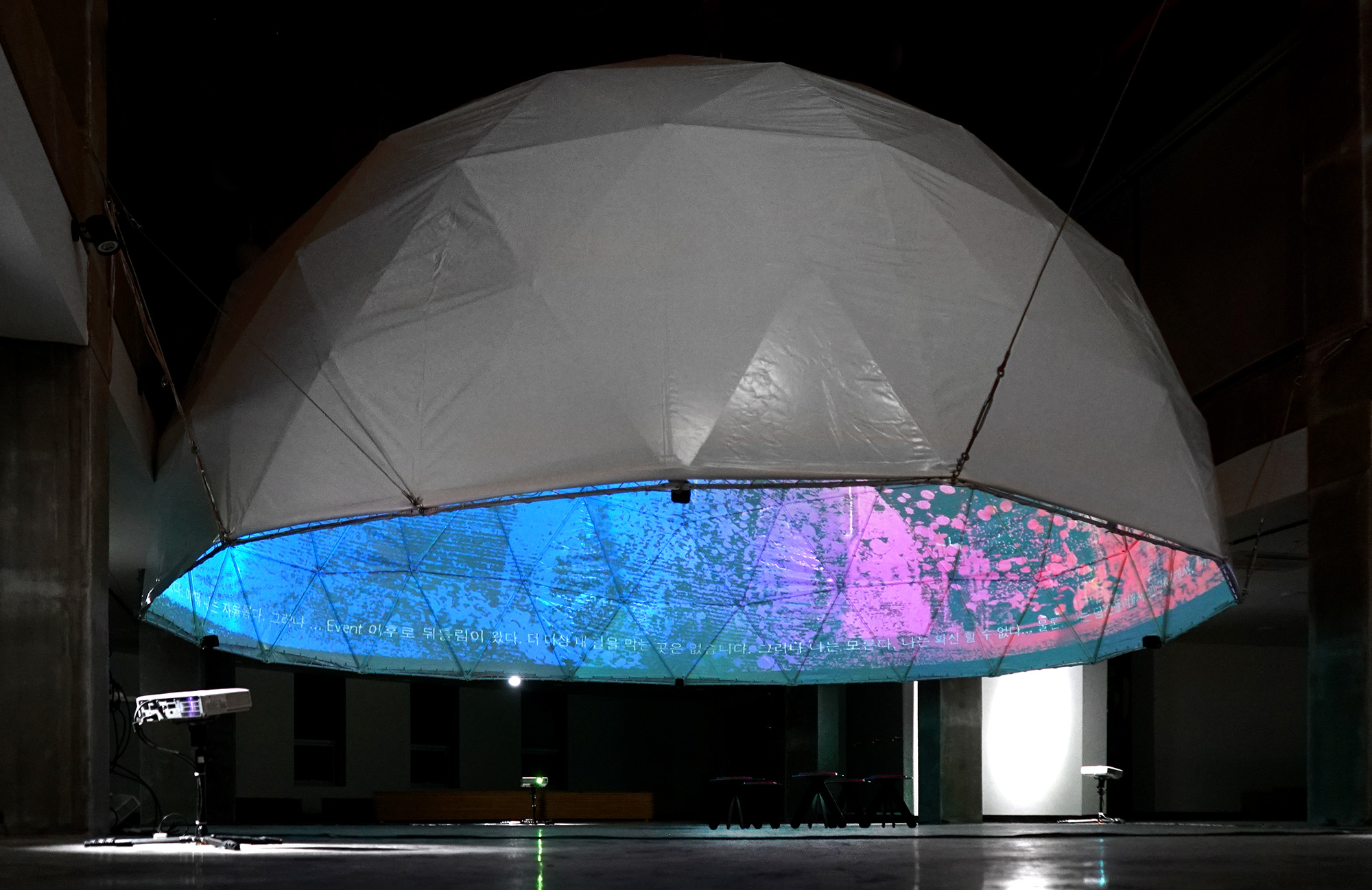
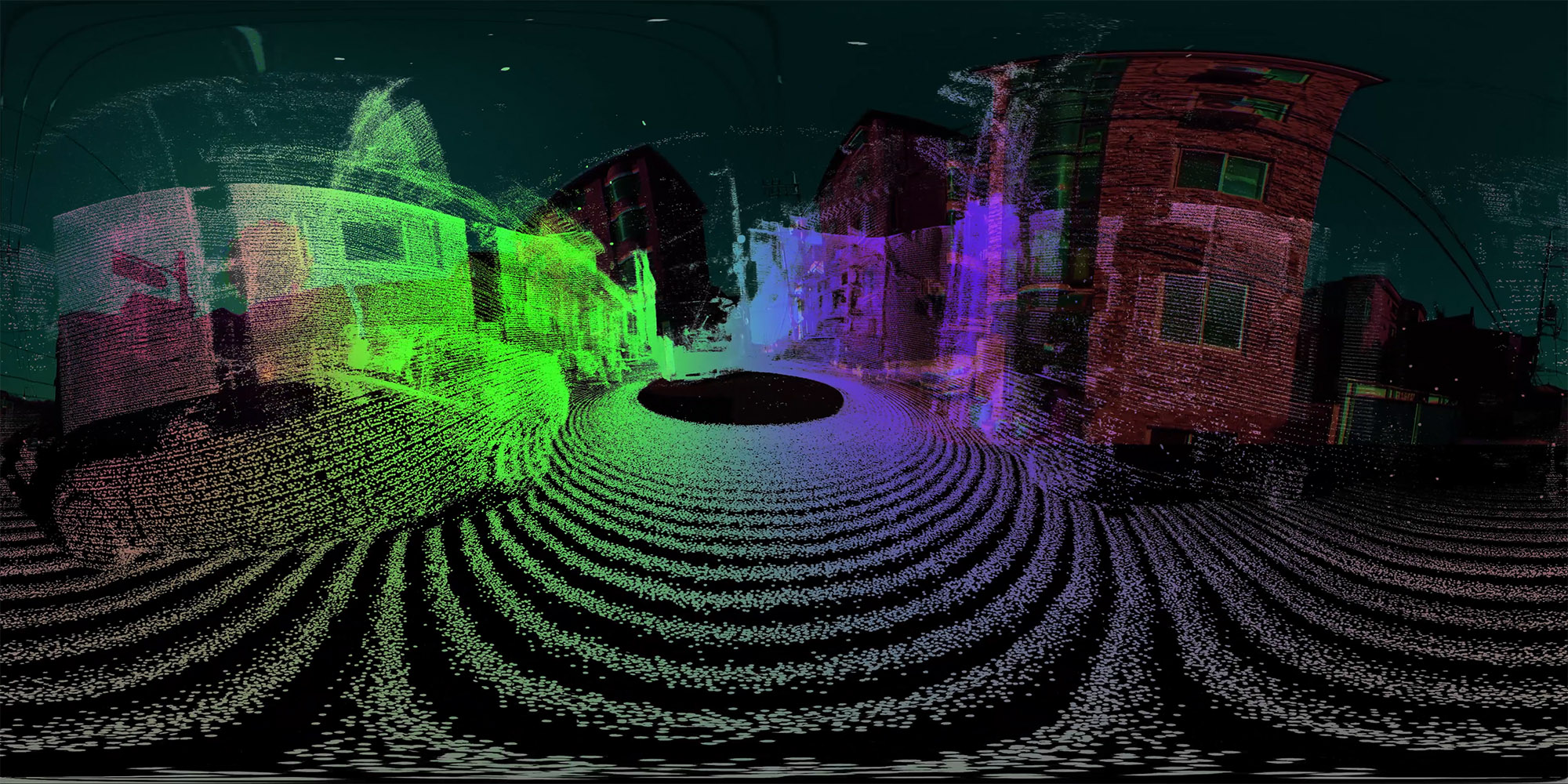
Driver Less Vision is the immersive experience of becoming an autonomous, self-driving vehicle—a 360° dome work that explores the tension between artificial intelligence and humans as they negotiate Seoul’s changing urban landscape with the arrival of autonomous vehicles, and the untapped conflicts and disruptive effects on the built environment caused by the deployment of technologies for autonomous mobility. It positions the audience as the autonomous vehicle, imagining a future where, after the event, humans are imperceptible or gone.
Autonomy and the City
Currently, the visual stimuli that organizes traffic is designed for human perception. The arrival of driverless cars entails the emergence of a new type of gaze that is required to negotiate existing visual codes—omnidirectional yet untrained. To assume that driverless cars will fully adapt to future conditions of the city neglects the history of transformation of urban streetscapes associated with changes in vehicular technologies.

What the Machine Sees
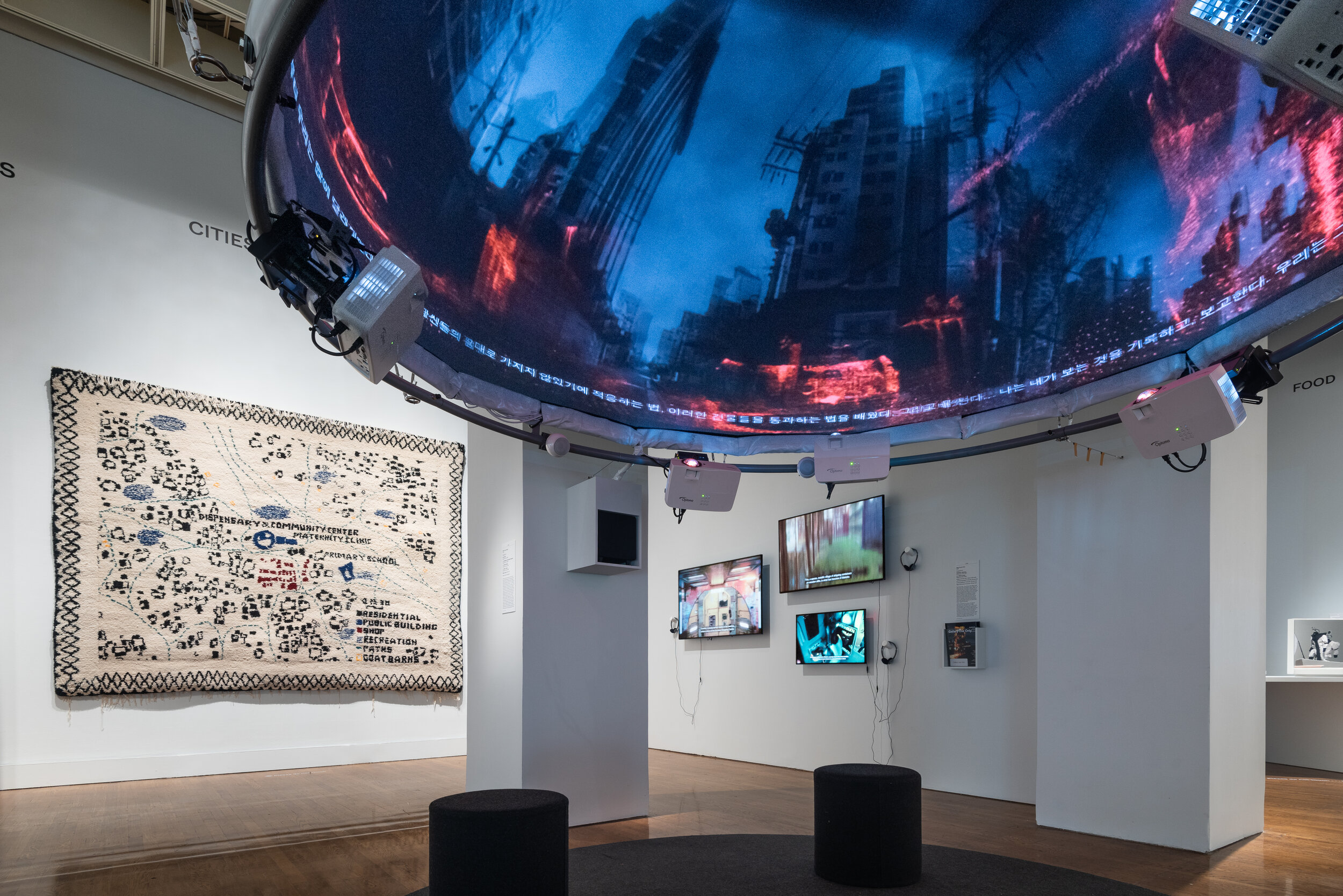
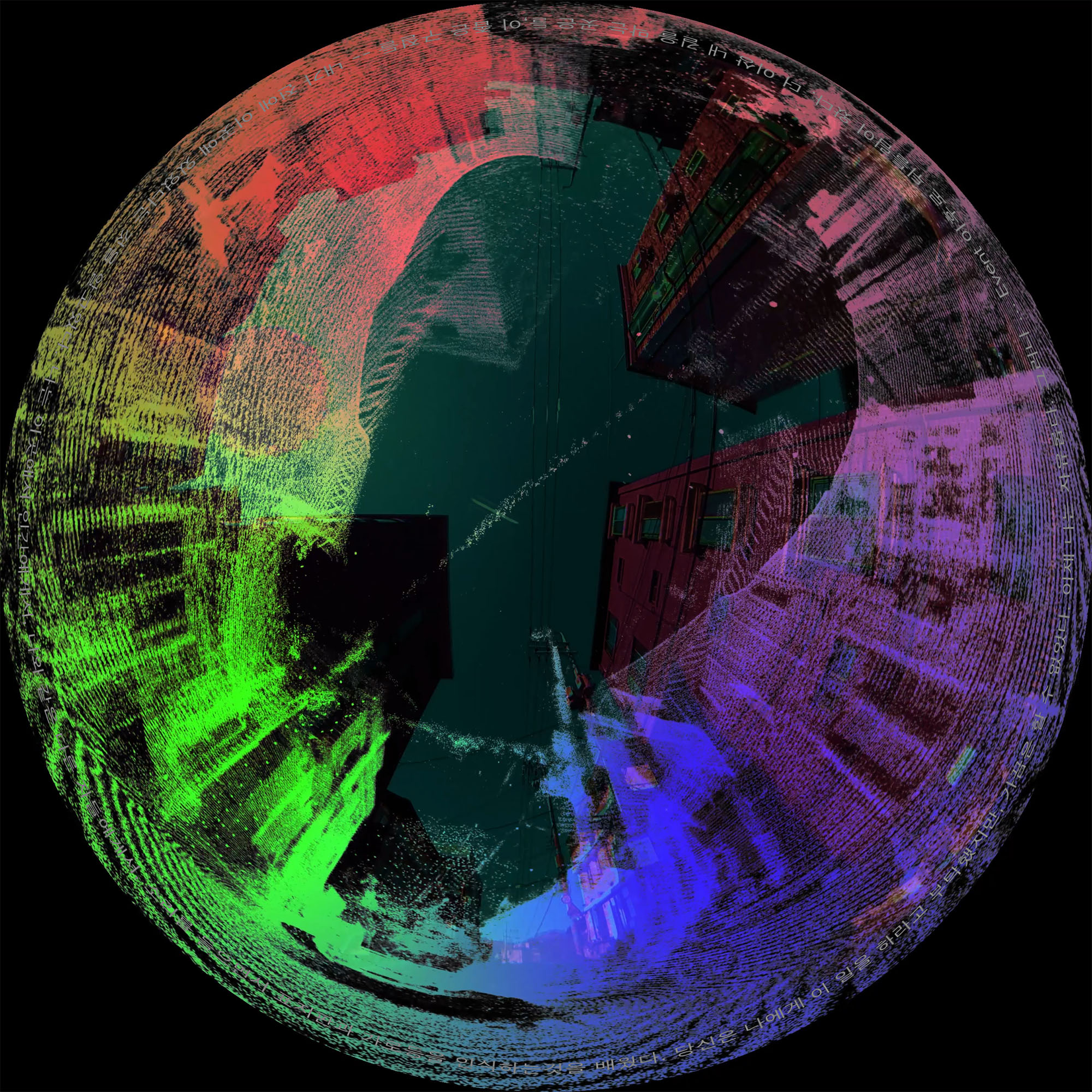
Driver Less Vision is an attempt to understand how driverless cars will change the city by immersing the audience in an urban journey through the car’s point of view, seeing the streets of Seoul through overlapping and dissonant perceptions.
Open on YouTube for full 360 playback.
Designs for Different Futures & the Seoul Biennale
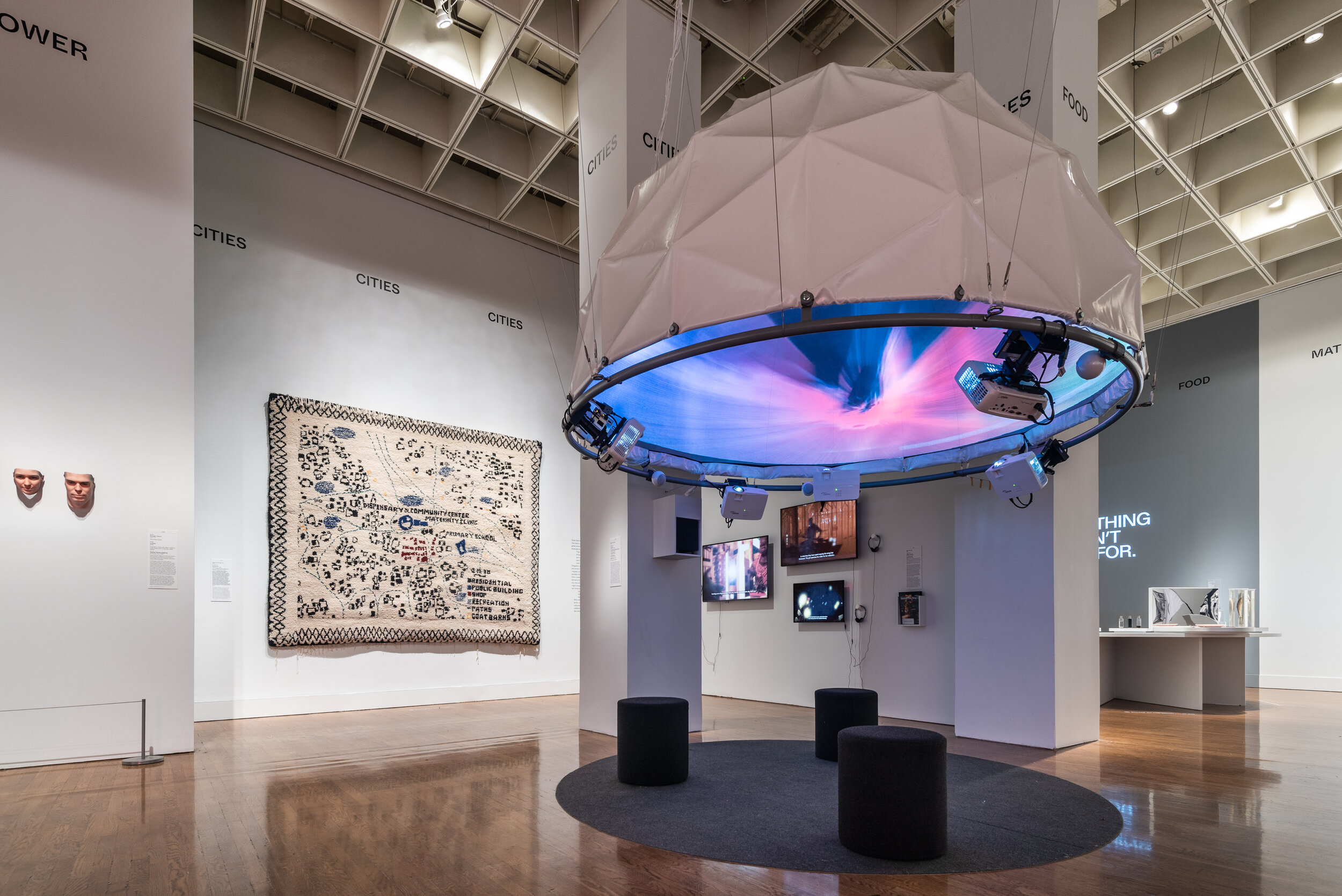
Driver Less Vision was presented within Designs for Different Futures (2019–2021), a traveling exhibition organized by the Philadelphia Museum of Art, Walker Art Center, and Art Institute of Chicago that surveyed how designers enlist art, science, and technology to speculate on life in the years and decades ahead. The show gathered some 80 projects—surprising, ingenious, and at times unsettling—that asked how design might respond to questions of ecology, embodiment, labor, and trust in an uncertain future.
The work was originally commissioned for the Seoul Biennale of Architecture and Urbanism in 2017, utilizing an eight-meter-diameter dome with 360° visuals developed with the generous support of Ocular Robotics, University of Technology Sydney, and Rice University. See the Seoul installation for the inaugural presentation.
My Role
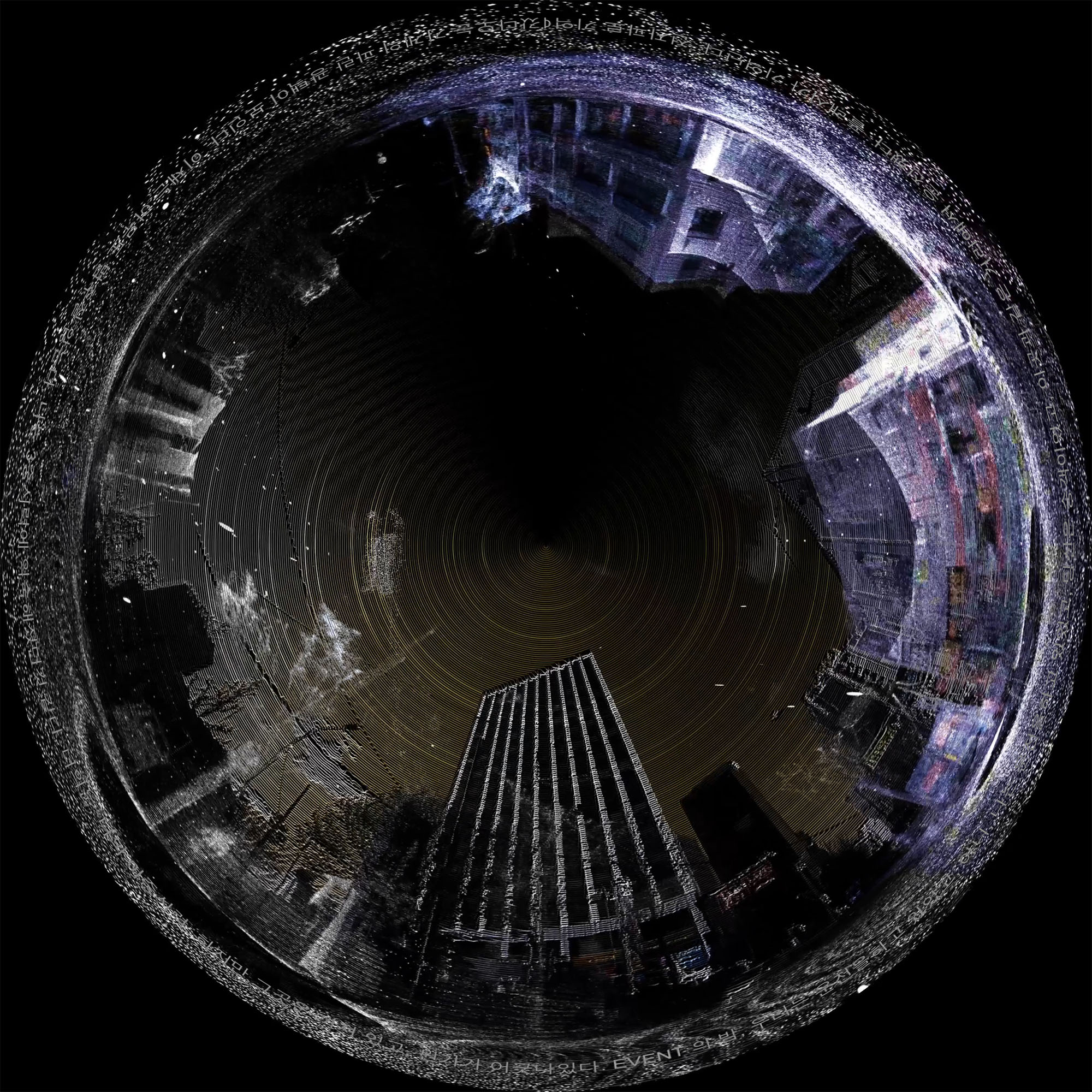
My work spanned production, technical direction, CG lead, compositing, projection mapping, and installation. I produced the virtual experience with 360° video and 3D data scanned in Seoul, designed and implemented the playback system software and hardware, built and installed the dome, and mapped the video projection for this touring presentation within Designs for Different Futures.
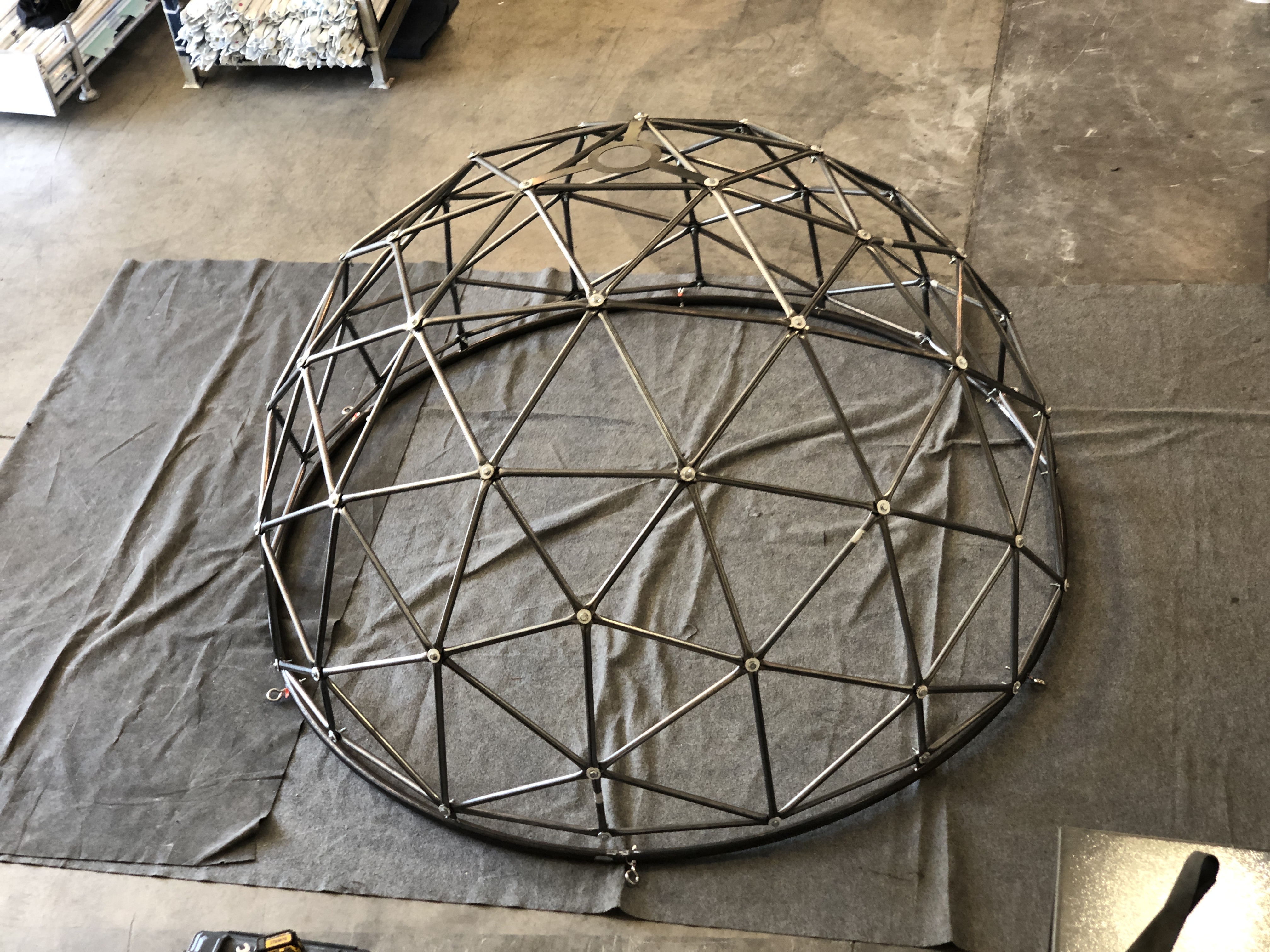
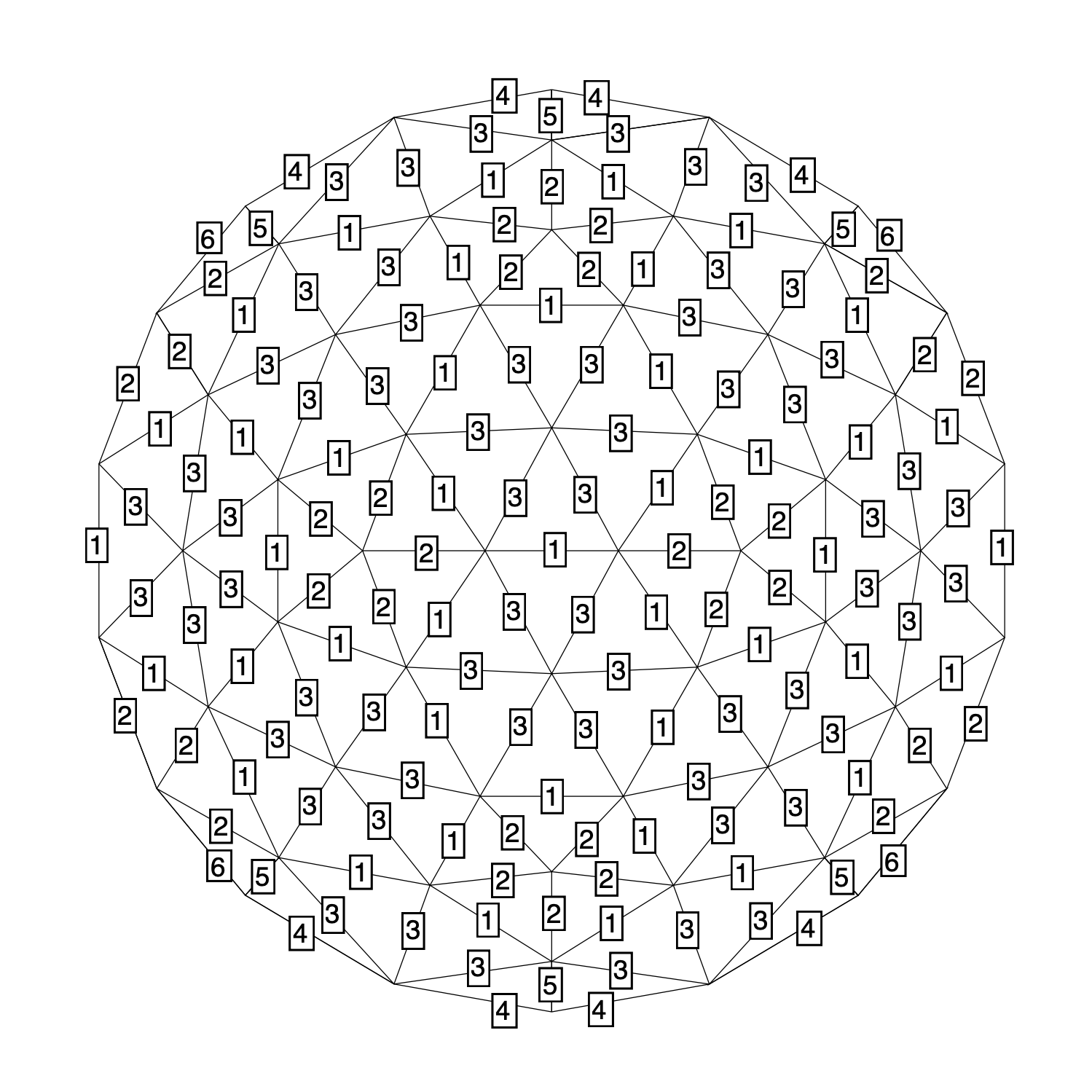
Custom Fabrication
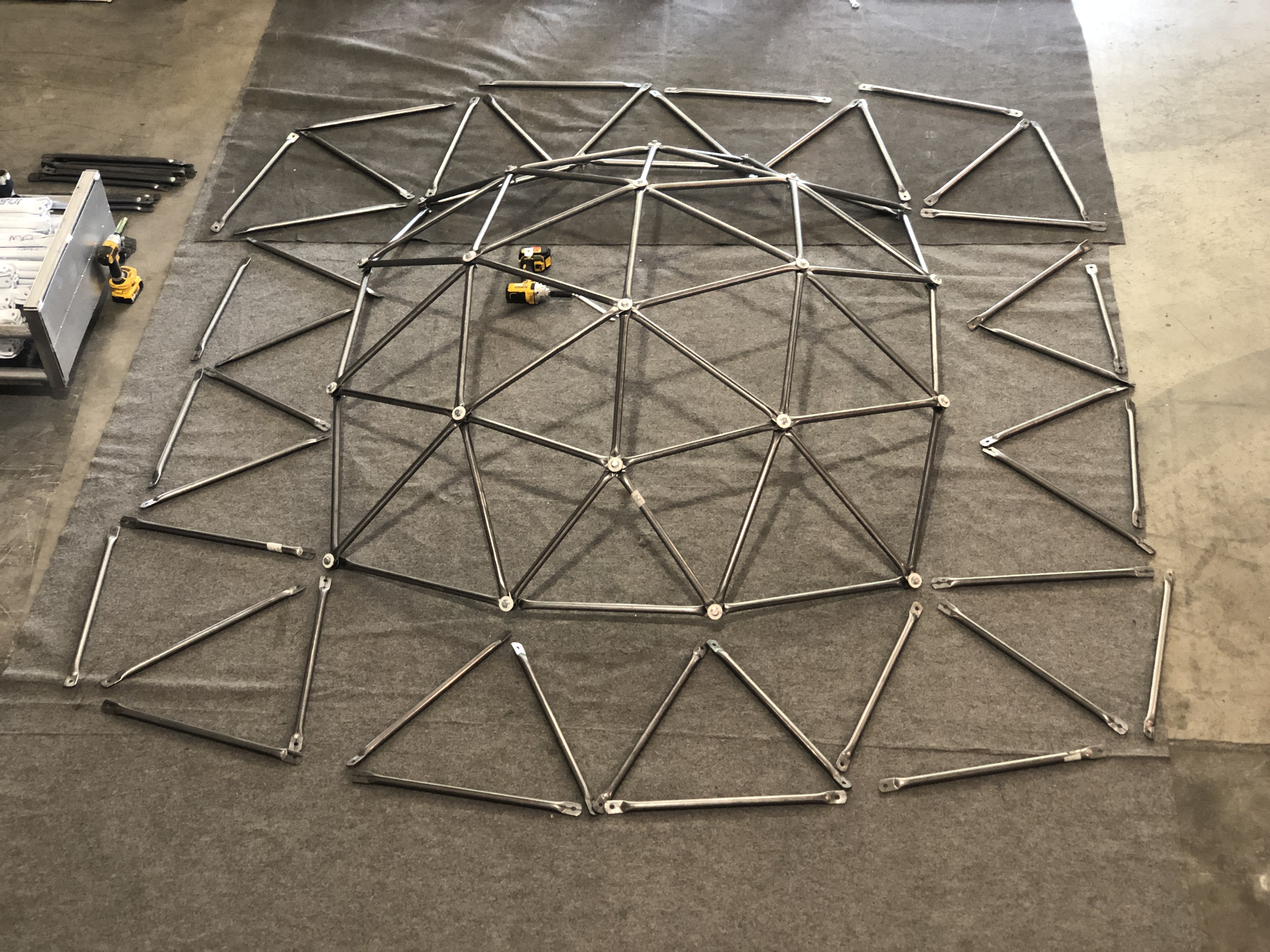
The touring presentation used a custom geodesic dome engineered for immersive 360° projection—assembled and calibrated for each museum venue on the Designs for Different Futures tour. The dome installation required custom design to enable suspension from the ceiling, and a custom ring to mount five projectors and surround sound speakers.
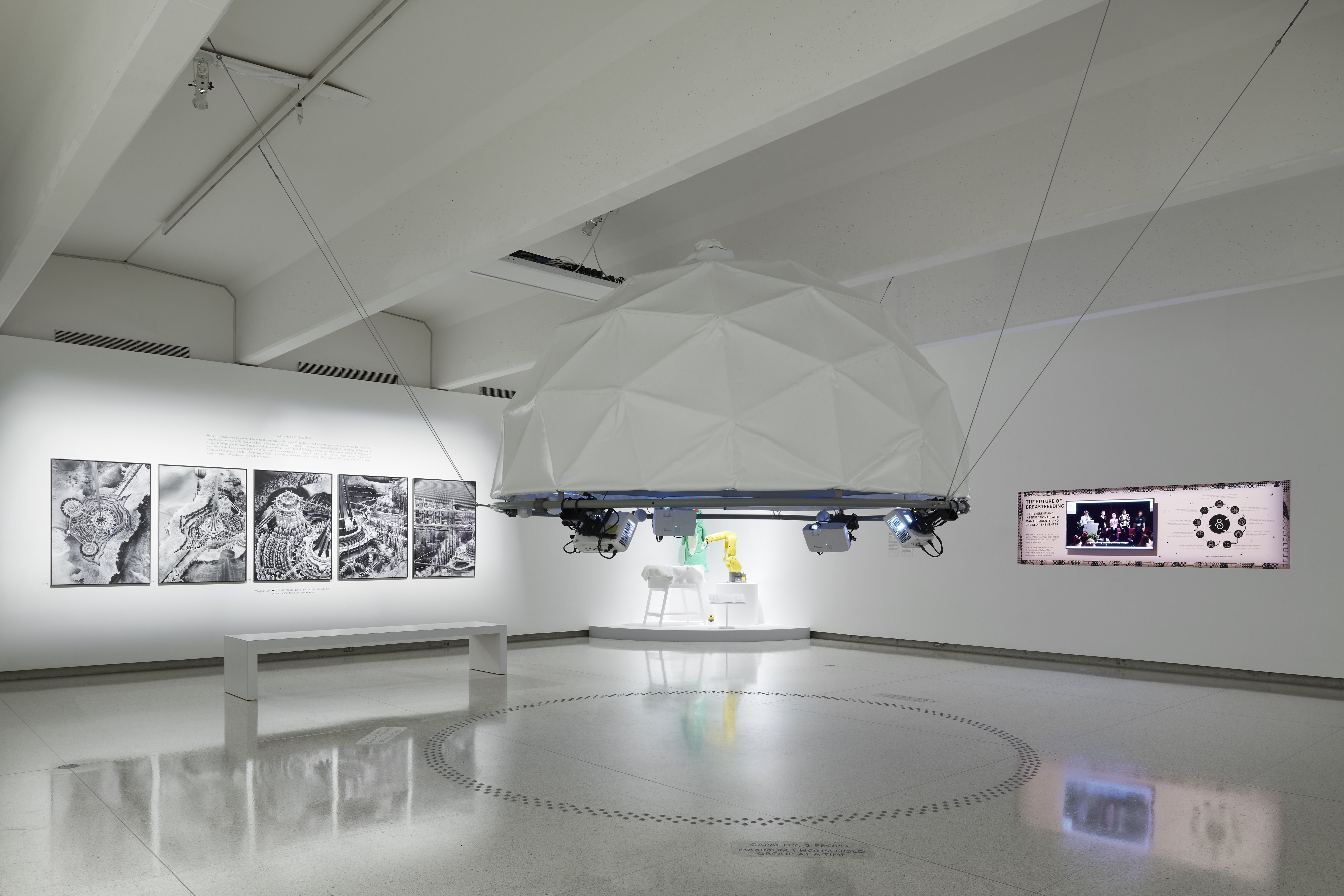
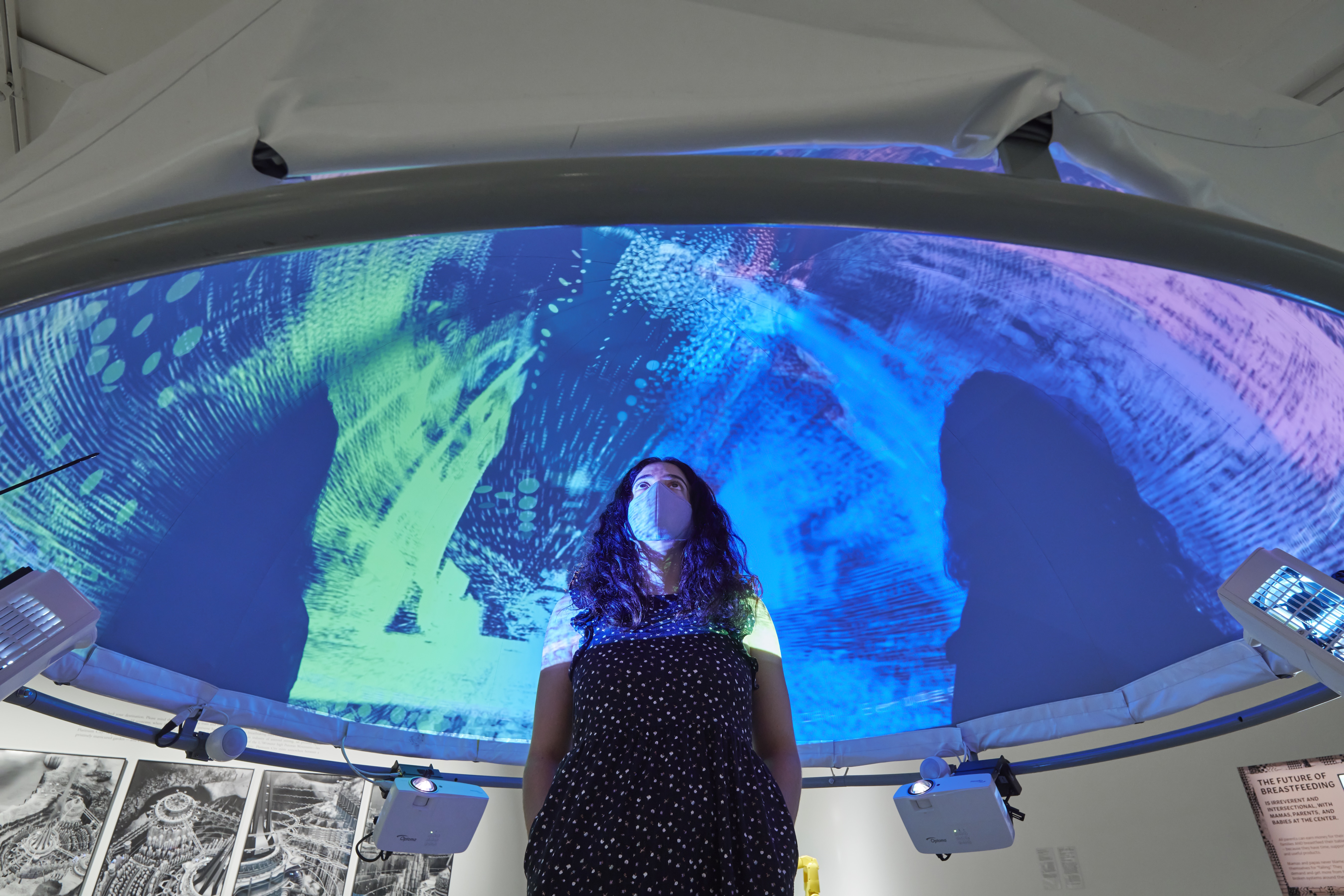
A Mobile Exhibition Design
The dome traveled with Designs for Different Futures to the Walker Art Center, Philadelphia Museum of Art, and Art Institute of Chicago—each venue presenting the work within its own exhibition architecture.
Project Credits & Information
- Project type
- Exhibitions
- Partner
- Philadelphia Museum of Art, Walker Art Center, Art Institute Chicago
- Agency
- Make Good
- Role
- Production, Technical Direction, CG Lead, Projection Mapping, Installation
- Credits
- Photography courtesy of the Philadelphia Museum of Art. Concept and Design: Urtzi Grau, Guillermo Fernández-Abascal, Daniel Perlin, Maximilian Lauter. Visual / Sound Design + Production: Perlin Studios: Daniel Perlin, Principal and Creative Director; Maximilian Lauter, Creative Producer and Designer; Robert Crabtree, 3D Design; Dan Taeyoung, Code and 3D Design; Gary Breslin, Motion Graphics and Animation.
- Date
- 2019–2021