Can breathing, morphing surfaces create responsive, organic architecture?
A laboratory in the gallery
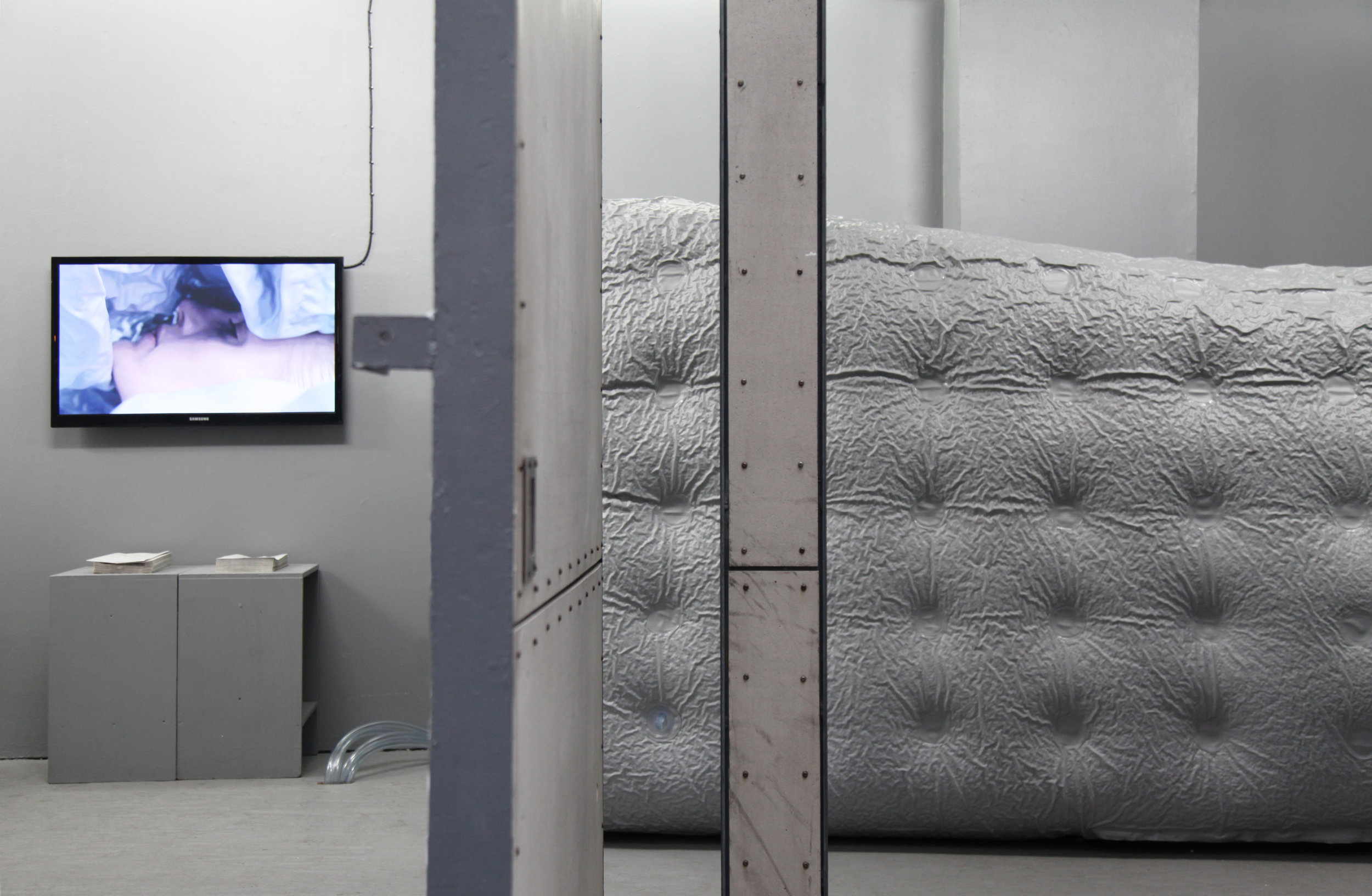
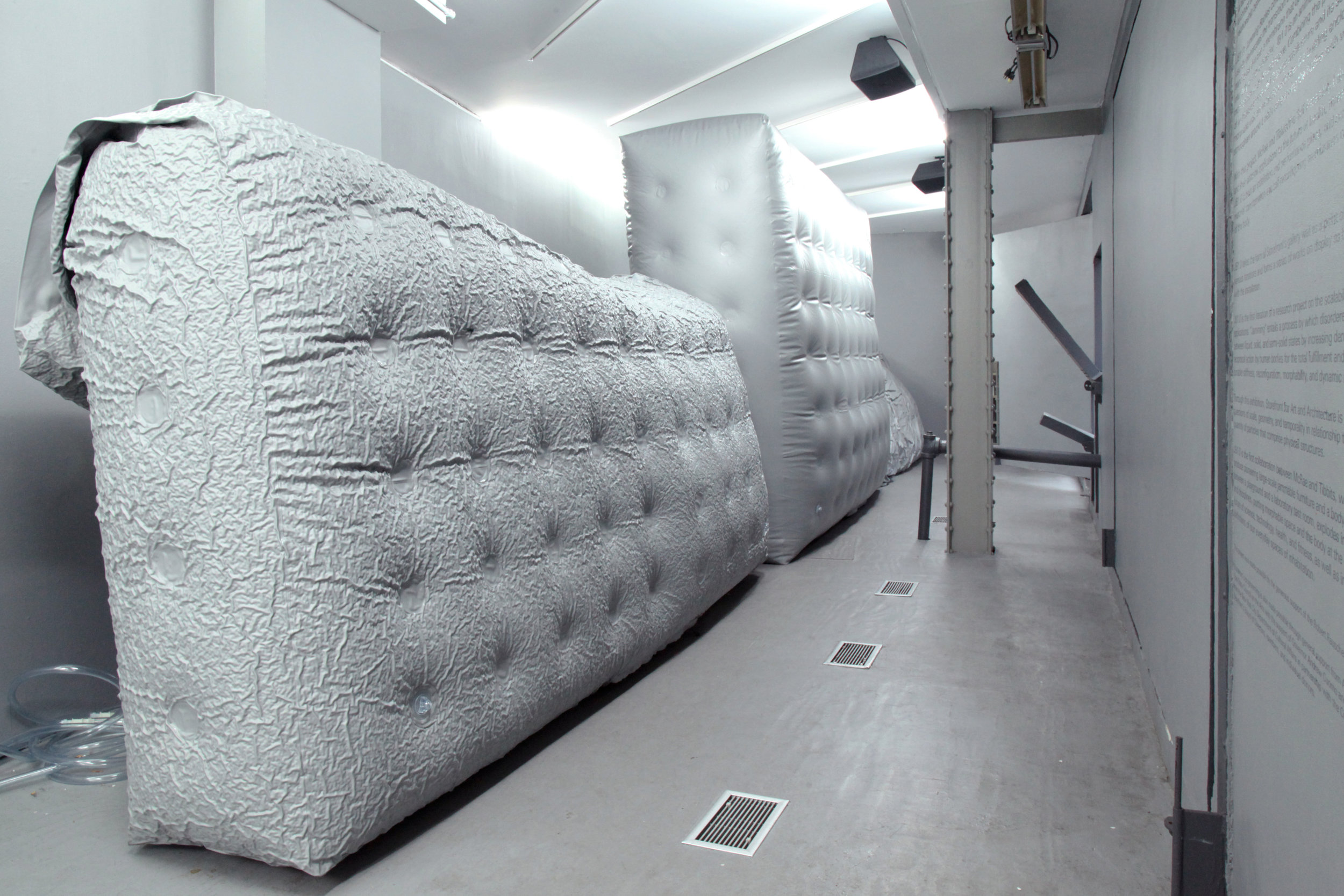
JB1.0: Jamming Bodies is an immersive installation that transforms Storefront’s gallery space into a laboratory. The installation, a collaboration between science fiction artist Lucy McRae and architect and computational designer Skylar Tibbits with MIT’s Self-Assembly Lab, explores the relationship between human bodies and the matter that surrounds them.
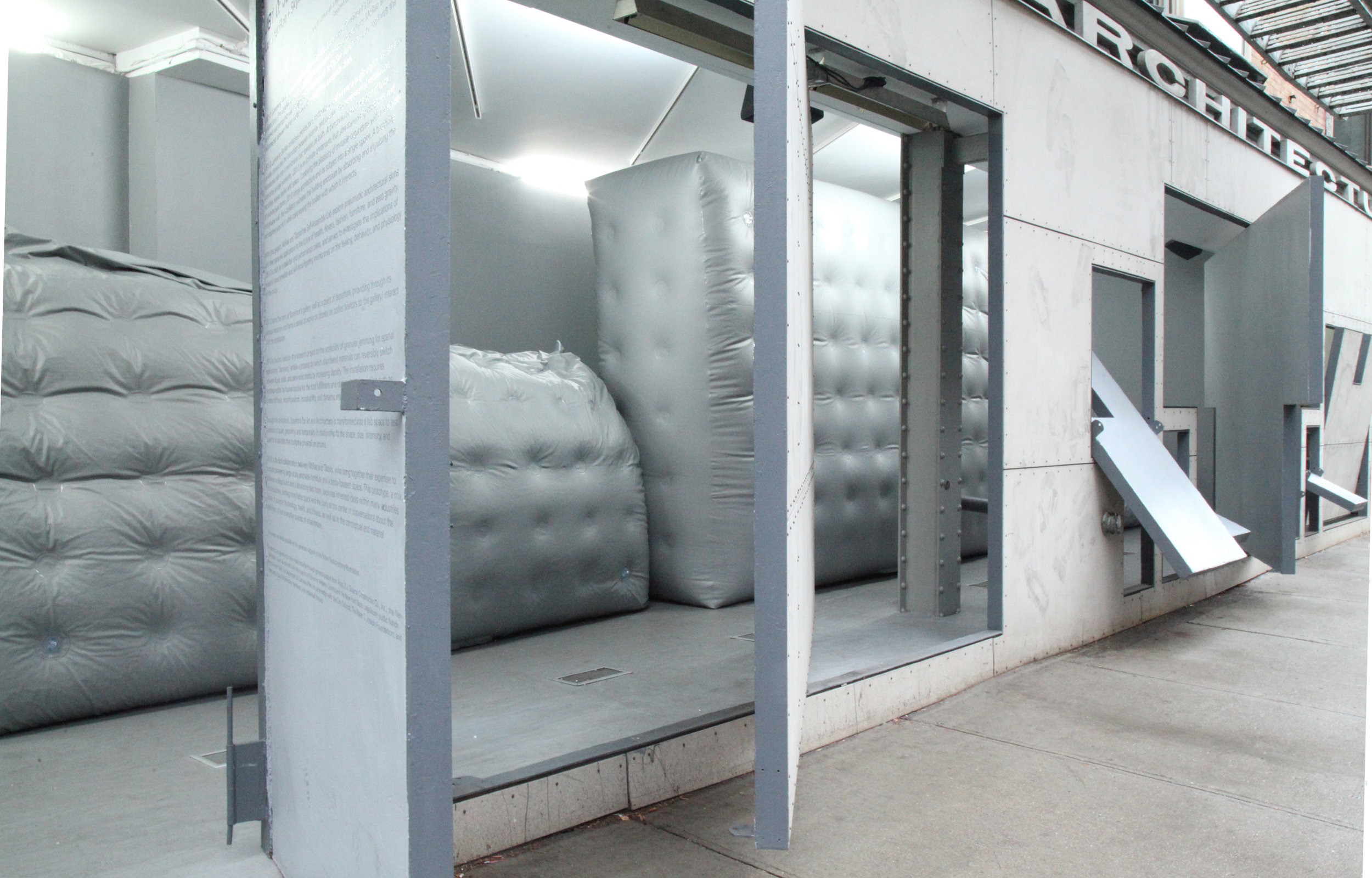
Skin as membrane
JB1.0 collapses architecture, technology, and art into a single object. While skin usually demarcates the transition between exterior and interior, this experimental installation transforms skin into a membrane that operates as both. A threshold toward a space of total interiority or total exteriority, JB1.0 is an animate continuum that simultaneously embraces and modifies human bodies and space.
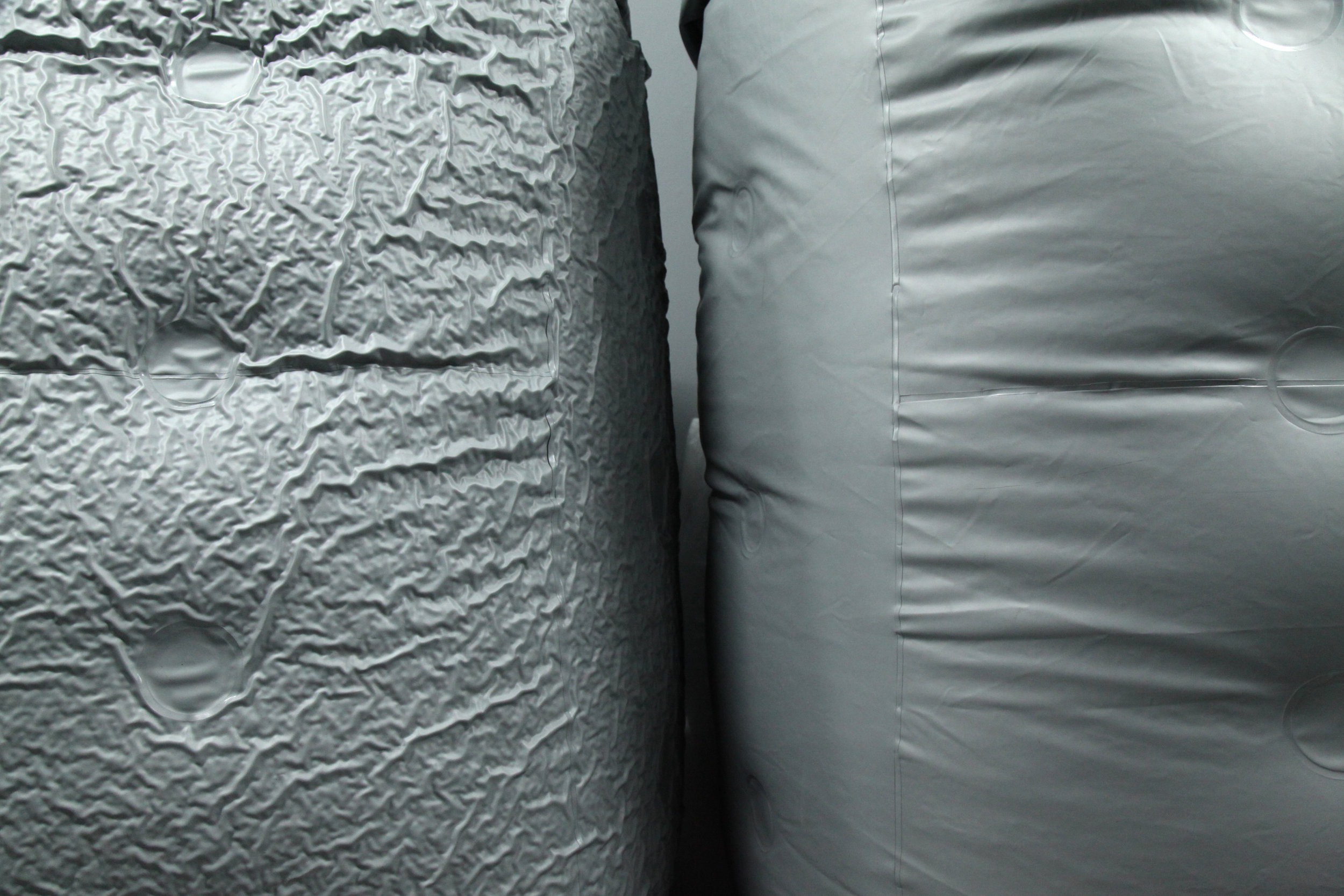
Morphable wall
Combining the plasticity of mutable organisms with the rigidity of architectural forms, JB1.0 brings architecture and its subject into a single space. A breathing, morphable wall animates the building enclosure by absorbing and expelling the atmosphere around it while compressing the bodies with which it interacts.
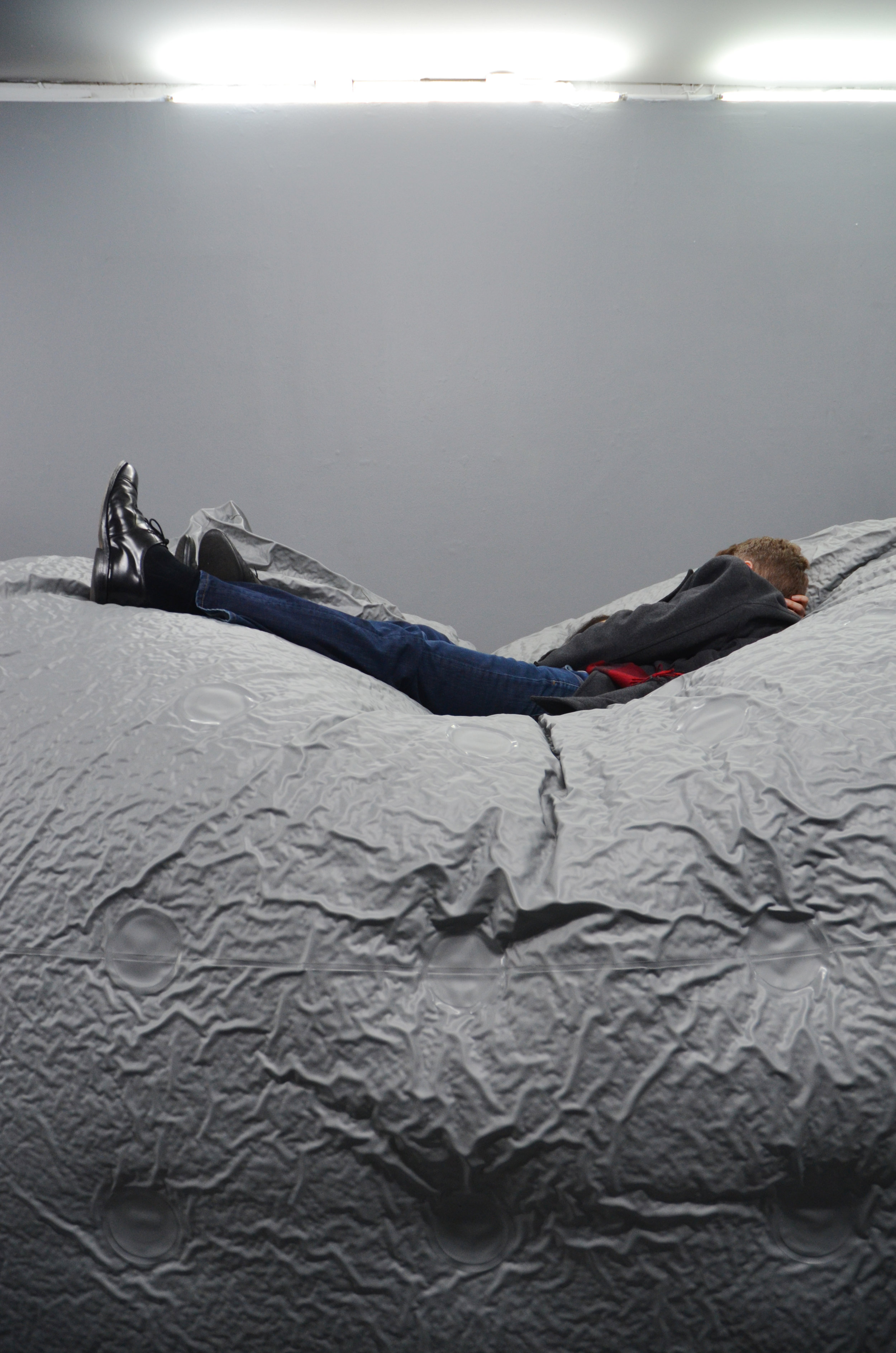
Pneumatic futures
With this project, McRae and Tibbits, along with MIT’s Self-Assembly Lab, explore pneumatic architectural skins and their potential applications to the future of health, fitness, fashion, furniture, and zero gravity. JB1.0 is both an installation and performance piece, investigating how material transformation and self-reconfiguring membranes affect the feeling, behavior, and physiology of the body.
Project Credits & Information
- Project type
- Exhibition
- Partner
- Storefront for Art & Architecture, MIT Self-Assembly Lab
- Agency
- —
- Role
- Program Director, Production
- Credits
- Lucy McRae × Skylar Tibbits with MIT Self-Assembly Lab
- Date
- October 16–December 19, 2015