What can we learn from new models of sharing?
Sharing Models: Manhattanisms
We are experiencing the emergence of a culture marked by a return to, redefinition, and expansion of the notion of the commons. The increasing complexity and interconnectedness of globalization reorients us away from trends that emphasized individuation and singular development, and toward new forms of collectivity.
Over the last decade, emerging technologies and economies have affected how we work and travel, and how we think about shelter and social engagement. How will the sharing movement of today affect the way we inhabit and build the cities of tomorrow?
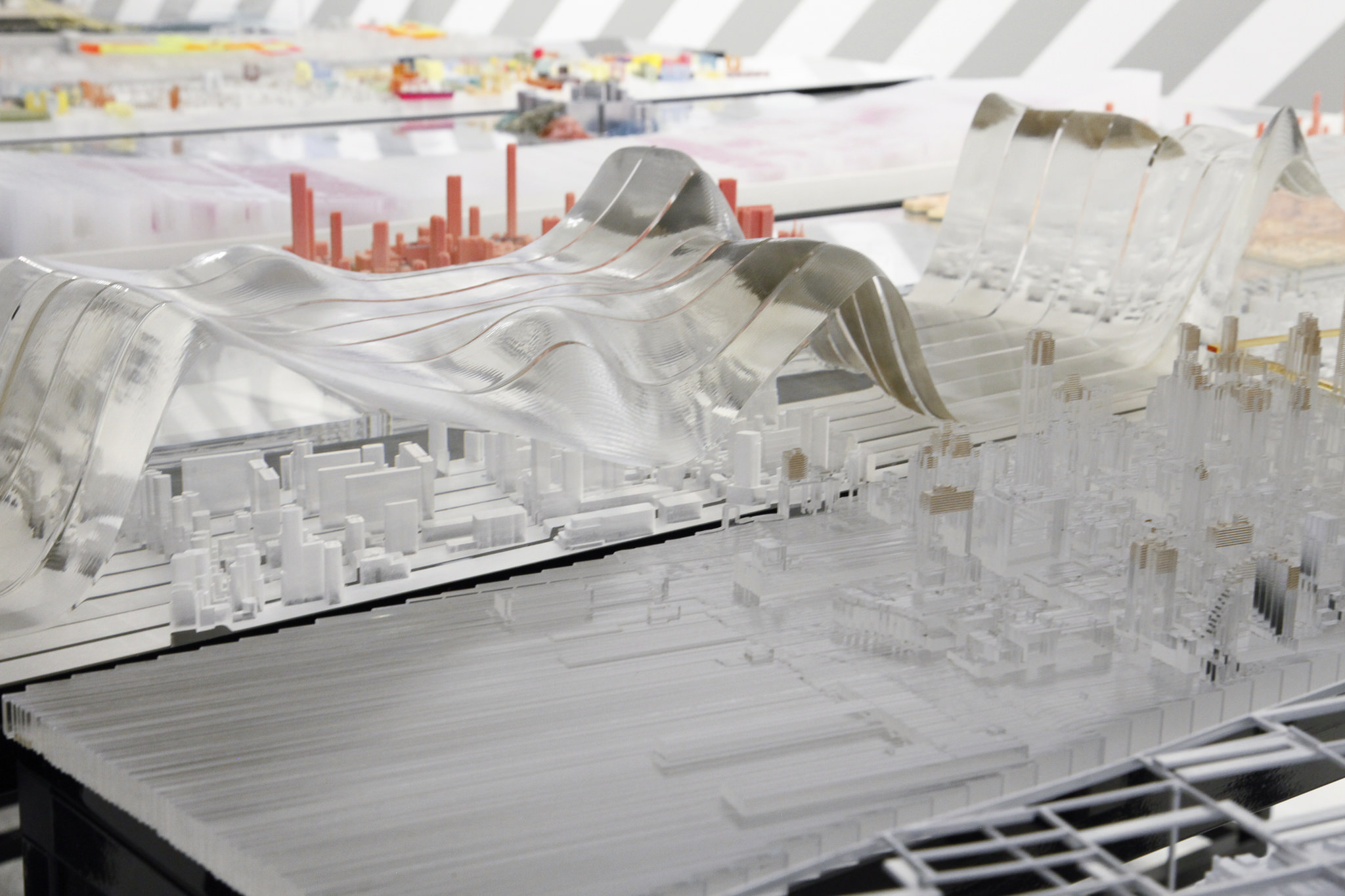
A laboratory for urban sharing
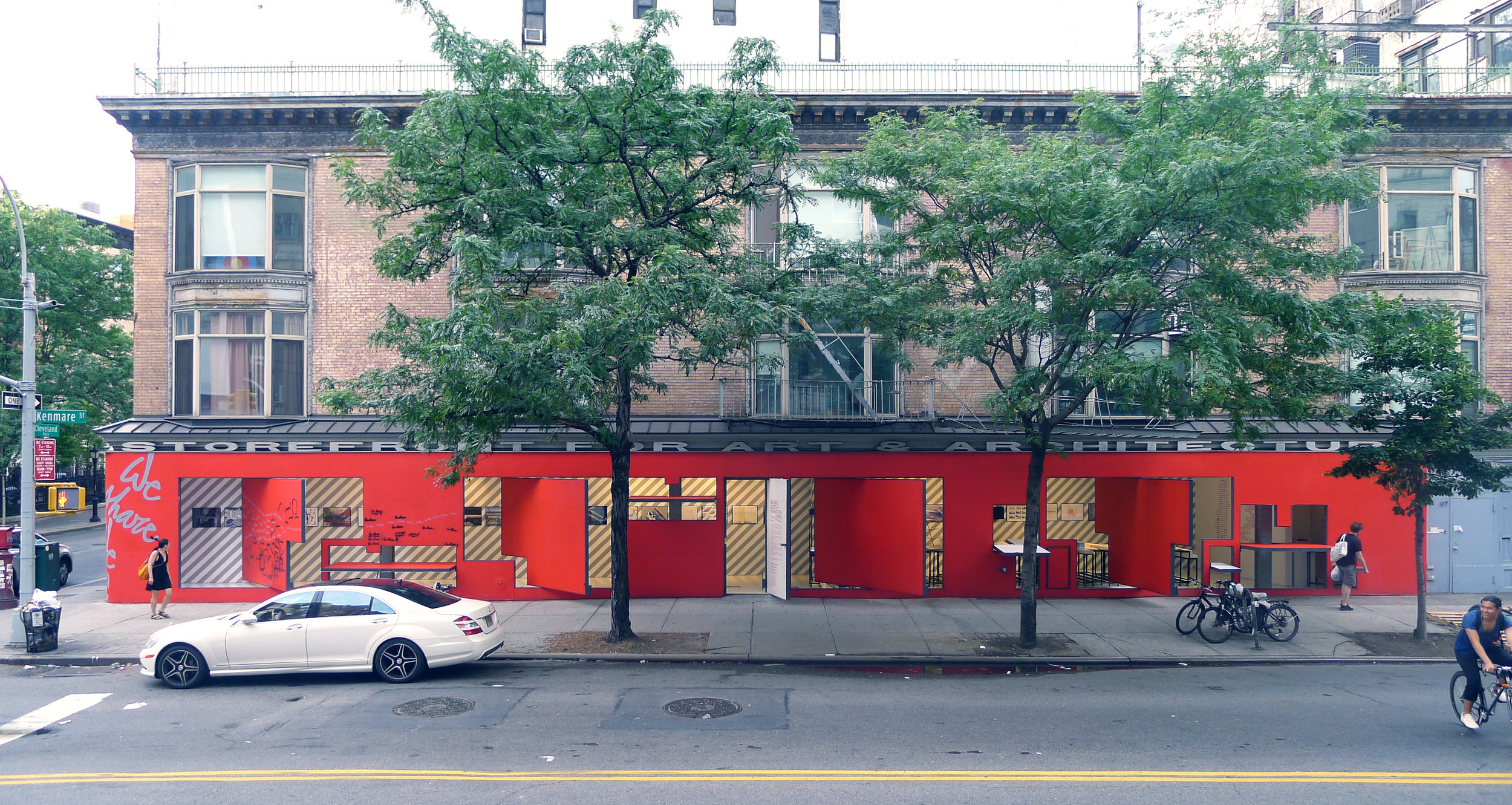
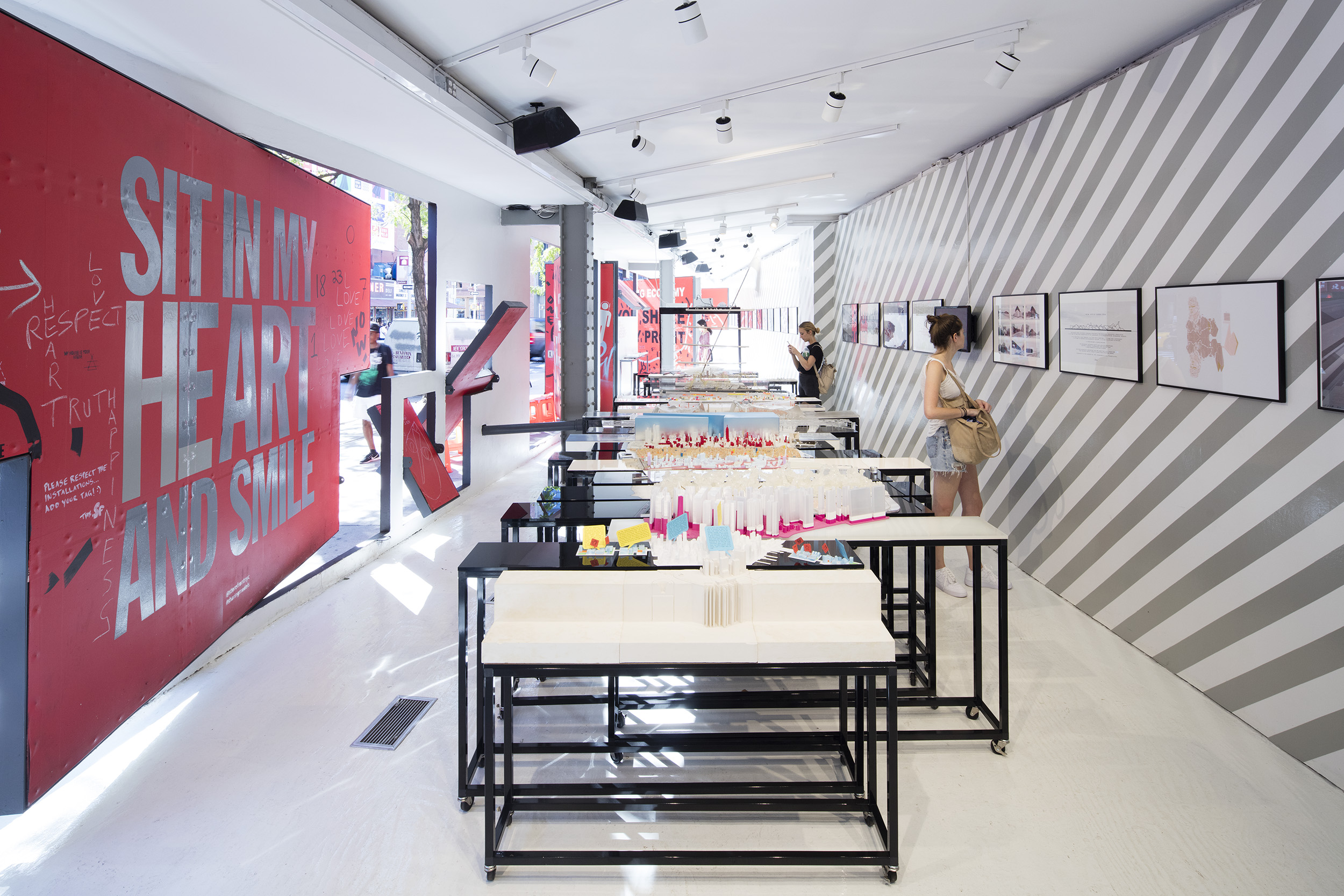
Manhattan, one of the most dense and iconic places in the world, has been a laboratory for many visions of urbanism. Sharing Models: Manhattanisms invited 30 international architects to produce models of their own visions for the city’s future.
The models, each a section of Manhattan, established analytical, conceptual, and physical frameworks for inhabiting urban space and the public sphere. Together they presented a composite figure—a territory that is simultaneously fictional and real—opening a window to new perceptions of the city’s shared assets.
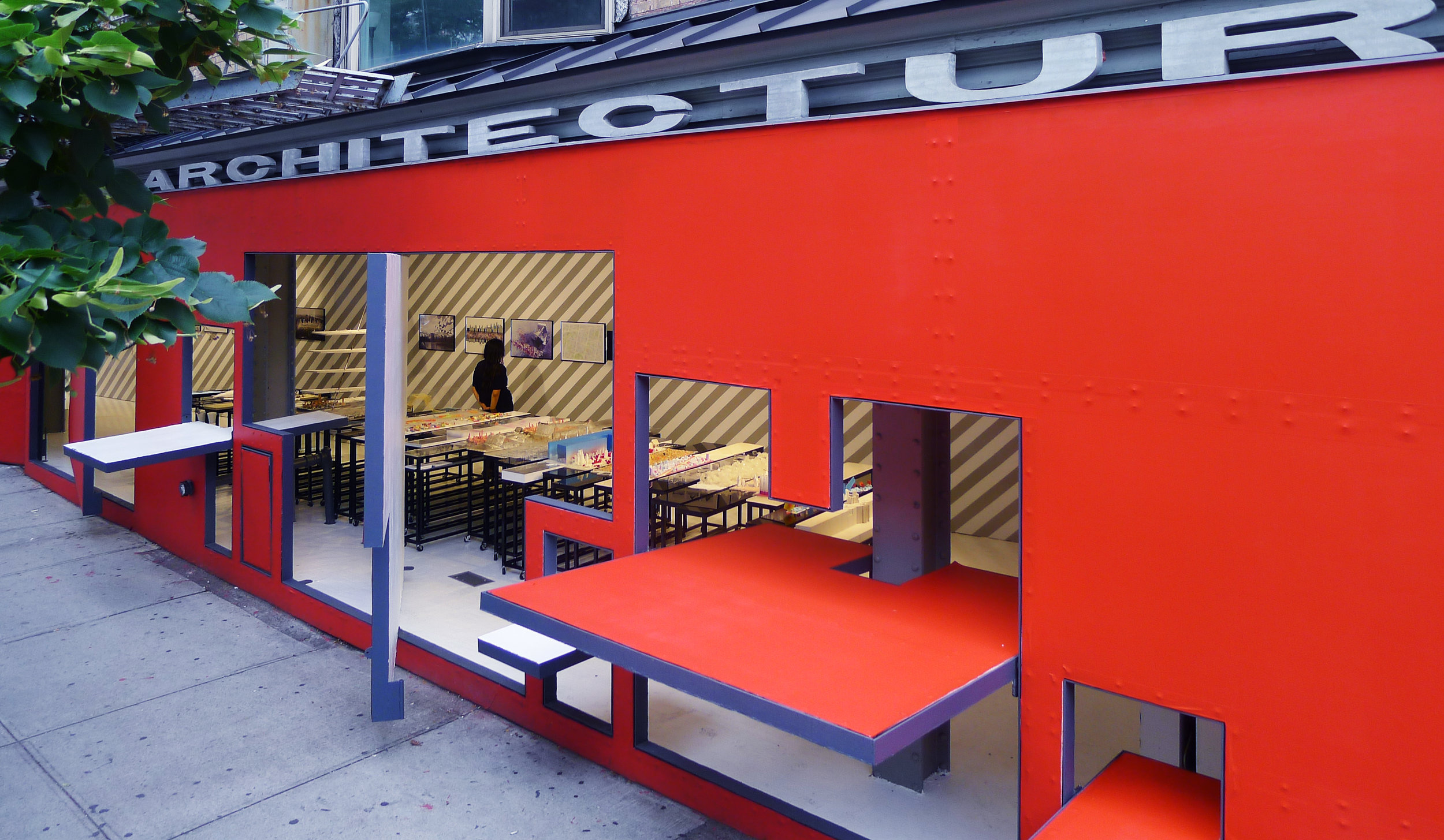
Thirty visions
Participating architects included SO – IL, Tatiana Bilbao Estudio, TEN Arquitectos, nARCHITECTS, Asymptote Architecture, Leong Leong, Höweler + Yoon, SITU Studio, MAIO, and many others—each contributing a sectional model that reads Manhattan as a shared field of speculation rather than a fixed plan.
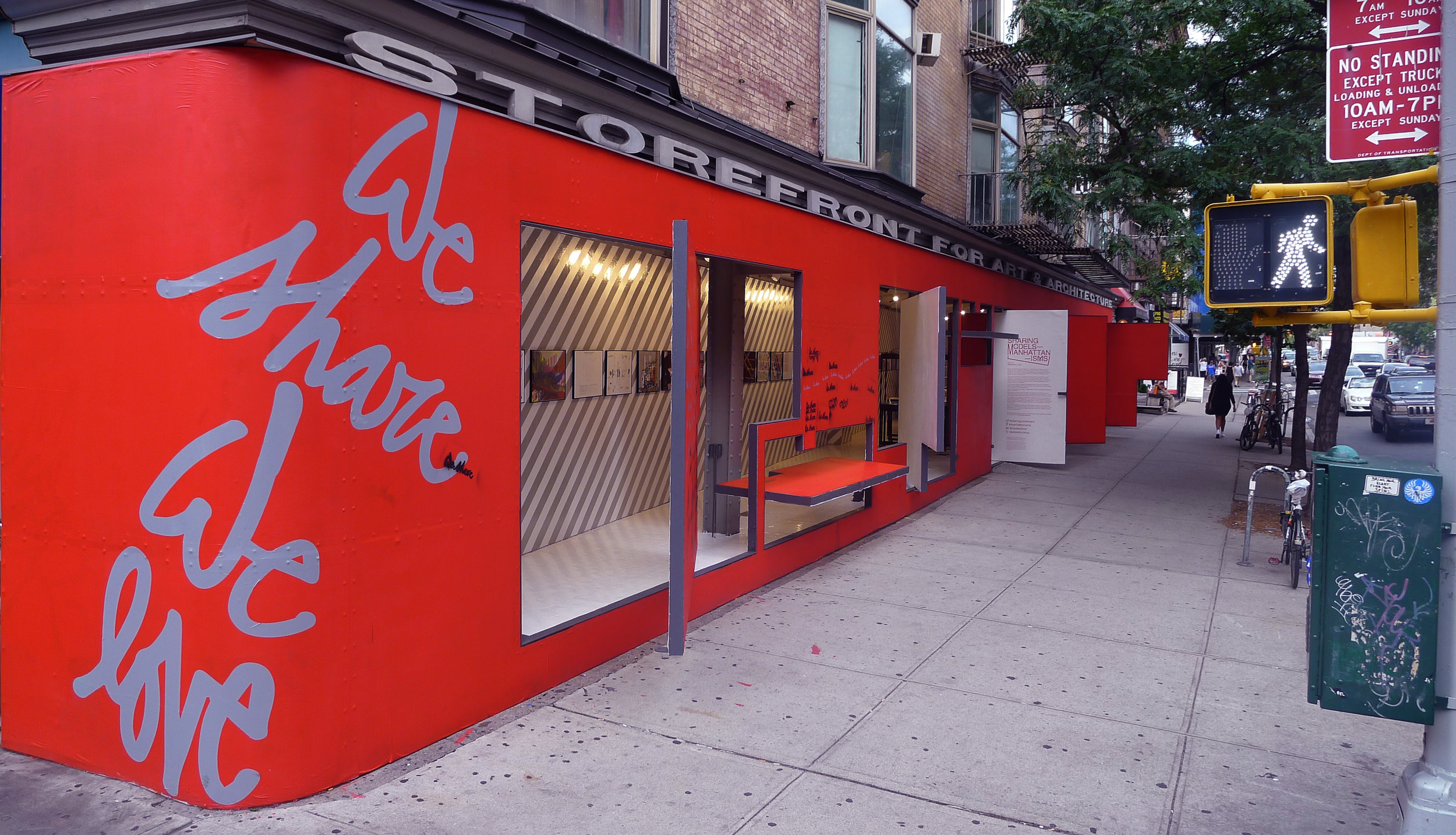
Research support for the exhibition was provided by Juan Francisco Saldarriaga and the Center for Spatial Research at Columbia University. Specific model support: Acción Cultural Española (AC/E) and Hotel Americano. Stencil cuts: SOFTlab.

Project Credits & Information
- Project type
- Exhibition
- Partner
- Storefront for Art & Architecture
- Agency
- —
- Role
- Program Director, Production
- Credits
- Organized by the Storefront Team. Curated by Eva Franch i Gilabert. Production by Maximilian Lauter and the Storefront team. Research support: Juan Francisco Saldarriaga and the Center for Spatial Research at Columbia University. Installation photography: Naho Kubota. Stencil cuts: SOFTlab.
- Website
- Storefront — Sharing Models
- Date
- July 15–September 2, 2016