Who is in control in a smart city?
Archetypes of a Smart City
Rio de Janeiro is one of the most visible sites of “smart city” experimentation. Following catastrophic natural disasters, calamitous traffic congestion, and urban health epidemics, the city launched the Centro de Operações Rio (COR) in 2010 — a command and control hub built to monitor urban camera and sensor networks, gauge traffic patterns, predict landslide risk, and map disease paths around the clock. COR operates through a syntax of “if-then” protocols that become surprisingly charged when they meet the political life of the city: a burning bus is a traffic problem until it is a crisis; a demonstration is an event until it is an emergency. Control Syntax Rio asks who controls this calculus — and who is controlled by it.
Systems of Control Made Visible
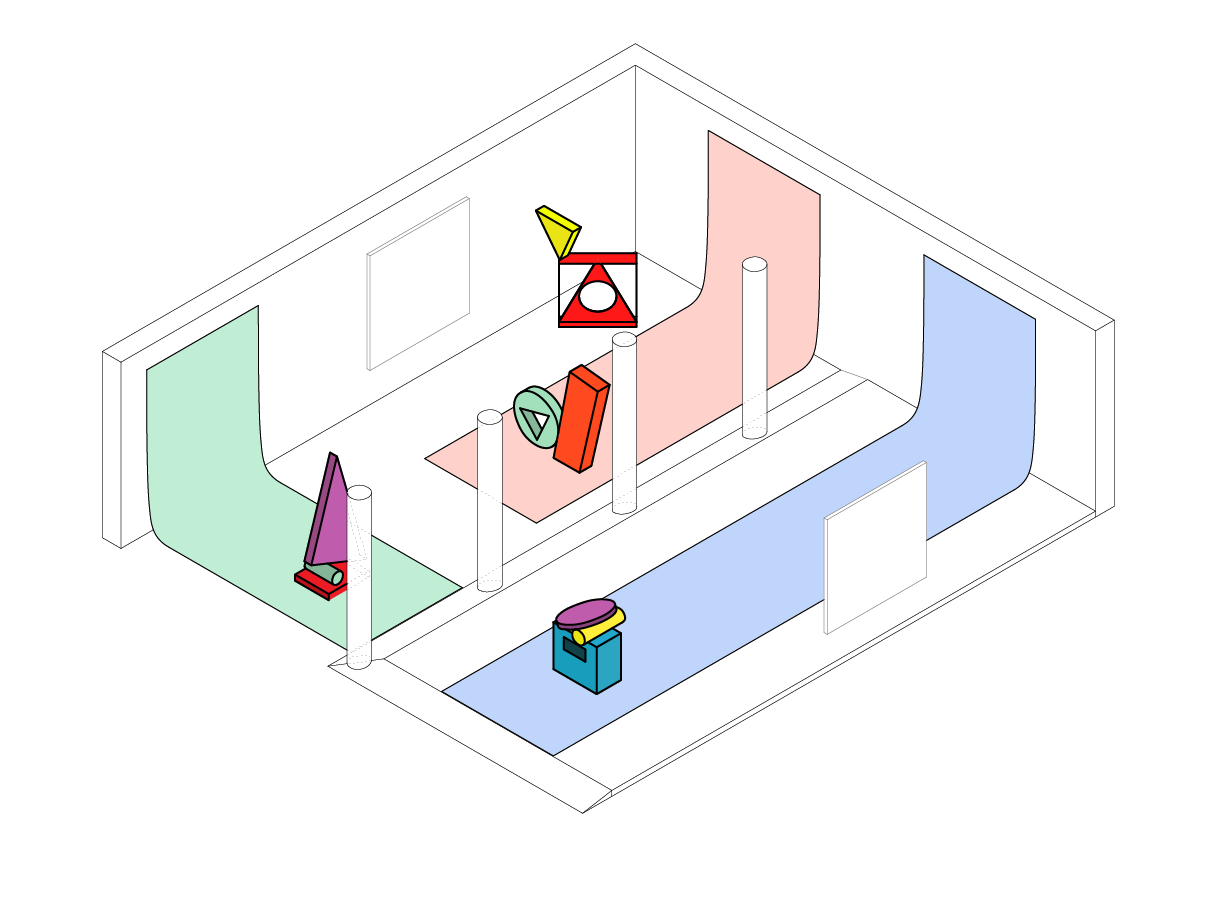
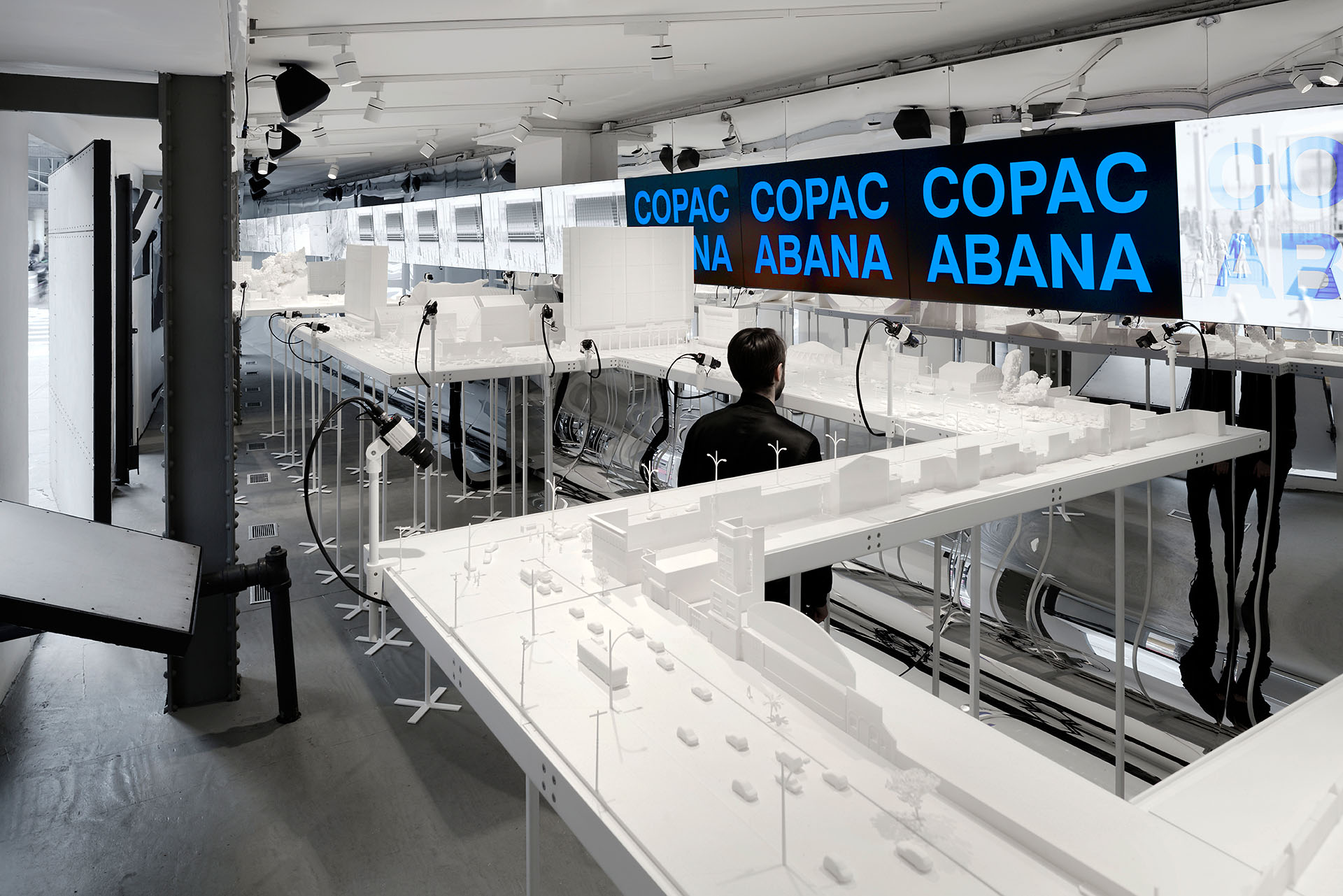
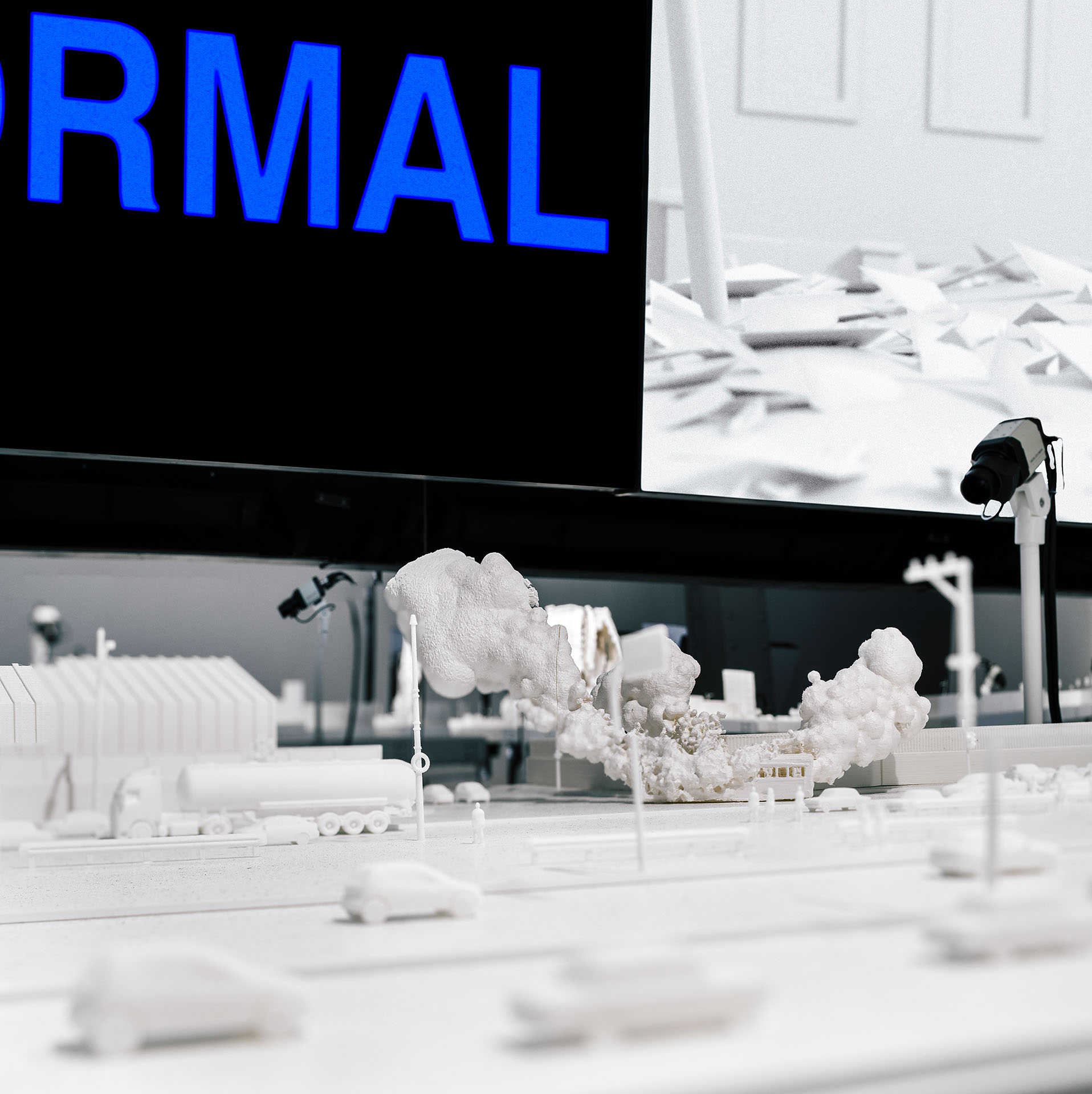
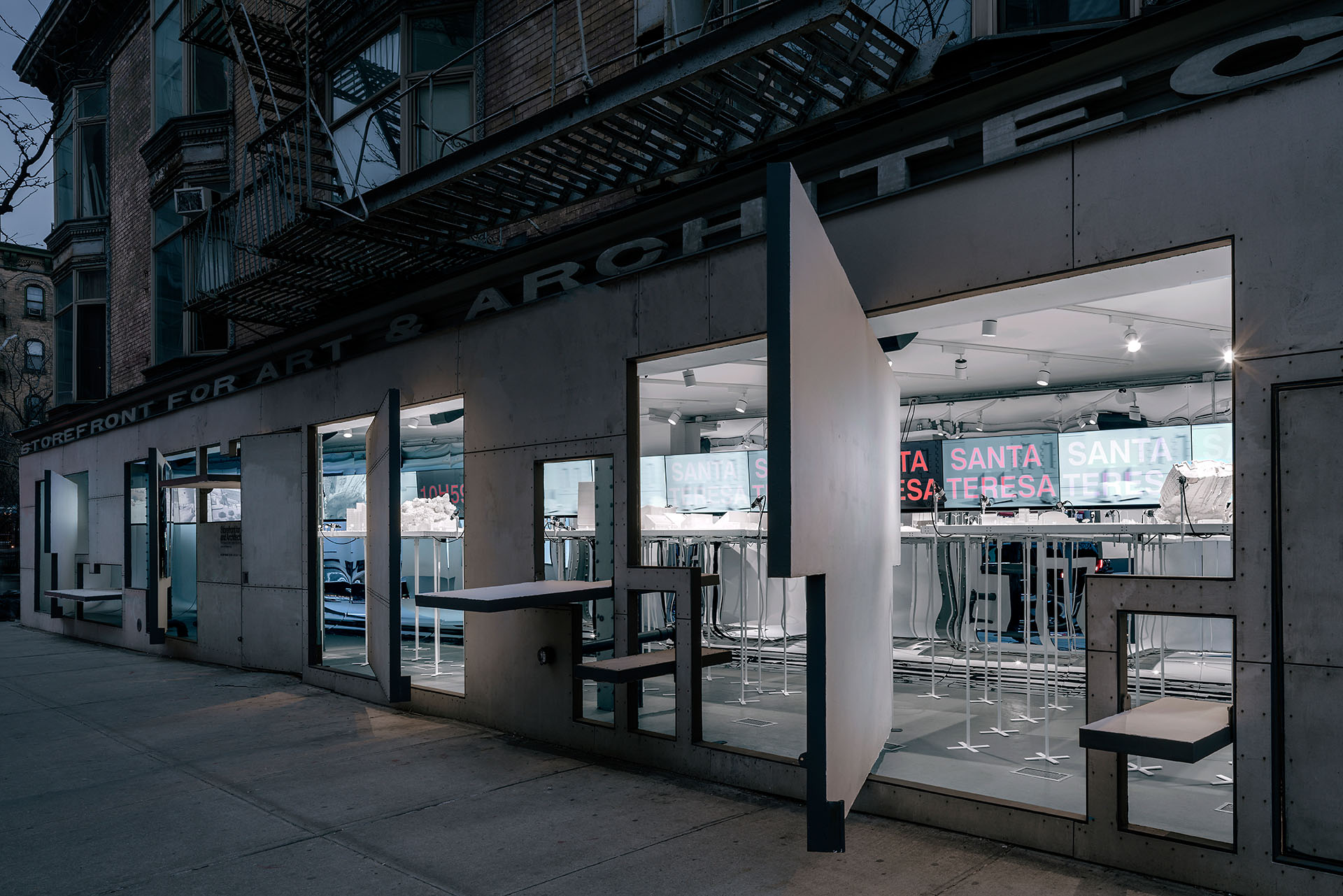
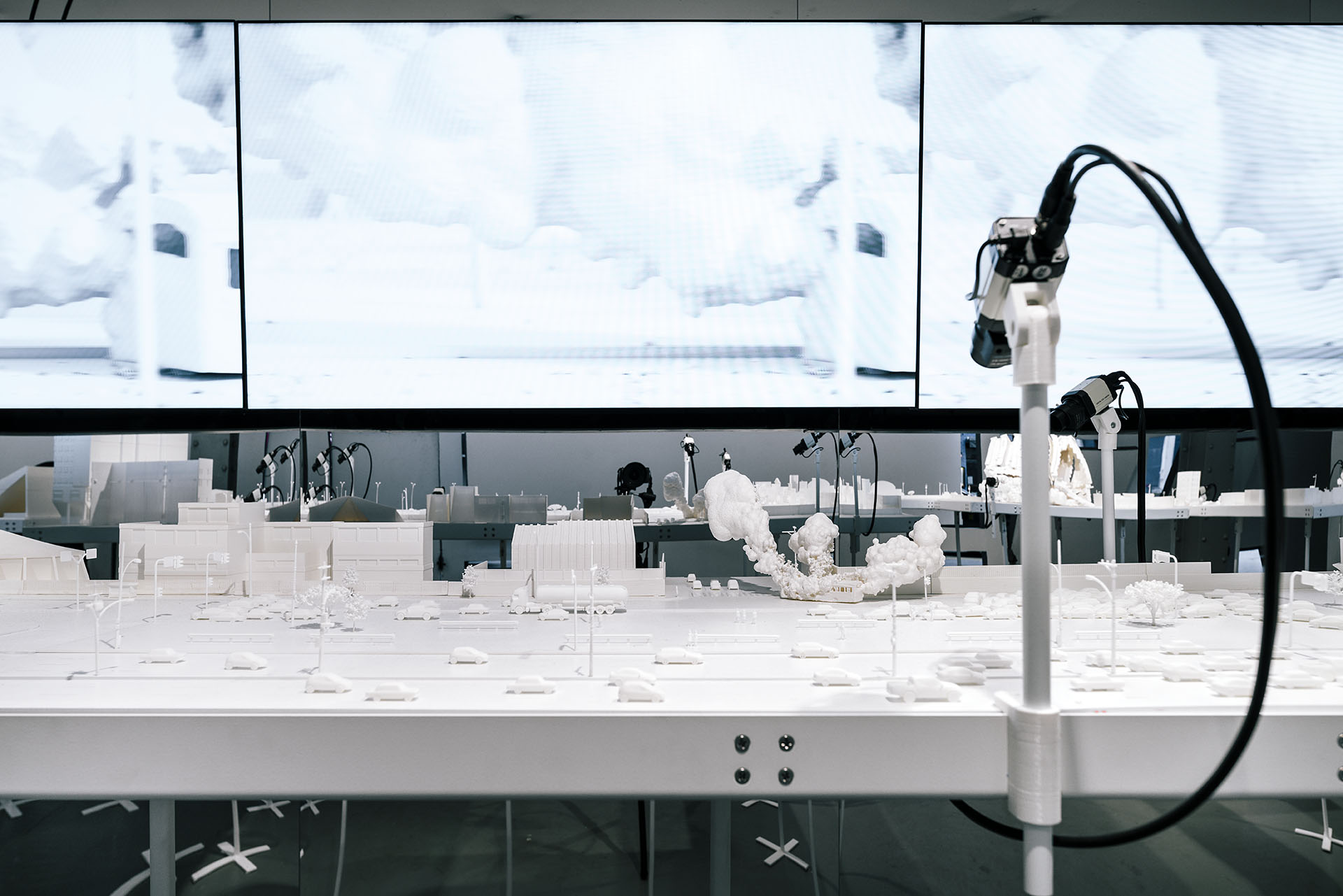
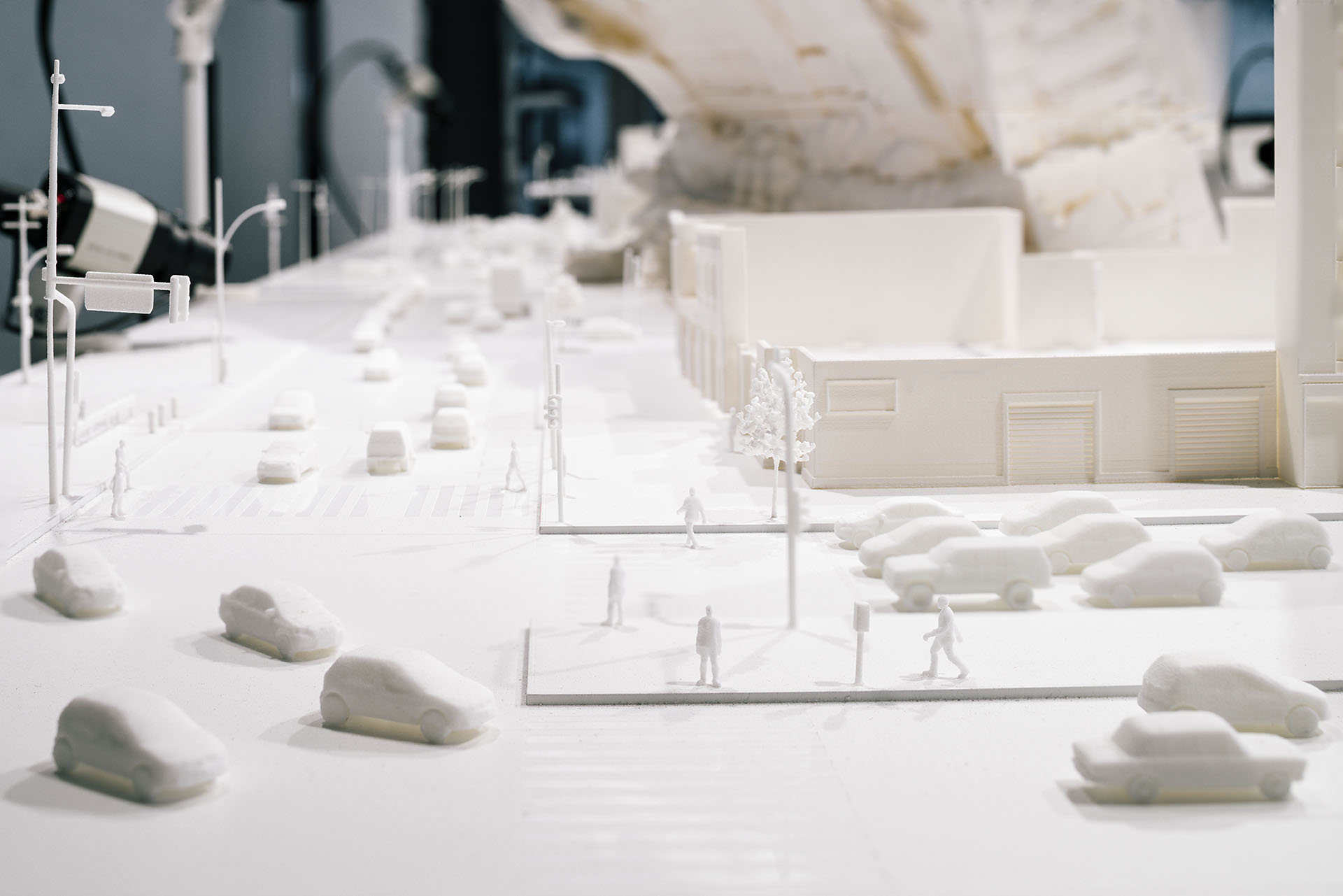
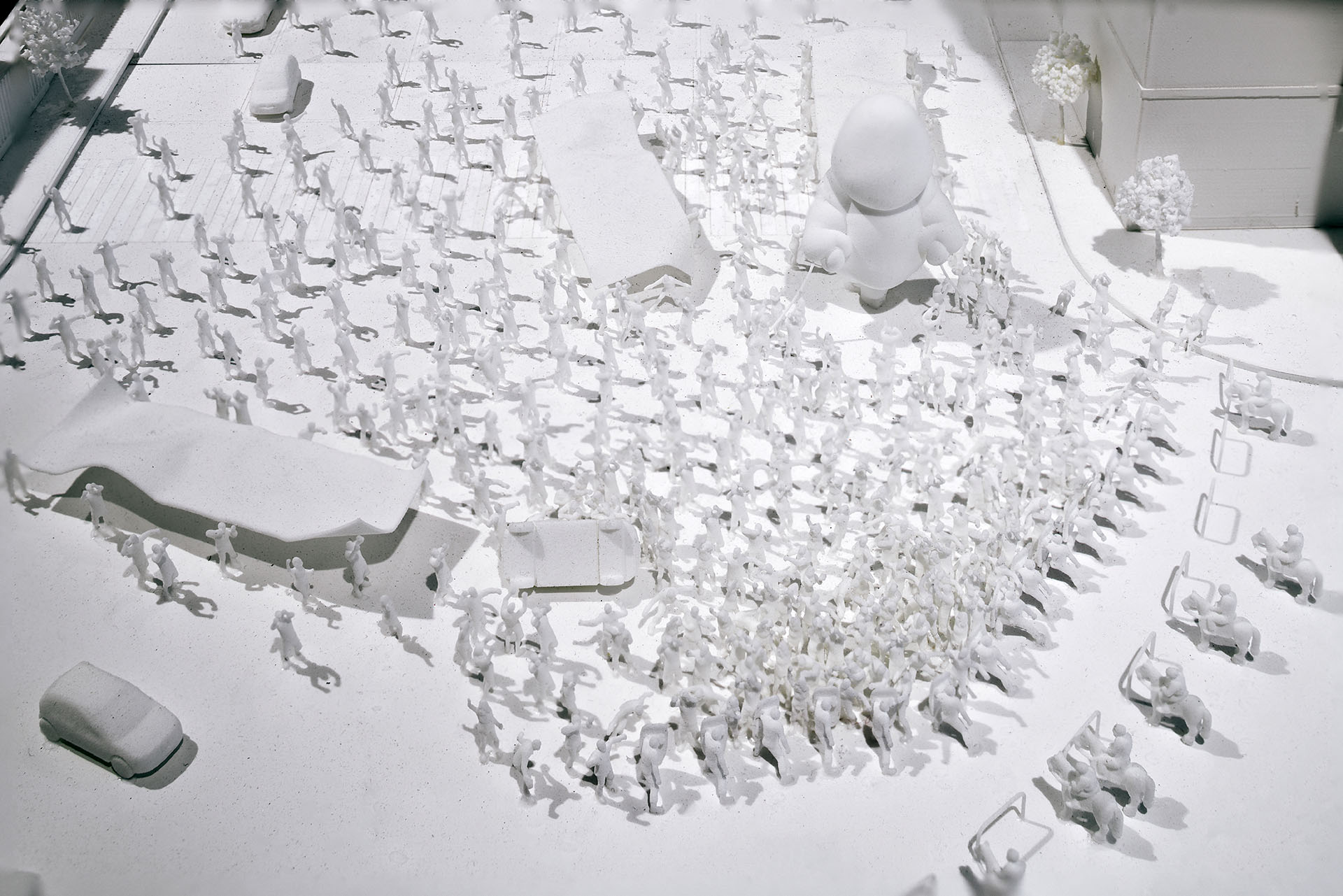
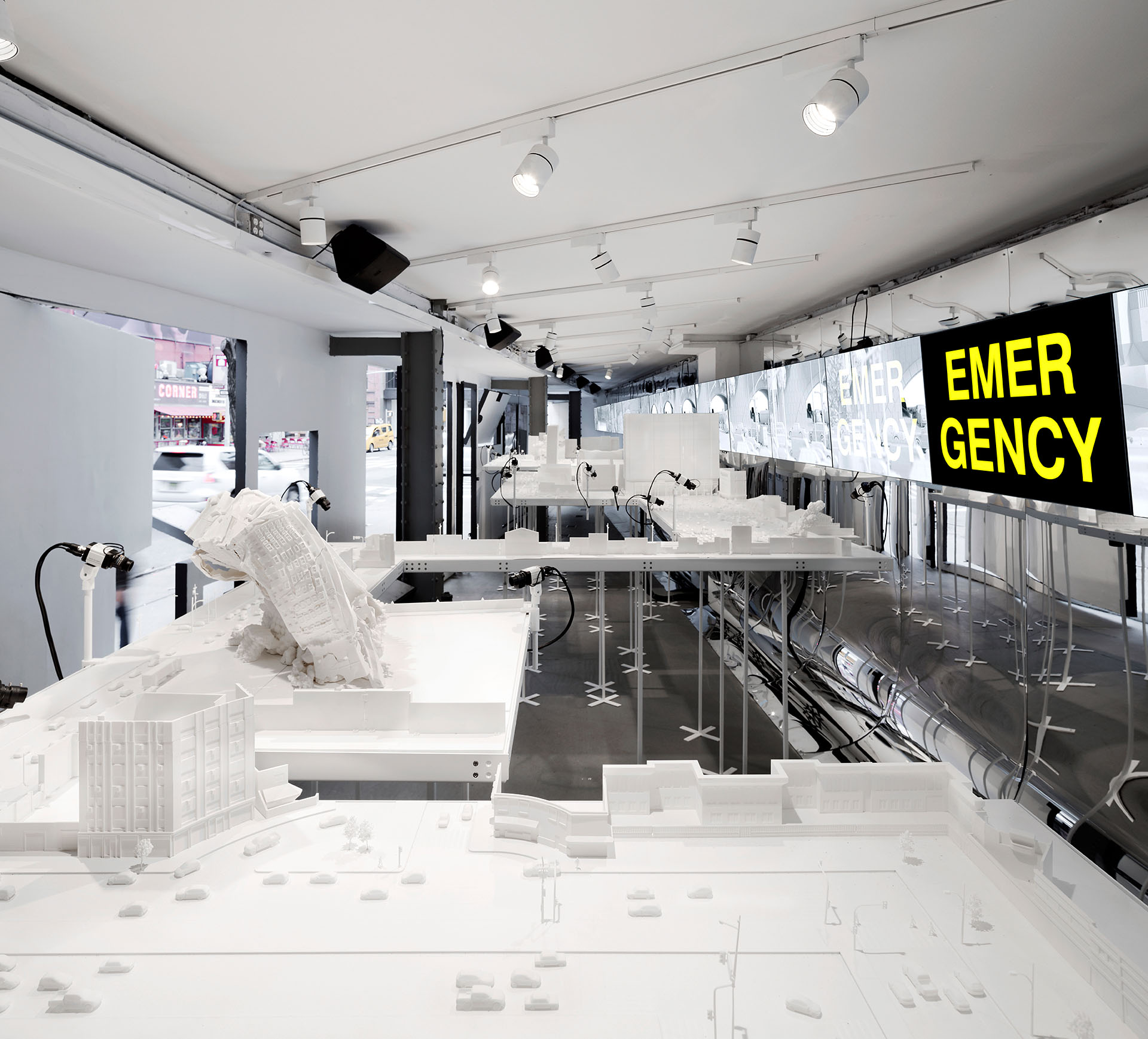
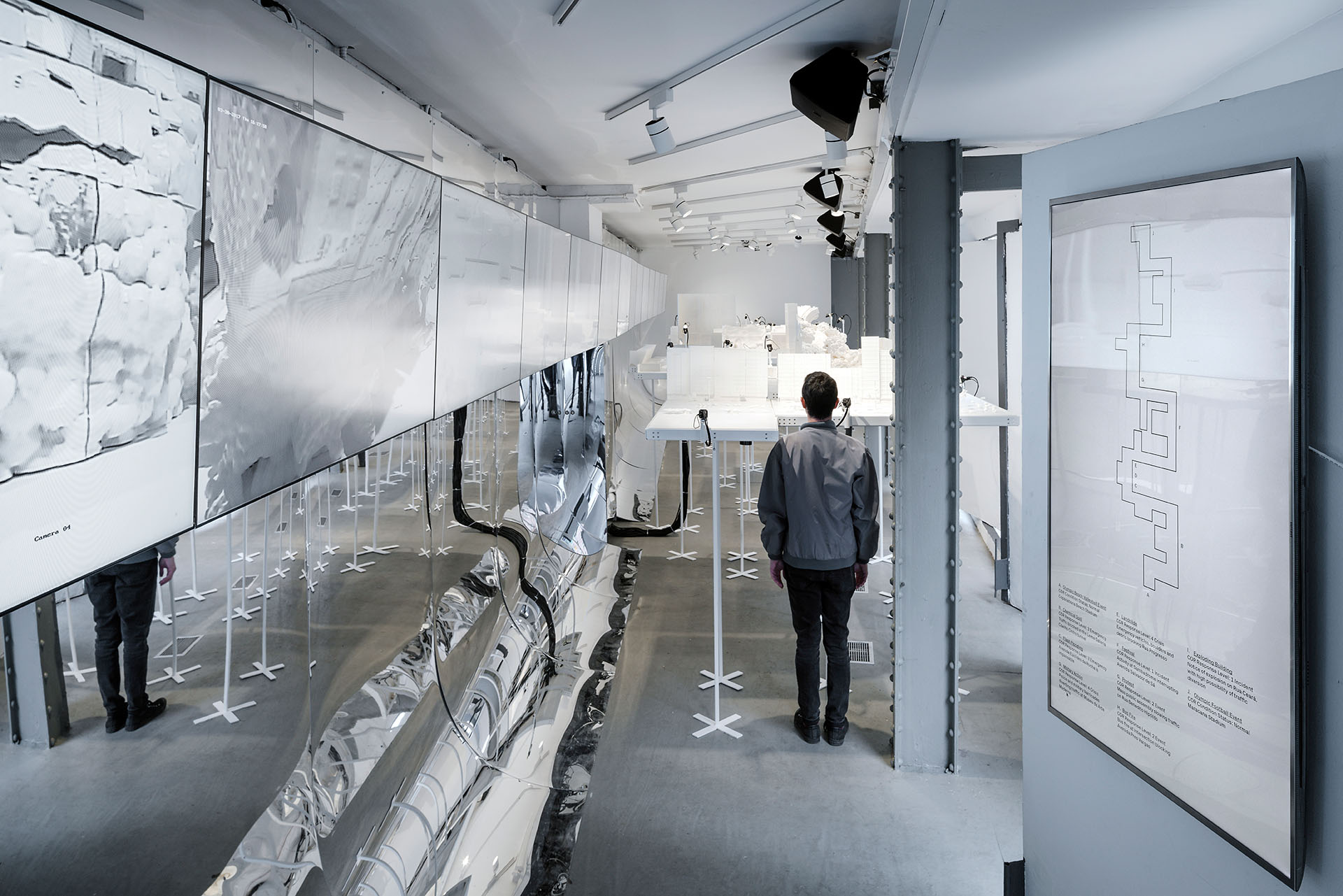
The exhibition is itself a site of surveillance, placing visitors inside COR’s observational logic. A massive 3D-printed streetscape spans over 100 feet, acting as both architectural model and as film set. It depicts a single route through Rio frozen at five distinct incidents that COR is built to assess: a landslide, a demonstration, a burning bus blocking the road, a chemical leak, a street festival. Each is color-coded to COR’s live escalation system — green, blue, orange, red — tracing the gradation from managed event to full crisis. Twelve live cameras mounted throughout the model feed real-time video to more than twenty screens distributed across the room. A super wide control room style video display features an animated film made for the exhibition. Tracing the path of unfolding events across the city as narrated by an imagined COR operator. A spatial audio soundtrack vibrates the structure from beneath, scoring the tumultuous events.
My Role
As Programs Director and Gallery Manager at Storefront, I managed exhibition production and public programs for the project. In addition to overseeing installation from build-out through opening and events, I led technical direction to implement the video distribution system and build the multichannel audio infrastructure. I also produced the sound design for the film.
Original Spatial Sound Design & Installation
To integrate the film with the installation, I composed original spatial sound design for the exhibition and installed an 8-channel playback system positioned beneath and around the architectural model. The sound operated between ambience and physical presence — speakers embedded in the structure made the model city shake to call attention to each site of disturbance.
Presentation & Recognition
Exhibited in 2016 at Het Nieuwe Instituut (Rotterdam, Netherlands) and in 2017 at Storefront for Art and Architecture (New York, USA). The project was recognized by The Architect’s Newspaper, METALOCUS, and others, spurring support for a third iteration of the project in Songdo, Korea.
Partnerships
Control Syntax Rio was presented as part of City Forces, a year-long joint cultural crossover program between Storefront for Art and Architecture and Het Nieuwe Instituut, supported by the Dutch Culture USA program of the Consulate General of the Netherlands in New York. The program seeks to examine the relationships of power between those involved in the construction of the contemporary city through a series of events, exhibitions, and projects to be developed in New York, Rotterdam, and other cities around the world.
Special exhibition support for Control Syntax Rio is generously provided by Samsung and FoyerLive.
Project Credits & Information
- Project type
- Exhibition
- Partner
- Storefront for Art & Architecture, Het Nieuwe Instituut
- Agency
- —
- Role
- Program Direction, Exhibition Production, Technical Direction, Sound Design
- Credits
- Organized by the Storefront Team and Het Nieuwe Instituut, Rotterdam. Production: Maximilian Lauter. Curators: Farzin Lotfi-Jam, Mark Wasiuta. Exhibition Design: Sharif Anous, Farzin Lotfi-Jam, Mark Wasiuta. Graphic Design: MTWTF. Spatial Sound Design & Installation: Maximilian Lauter & Michael Christopher (Sonic Platforms). Installation photography: Miguel de Guzman.
- Website
- Storefront — Control Syntax Rio
- Date
- 2016 – 2017 (multiple phases)