What latent potential is embedded in our perception of sound?
Research in Sound and Architecture
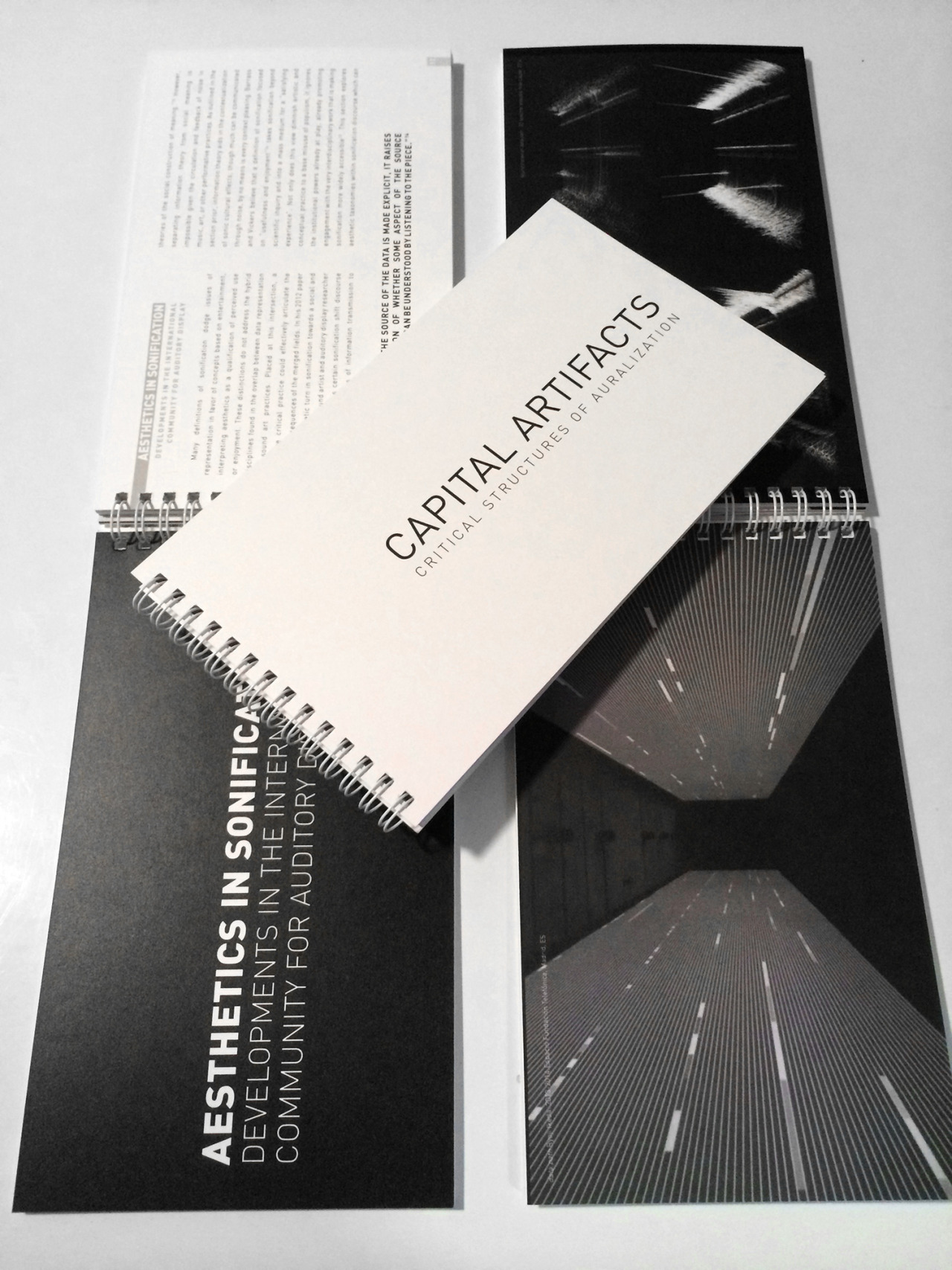
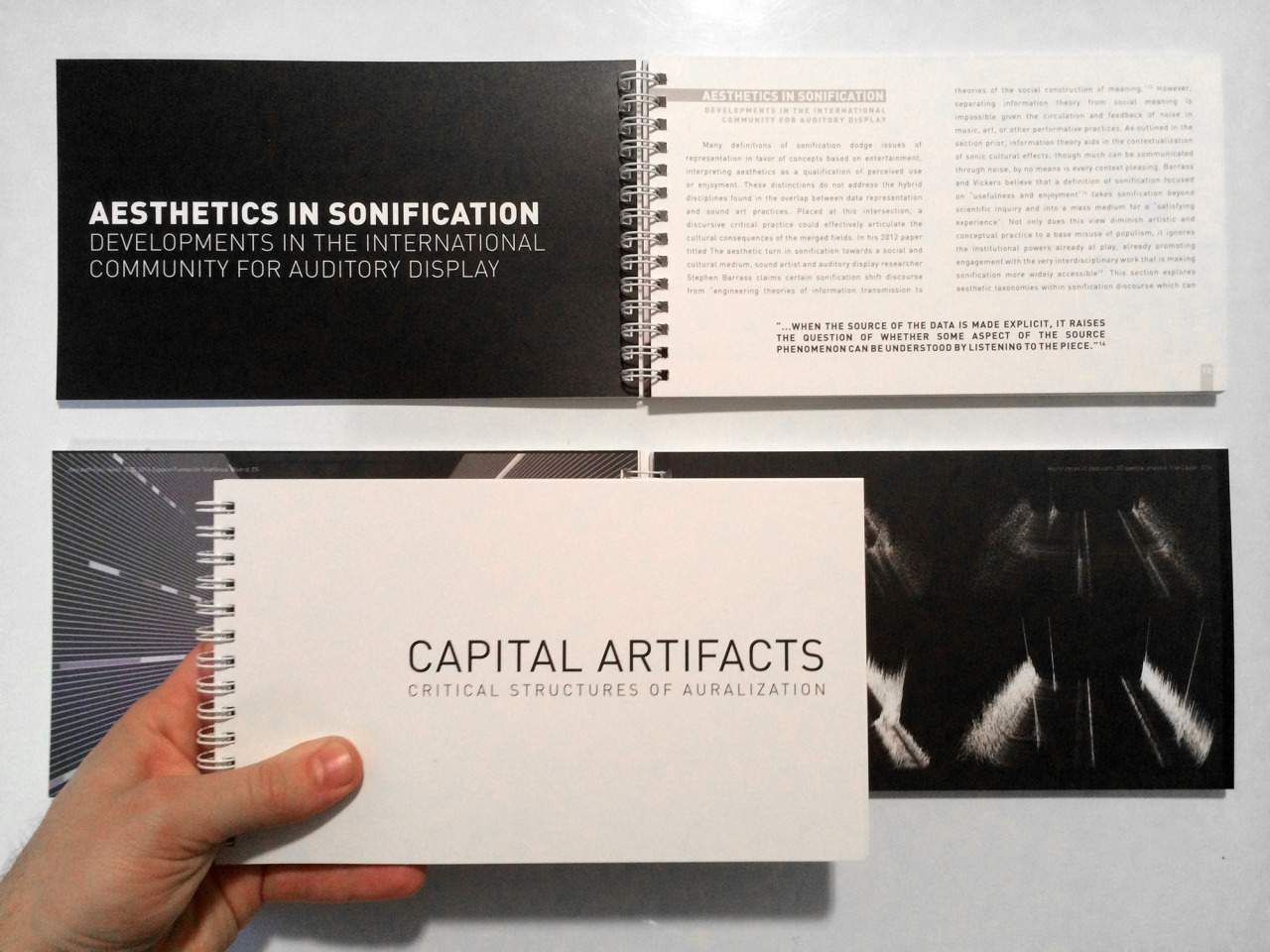
Presented to the faculty of Columbia GSAPP’s Graduate School of Architecture, Planning, and Preservation, this M.S. thesis in Critical, Curatorial, and Conceptual Practices in Architecture traces a critical archeology of transmission, sonification, and audiovisual art—a historical framework for expanding both design and curatorial practice.
Capital Artifacts examines how auditory display operates in museums and public space, asking what cross-disciplinary influence auralization holds relative to perceptual capital, cultural politics, and the interfaces that mediate sonic experience.
Critical structures
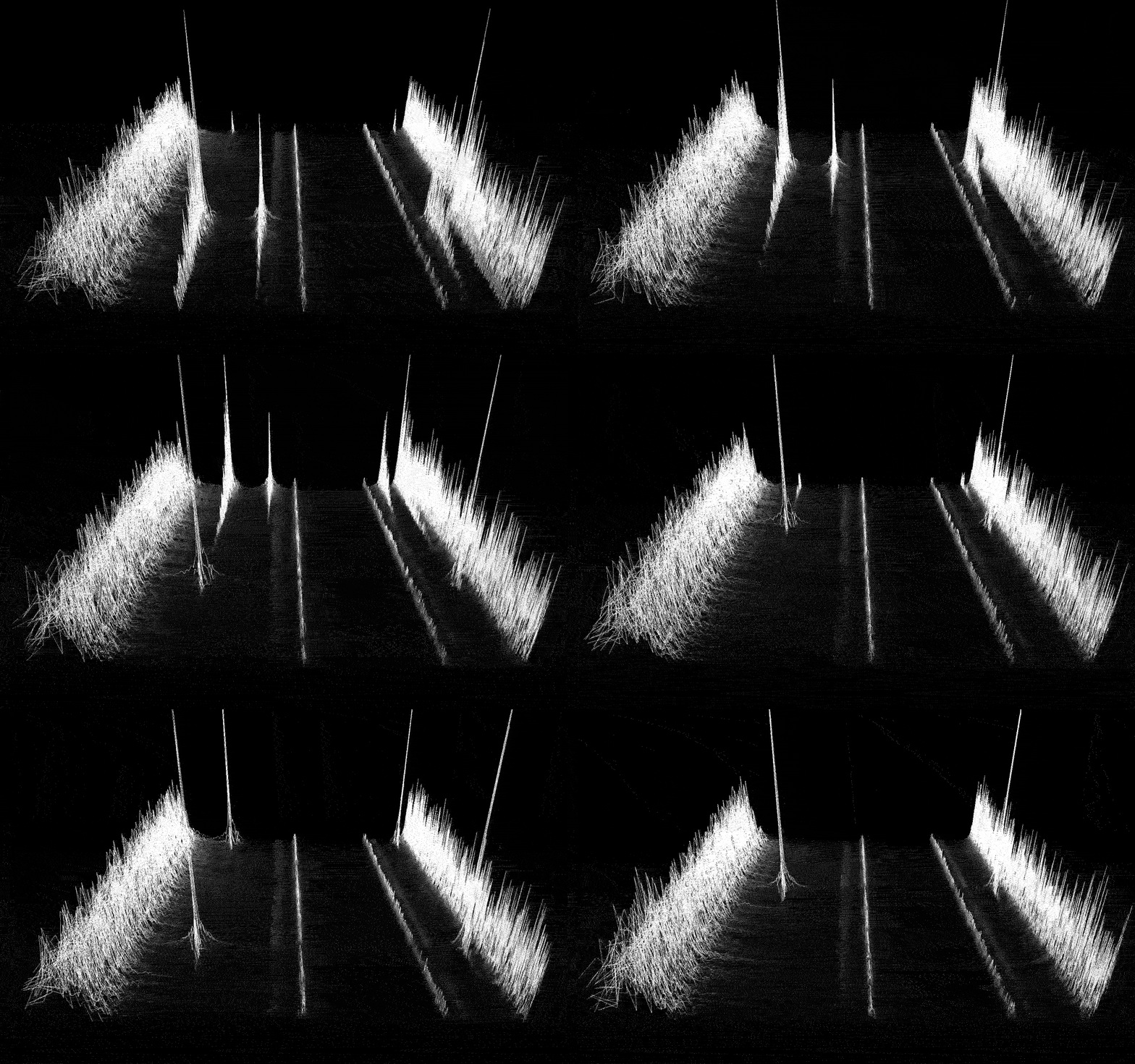
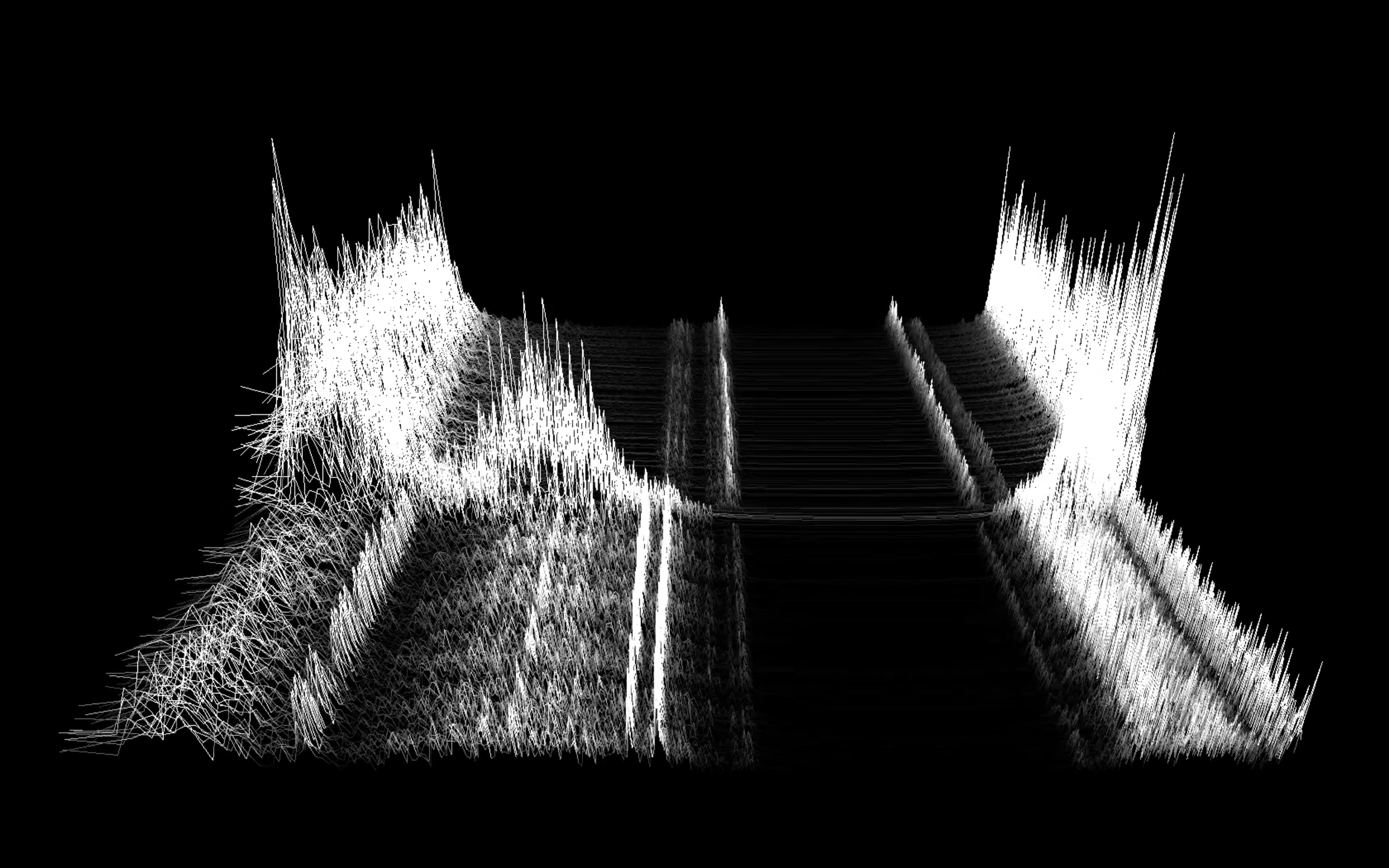
Auralization—the imagining of an aural event—is distinct from sonification, which maps data to audible signifiers. Psychoacoustic structures inform our sonic imaginary; at the intersection of computer music and information display, new notions of transmission, translation, and fidelity emerge.
Operating on the thresholds of perception and calculation, these intermodal strategies are contextualized by glitch: an error that may stem from systematic breakdown or from the limits of sensory detection itself. By making noise legible, the thesis constructs an aural ecology for expanding semantic and aesthetic discourse within the International Community for Auditory Display.
Productive Noise and the City
Ryoji Ikeda’s hyperminimalist work anchors the thesis: art practices that disseminate glitch through audiovisual display, building immersive environments of auditory display in museums and on the urban stage.
Noise becomes materia prima—inscribed with entropy, carrying masked meaning. Glitch artifacts mark where we perceive difference; auralization intersects perceptual capital and cultural capital across institutional and public interfaces. A lossless experience is impossible—every system is filtered, lossy, and politically mediated. Steganography, encryption, and interference are not only failures but sources of production, shaping how scientific and artistic practice might decode the future city.
Project Credits & Information
- Project type
- Research
- Partner
- Columbia University
- Agency
- —
- Role
- Researcher
- Credits
- Maximilian Lauter
- Press
- —
- Website
- —
- Date
- —