How do you hand-paint a global emoji language for billions of sends?
Billions of sends
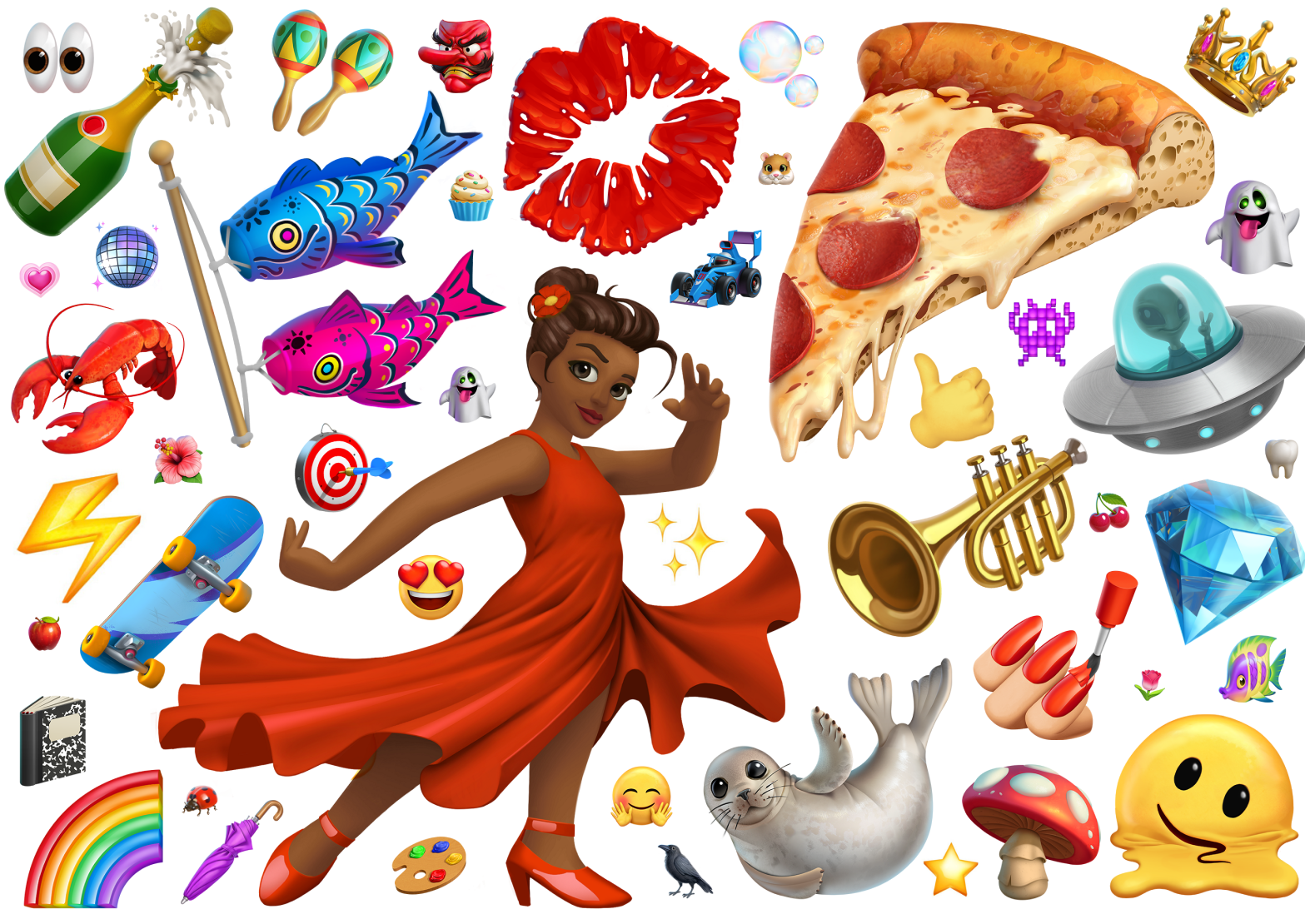
A single emoji can hold a dozen meanings at once, shifting with culture, context, and who’s sending it. They travel across billions of messages a year—which makes the visual choices baked into any emoji library some of the most-read design decisions on earth.
BUCK partnered with Twitter to produce Twemoji: a complete replacement for the platform’s emoji library, animated reactions included.
The Unicode catalog
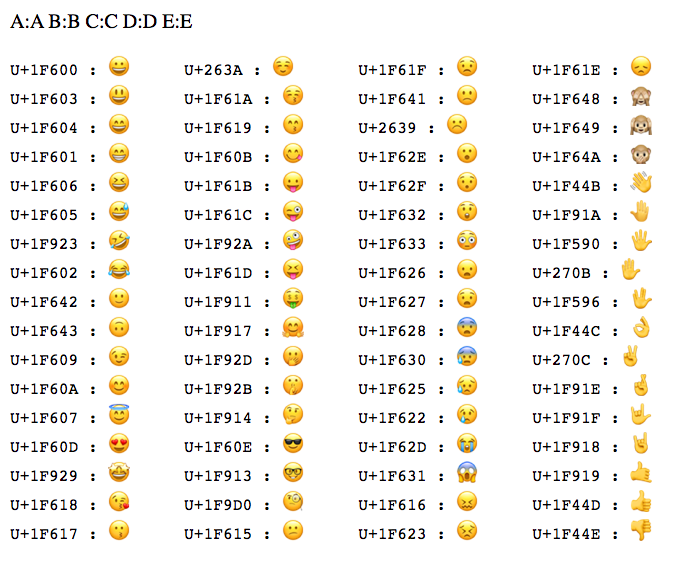
Unicode maintains the international index of emoji: agreed names and sequences so the same character renders consistently across every device and platform. It is a living specification — new entries added each year, with skin-tone modifiers, gender variants, family groupings, and ZWJ combinations pushing the total past 5,000 distinct characters and sequences.
Twemoji had to implement the entire index, stay current as it grew, and make every entry feel like it belonged to the same system—even though faces, objects, animals, symbols, and regional flags share almost nothing formally. The production had to provide the through-line that the specification does not.
Dimensional
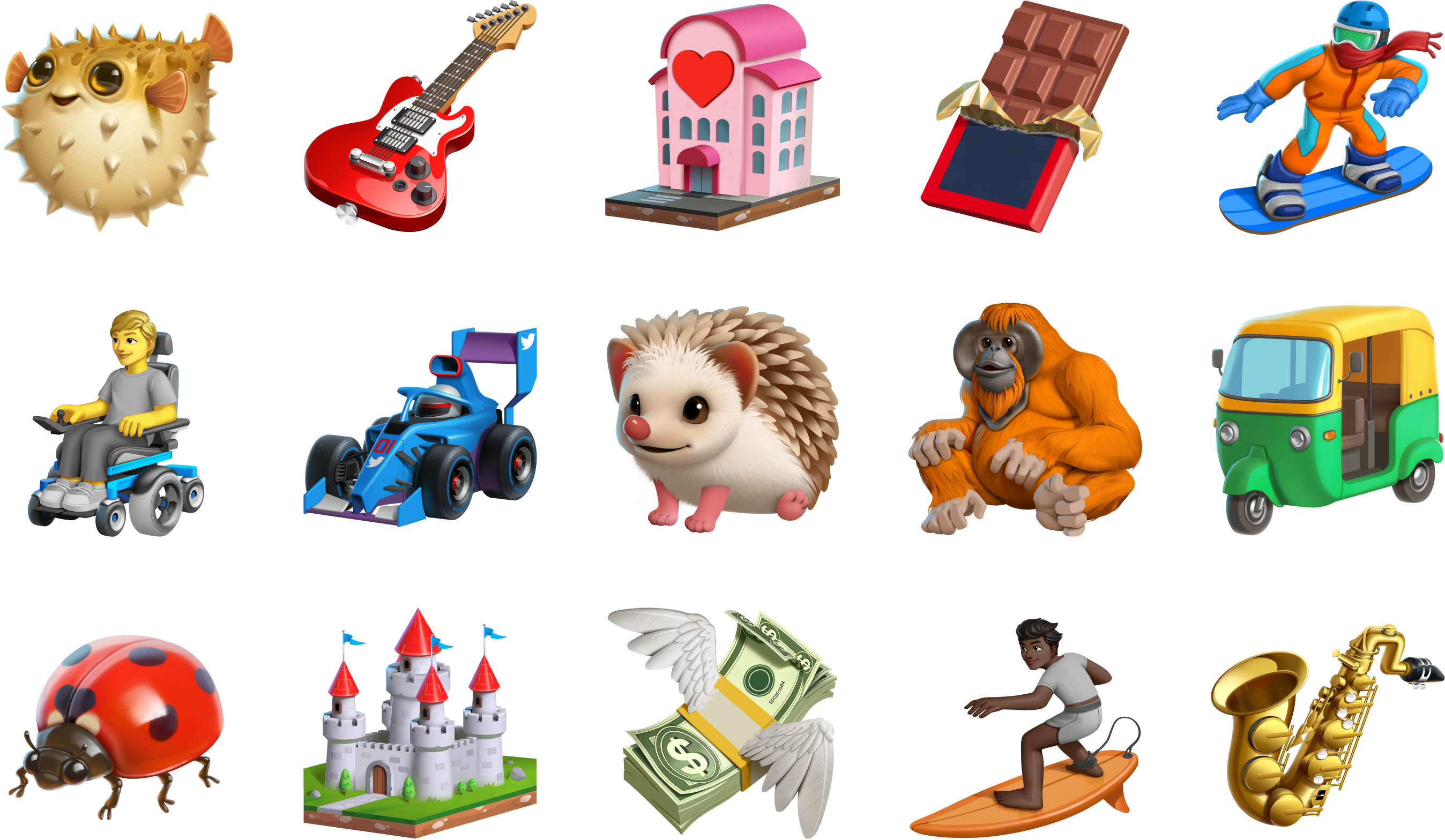
The defining choice is a single three-quarter camera angle—consistent across every character in the set. A perspective decision becomes the grammar: the thing that ties a face to a food item to a flag to a mathematical symbol. Without it, 5,000 individually well-crafted glyphs become a catalog, not a system.
Each glyph was painted by hand.
Expressive and inclusive
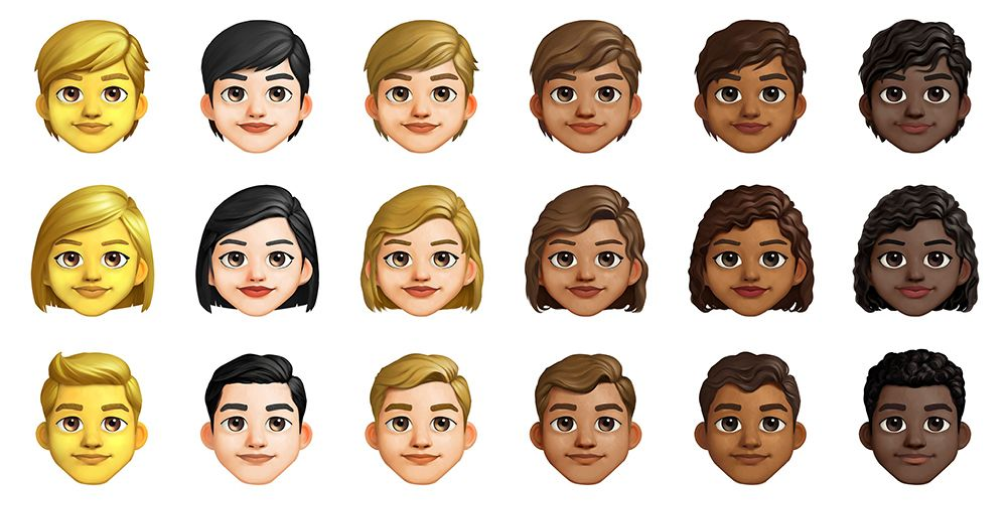
Skin-tone families, identity variants, and regional symbols carry meaning that shifts by culture, generation, and context. A misread gesture or a defaulted skin tone reaches millions of users before anyone can walk it back. Review cycles ran as much on interpretation as on execution—asking what a character communicated, to whom, and where a rendering could fail even when the Unicode specification was technically satisfied.
What we shipped became the visual form people used to recognize themselves and each other online.
Detail at every scale
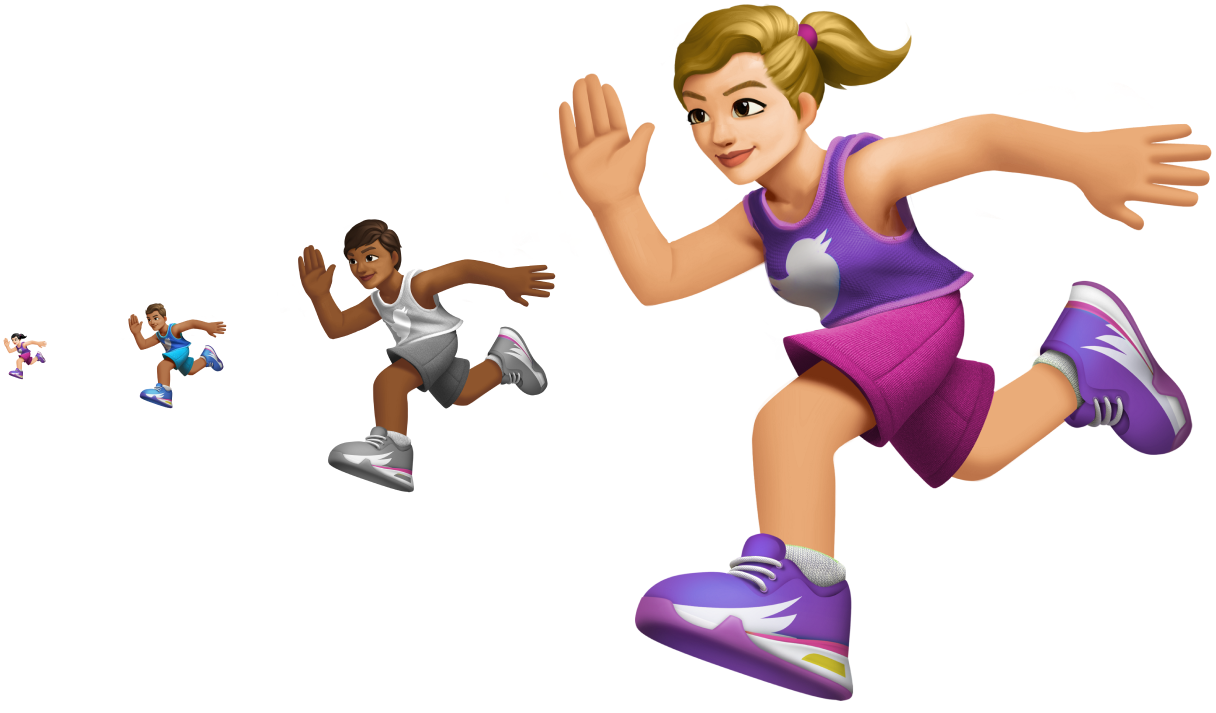
Each glyph had to survive the full range: sixteen pixels in a notification, meters tall in campaign art. Concept designers worked at pixel resolution because compression eats anything soft or ambiguous, and the same asset renders across every output size without modification—every line decision multiplies. That’s the craft pressure underneath the volume.
Animated reactions
The static set was the foundation. Animated tweet reactions extended the system into motion—which meant the dimensional style had to translate to timing and performance without drifting from the hand-painted source.

My role
I produced the Twemoji program at BUCK for just over two years. Twenty-four concept designers worked in parallel across the full catalog and animated reactions; I ran day-to-day production, reviews, and delivery.
Thousands of glyphs, hundreds of revision rounds, multiple export targets, workstreams across time zones. I applied agile production to the team’s workflow—burndown tracking for the artist pool, sprint cadences for reviews and delivery, and a living backlog for naming, versioning, and dependencies.
When we wrapped, the team painted me into the set—my own portrait, in the same three-quarter style, made with the same care that went into every character. After two years building a system for other people to express themselves in, getting to live inside it felt right.
Project Credits & Information
- Project type
- Design system
- Partner
- Agency
- BUCK
- Role
- Producer
- Credits
- BUCK — Executive Creative Director Ben Langsfeld; Executive Producer Ryan McGrath; Producer Maximilian Lauter; Producer Alex dos Santos; Creative Director Stevie Watkins; Associate Creative Director Hiroshi Endo; Production Coordinators Alex Belsky, Jacklyn Reid, Jennifer Blackwell; Concept Design Director Dae-Han Yi; Creative Technologists Justin Taylor, Tayler Johnson; Lead Creative Technologists Cameron Browning, Michael Delaney; CG Supervisor Bill Dorais; 2D Animation Scott Jonsson; Design Adiya Eva Makayeva, Alex Kiesling, Arron Ingold, Artur Mukhametov, Chelsea Lee, Conor Smith, Dan Muangprasert, Daniel Cruz, Felipe Hansen, Fernando Utreras, Hanna No, Jong Lee, Julia Mattos, Lucia Massucco, Marcus Collins, Matt DeMino, Nancy Liu, RJ Palmer, Stan Chan, Tiago Hoisel, Tobi Trebeljahr, Tom Moore, Tristyn Pease, Vickie Liu.
- Press
- —
- Website
- BUCK — Twitter Twemoji
- Date
- 2020–2022