How does embodied cognition support virtual collaboration?
A Vision for the Future of Work
Remote-first and hybrid teams were struggling with disconnect, inadequate tools, and call overload. Enterprise teams were finding it harder to do their best work together while remaining apart. Meta was investing in Quest as an enterprise platform—avatars, Horizon Worlds, productivity for distributed teams. Mural had become the default canvas for facilitated sessions and owned the LUMA Institute’s collaboration methods. The shared product vision: empower teams to connect, collaborate, and craft thoughtful solutions through immersive worlds and guided activities.
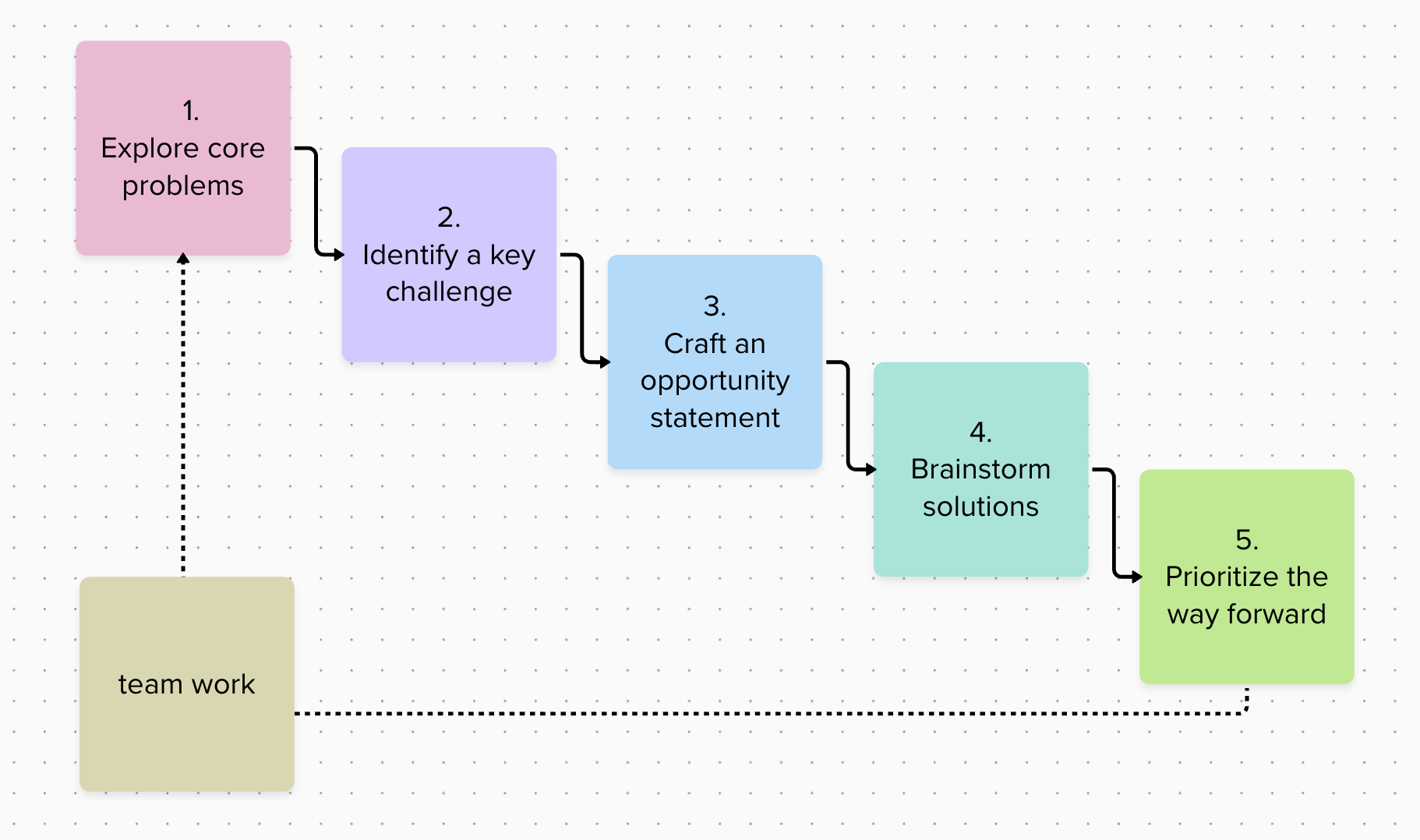
The partnership
I was executive producer on Meta’s side, facilitating the partnership with Mural’s Ventures and XR team. The mandate was to test whether distributed teams could recover what flat video strips away: spatial orientation and proximity, embodied awareness, and play. Mural’s team had spent months moving real ceremonies into immersive settings—town halls, retros, planning, alignment votes, brainstorming—and needed Meta’s platform path and launch infrastructure. Meta needed a credible collaboration story on Quest that went beyond a 2D panel in a headset.
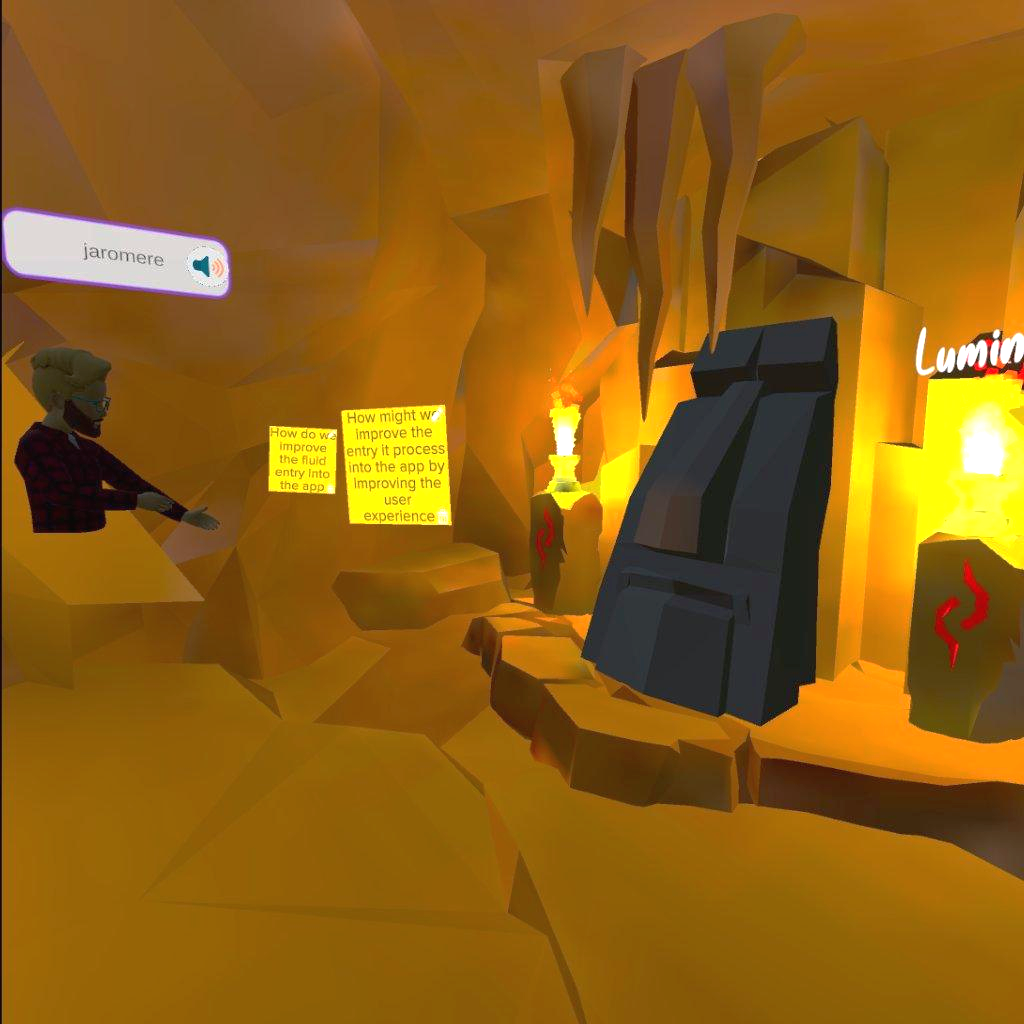
Embodied and spatial cognition
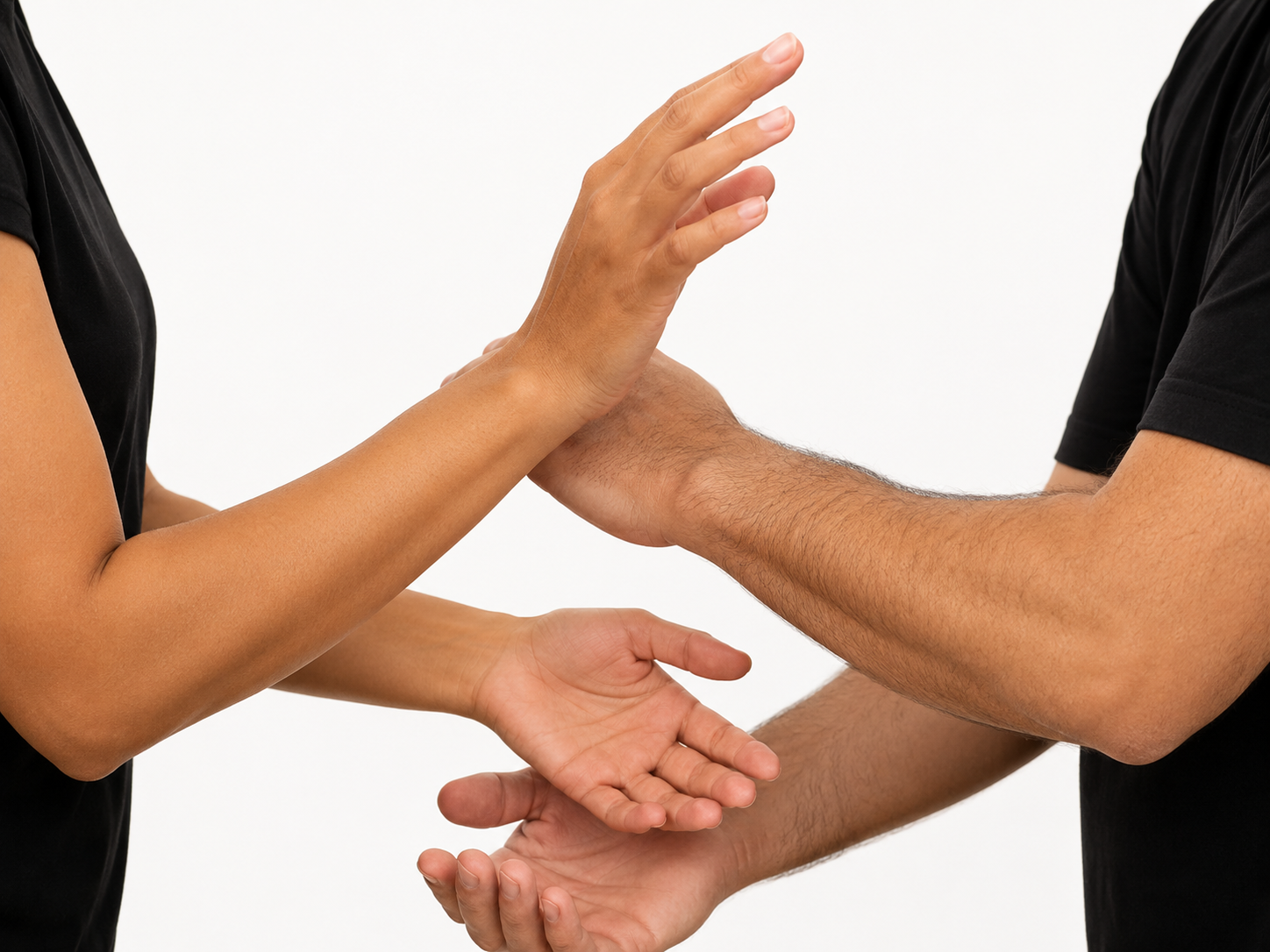
Humans think with our bodies and our environments as much as with language. We anchor memory to place; we read a room through proximity, posture, and peripheral attention. Mural’s LUMA Institute methods were built on this science—structured facilitation that uses physical affordances: stand here, cluster there, step back and see the whole field. The XR team ported those methods literally and metaphorically into immersive space: app-guided cooperation games embedded in the LUMA System, environments designed to foster co-presence, settings that support the cognitive modes teams need for co-creation.
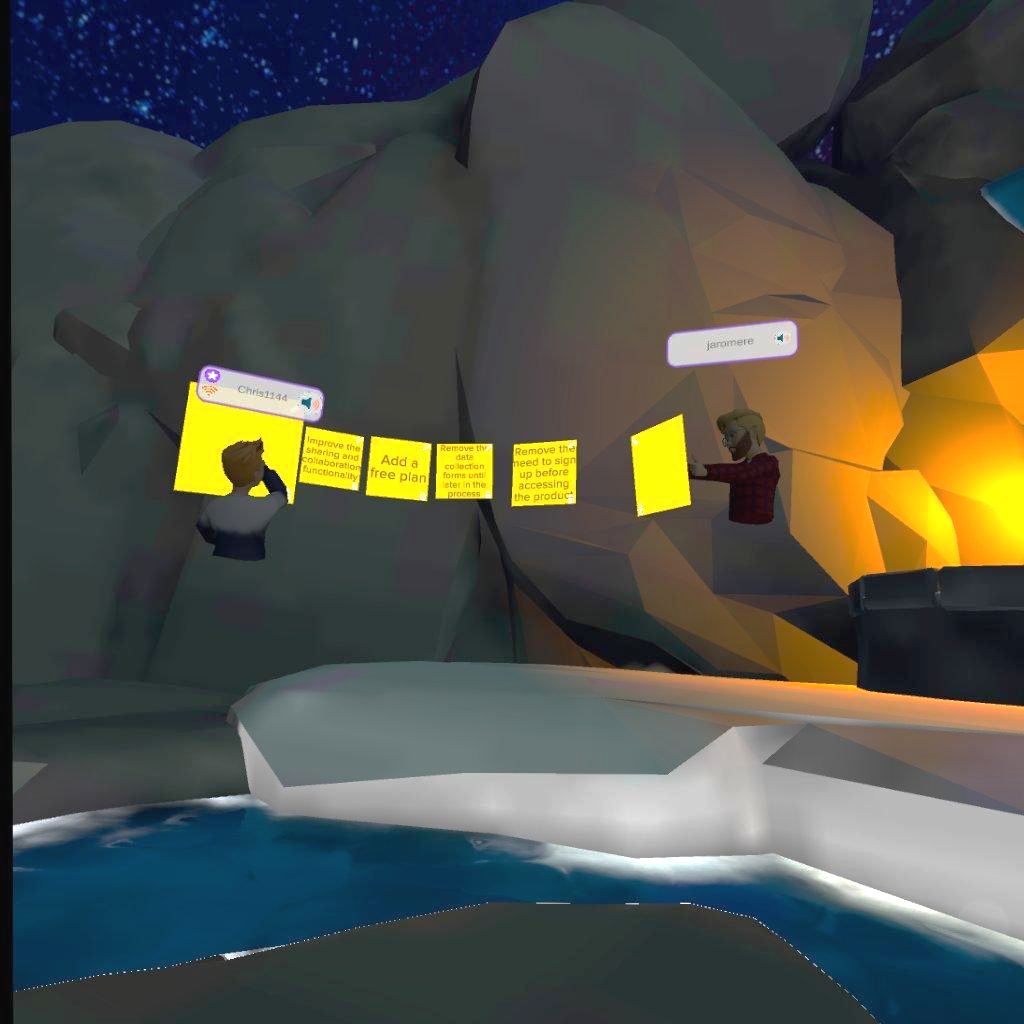
From canvas to environment
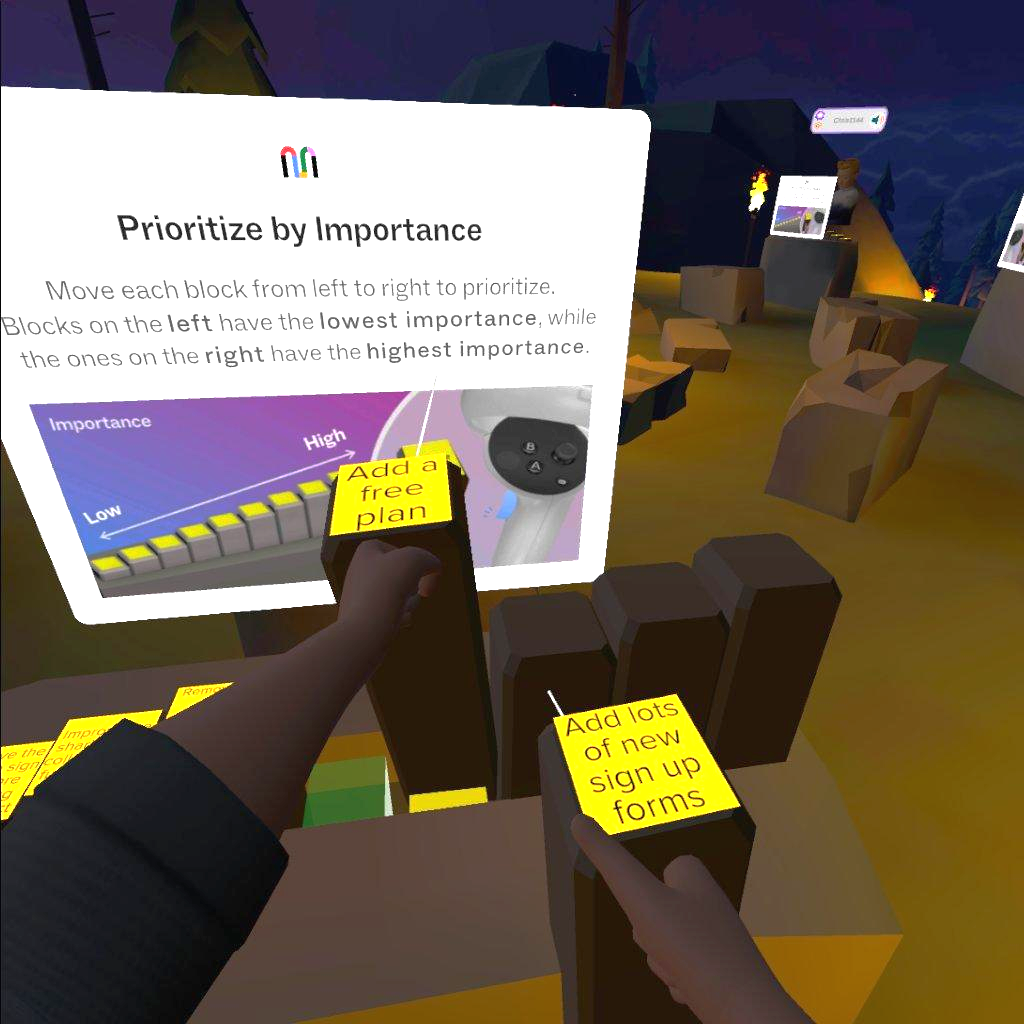
Early tests confirmed what the research predicted: porting a 2D mural into VR added friction without adding meaning. Legibility suffered; manipulation felt clumsy. The team explicitly did not want to ship the mural canvas through the Quest browser as the primary experience. What worked were environments and activities that spatialized facilitation metaphors—a sailboat for retrospectives, a prioritization matrix as a boxing ring, breakout alcoves where private conversation felt natural—and activities that engaged the whole person before anyone touched a canvas.
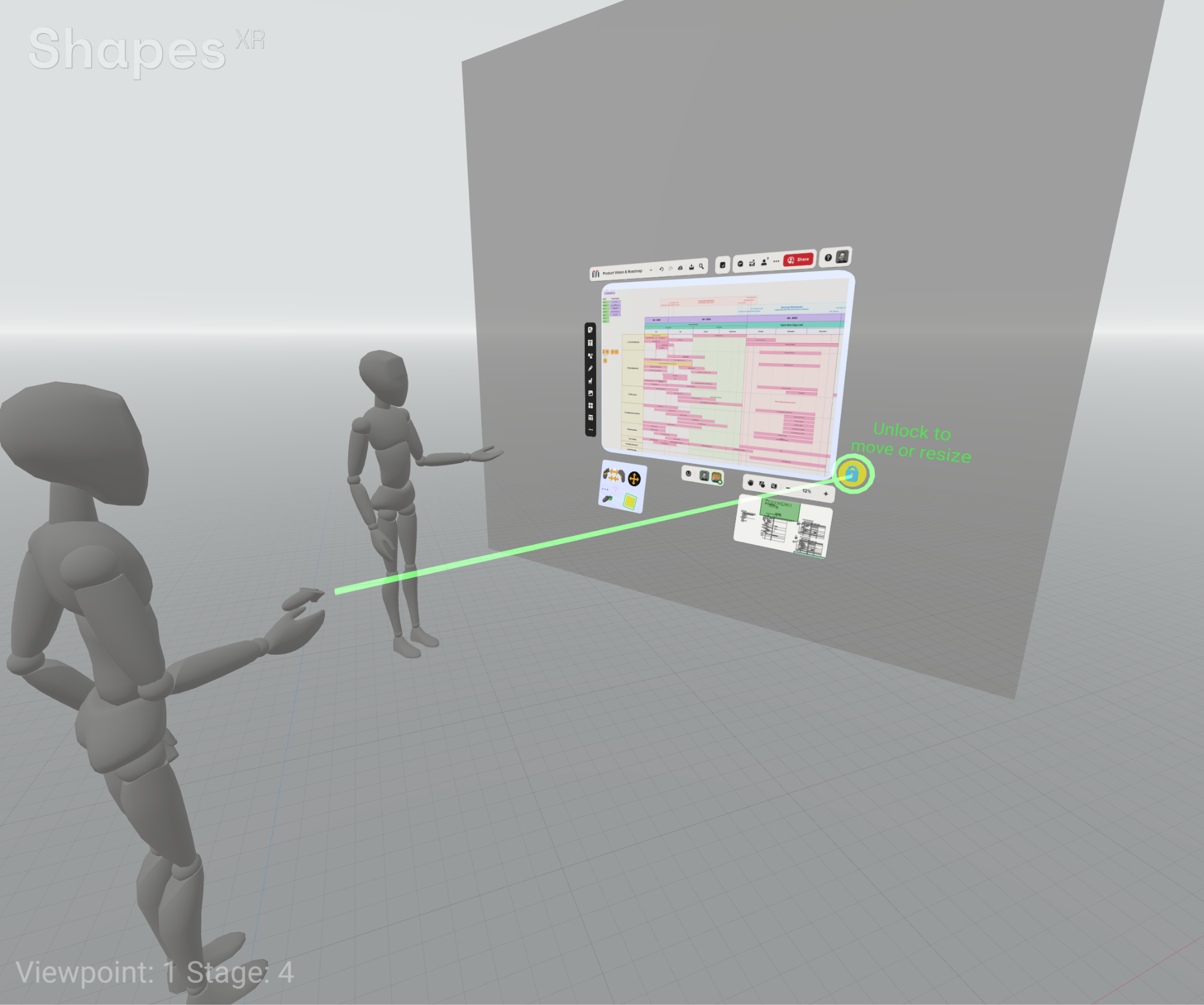
Horizon Worlds and Quest PWA
Horizon Worlds prototyping let cross-functional teams build and play-test in the same session—live iteration rather than shipping finished builds over the wall. That was a deliberate choice: Altspace meant relying on Unity developers to build environments and hand them off; Horizon let Mural’s team onboard participants, facilitate, and iterate together in real time. Separately, at Connect 2021, Mural announced its Quest 2 app as one of the first 2D productivity panels in the Oculus Store—the existing web client bundled for the platform, useful as a bridge while the native immersive app took shape.
Moving to Virtual and Mixed Reality
Following early experiments that proved the mechanics, the teams moved to create a purpose-built immersive environment. Full VR housed the collaboration games: bounded spaces with clear goals, informed by Mural’s facilitation playbooks. Mixed-reality tests followed as passthrough hardware matured on Quest 3 and beyond. Mural’s aim was a fully realized virtual space of spaces with democratic co-presence and the canvas woven into the world. Meta’s aim was credible enterprise collaboration on Quest—avatars, presence, and a path from prototype through alpha and beta to store.
Wilderness Camp
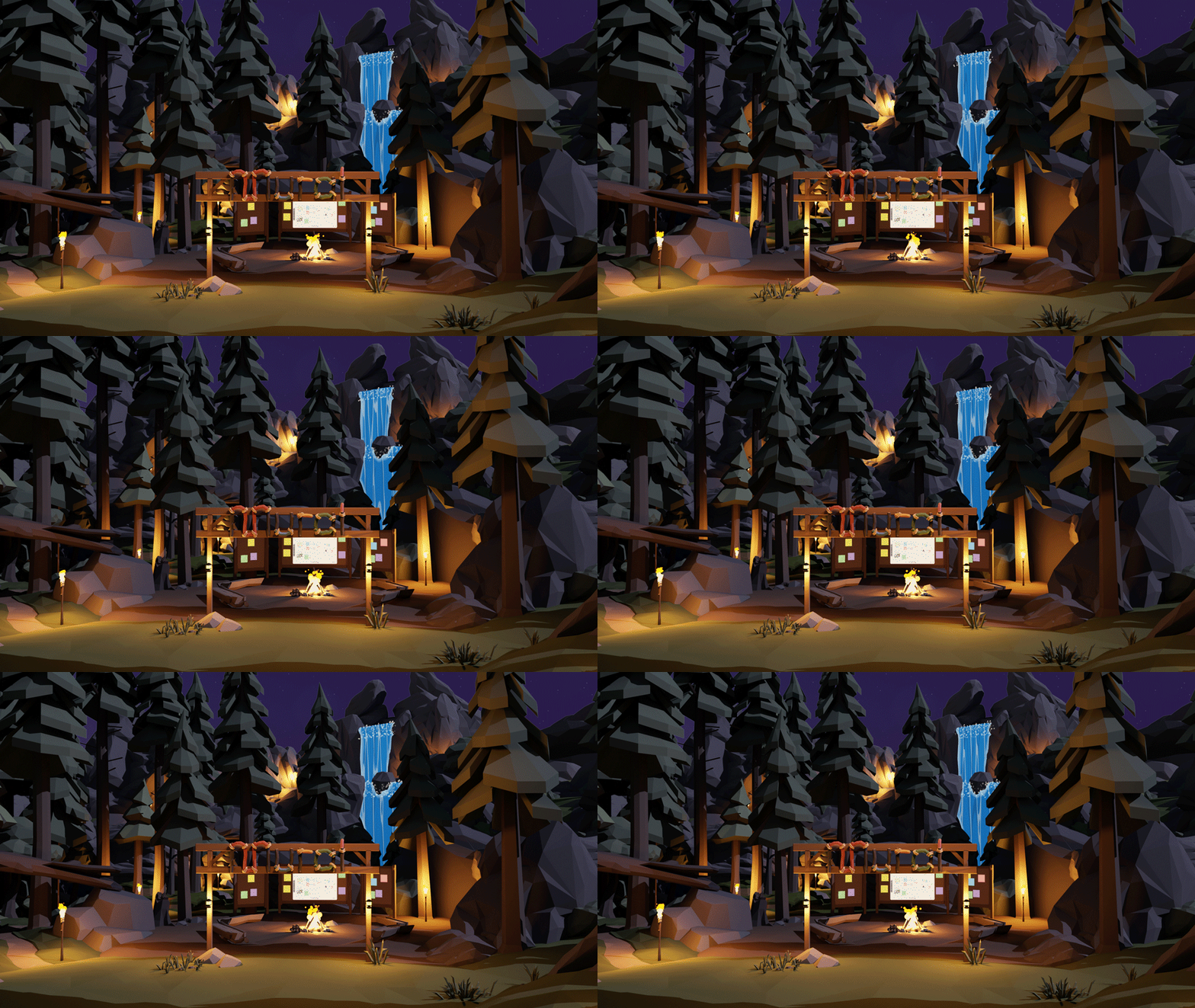
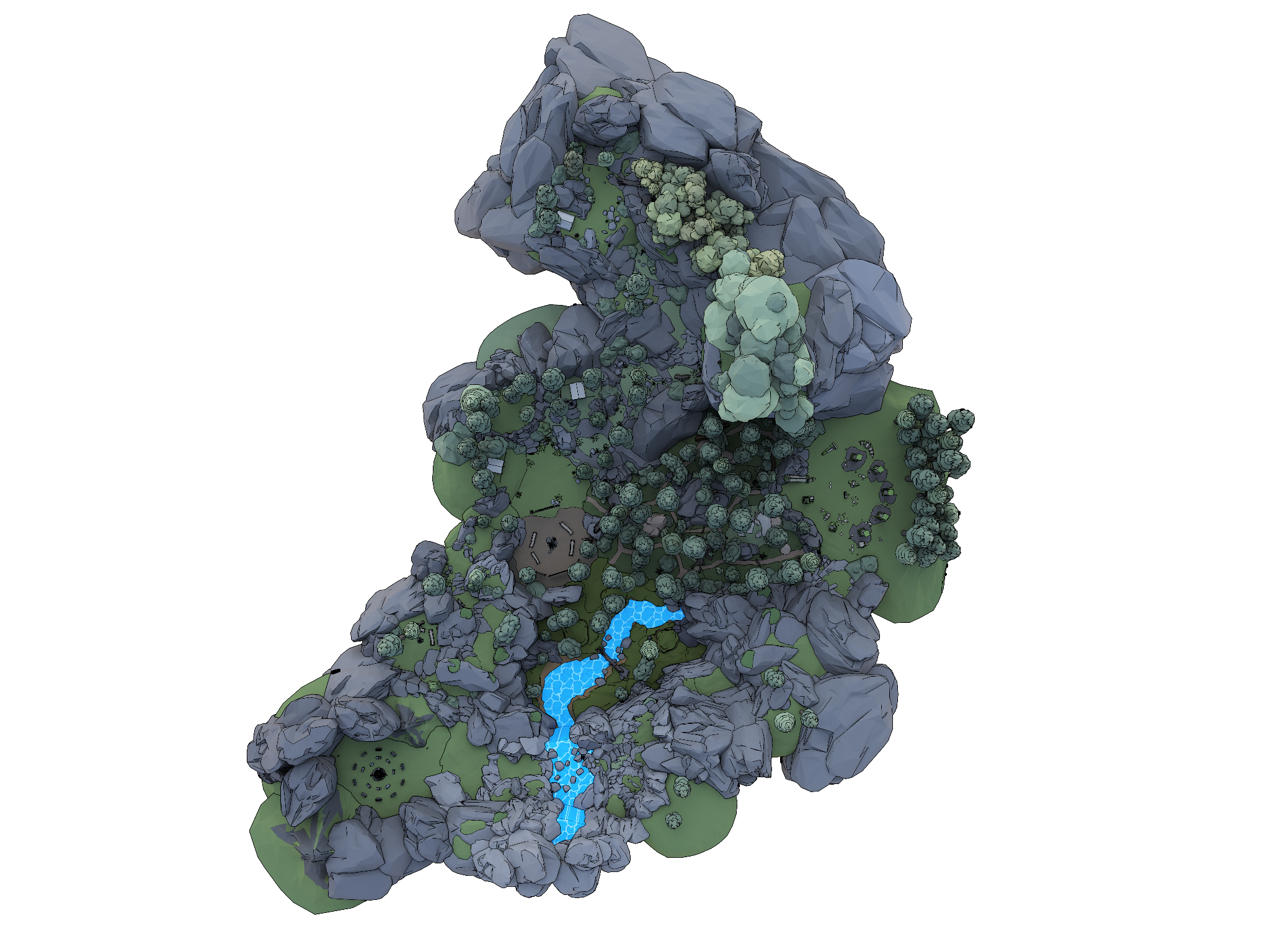
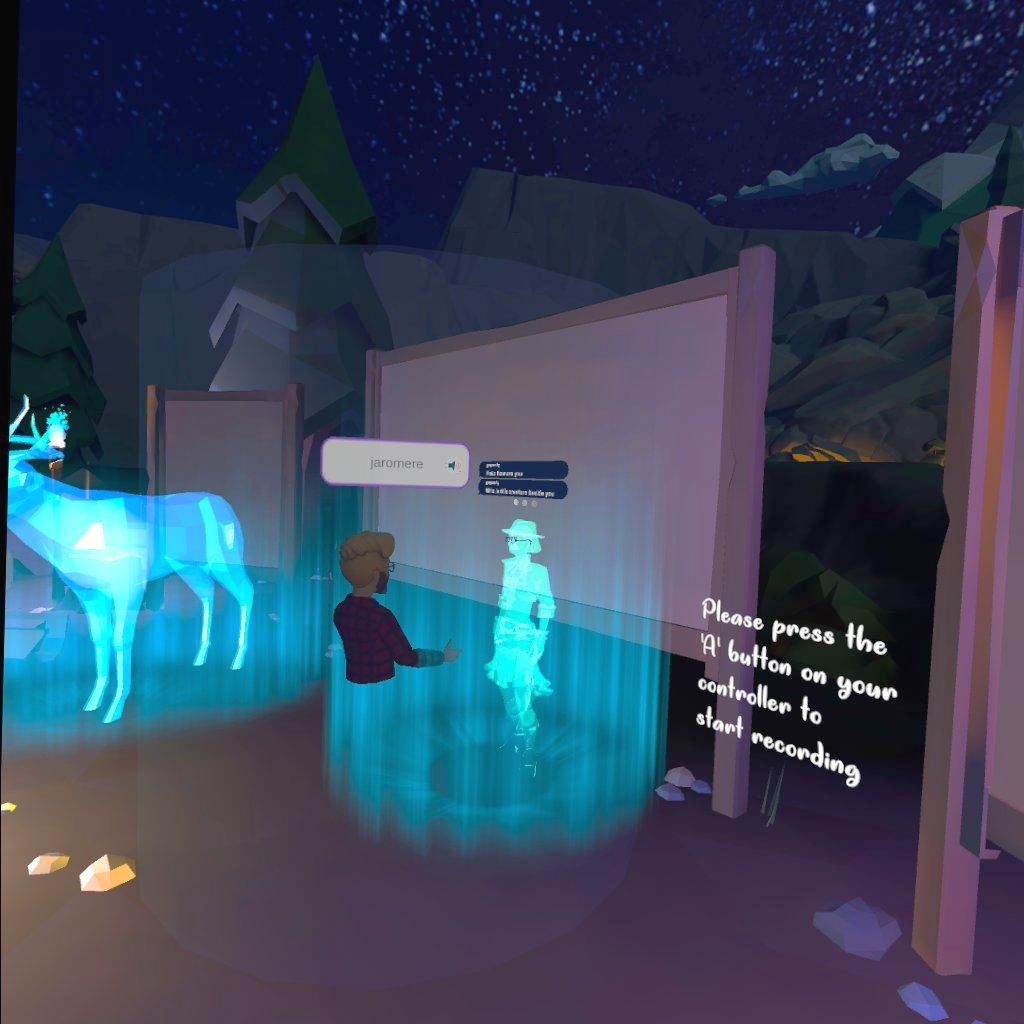
For the native Unity app, Mural partnered with Mighty Coconut—the studio behind Walkabout Mini Golf and immersive worlds built with Disney and Meow Wolf. Their craft is in places people want to inhabit: playful, legible, built for gathering. That matched where the product was heading. Imagination and connection came first; the canvas integrated second. The app linked human experience to space and place—natural environments supporting psychological safety, immersion as distraction-free engagement.
Environmental storytelling
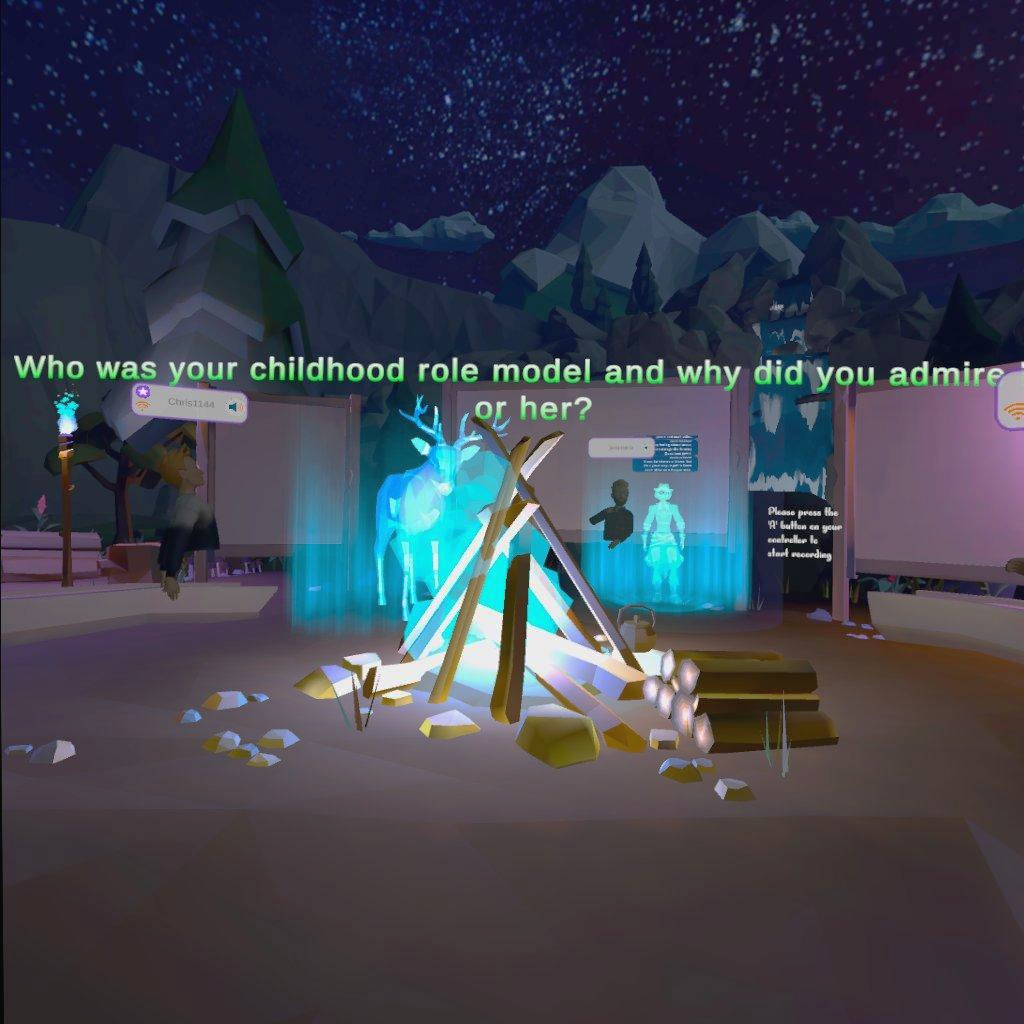
Don Carson, an environmental designer with roots in Disney Imagineering and Mighty Coconut, had shaped early Horizon prototypes around narrative space—fire pits, spatial audio, transitions that teach you where you are. The native app, codename Wilderness Camp, carried the campfire concept forward toward something shippable. Placemaking mattered: the environment offloads work from the facilitator to the space, so teams arrive already oriented to the activity ahead.
Talking around the campfire builds connection
The campfire was the central theme. For thousands of years, communities worked by day and gathered by fire at night—to share stories, eat, celebrate, connect. Remote-first work had lost that. The richest signal from internal dogfooding came from unstructured time: a campfire where avatars could simply be together without an agenda. Video calls optimize for information transfer; they flatten proximity and erase peripheral social cues. A fire invites overlap, side conversation, and belonging.
Alpha & Beta Early Adopter Programs
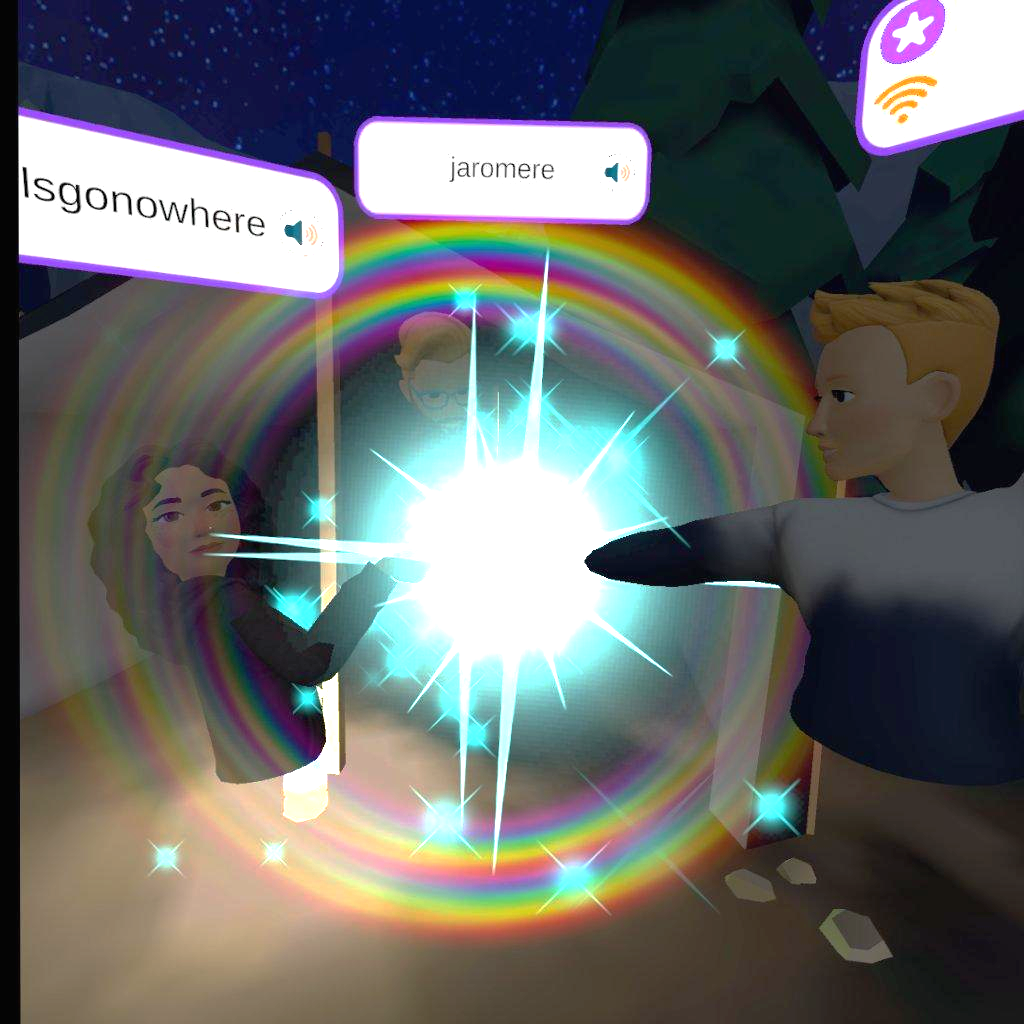
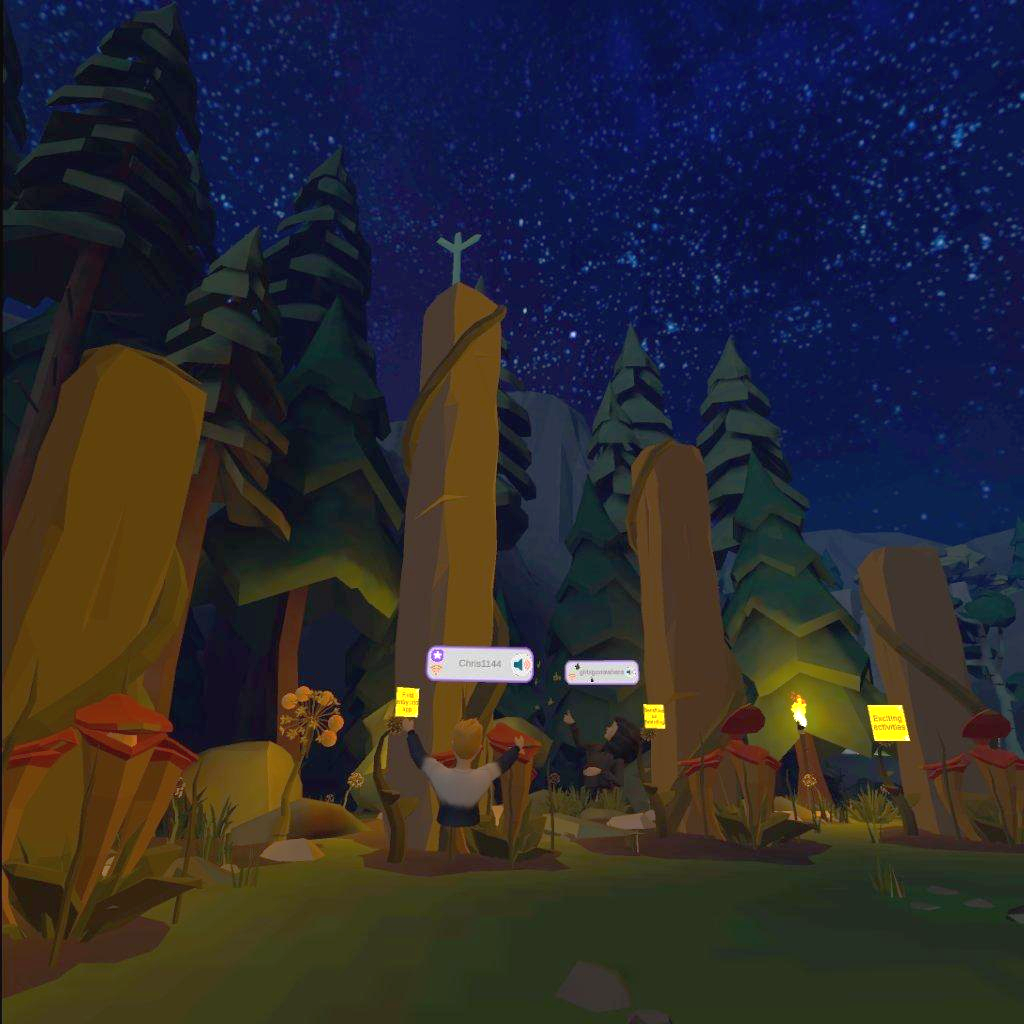
Play-tests with early adopters validated desirability, features, and experience. In alpha, ninety-five percent of participants reported that voting activities supported their team in deciding among options; eighty-six percent found breakout spaces supported discussion and idea generation. Breakout tents offered private discussion that felt natural in ways video calls rarely do. Sessions that ran ninety minutes could land with the rapport of a multi-day offsite.
My role
I led the cross-functional thread on Meta’s side: product development with Horizon and Quest teams, UXR and user testing, standing up and running the beta program, and shepherding the path toward store launch. The line from experiment to something shippable required aligning two companies’ roadmaps, hardware constraints, Quest for Business readiness, and very different definitions of “done.” Connect 2023 was the public milestone: learnings from alpha and beta testing, thought leadership on immersive collaboration, and an open beta as the primary call to action.
Connection mattered more than productivity tooling. People kept returning because the space felt shared—they had been in a room together.
Project Credits & Information
- Project type
- Enterprise VR collaboration R&D
- Partner
- Meta · Mural
- Agency
- —
- Role
- Executive Producer
- Credits
- Meta — Director Anand Dass, Product Director James Senior, Executive Producer Maximilian Lauter; Mural Ventures / XR — Paul Tomlinson, Steve Schofield, Erika Flowers, Chris Lunney, and the Mural XR team.
- Website
- Mural
- Date
- 2021–2024