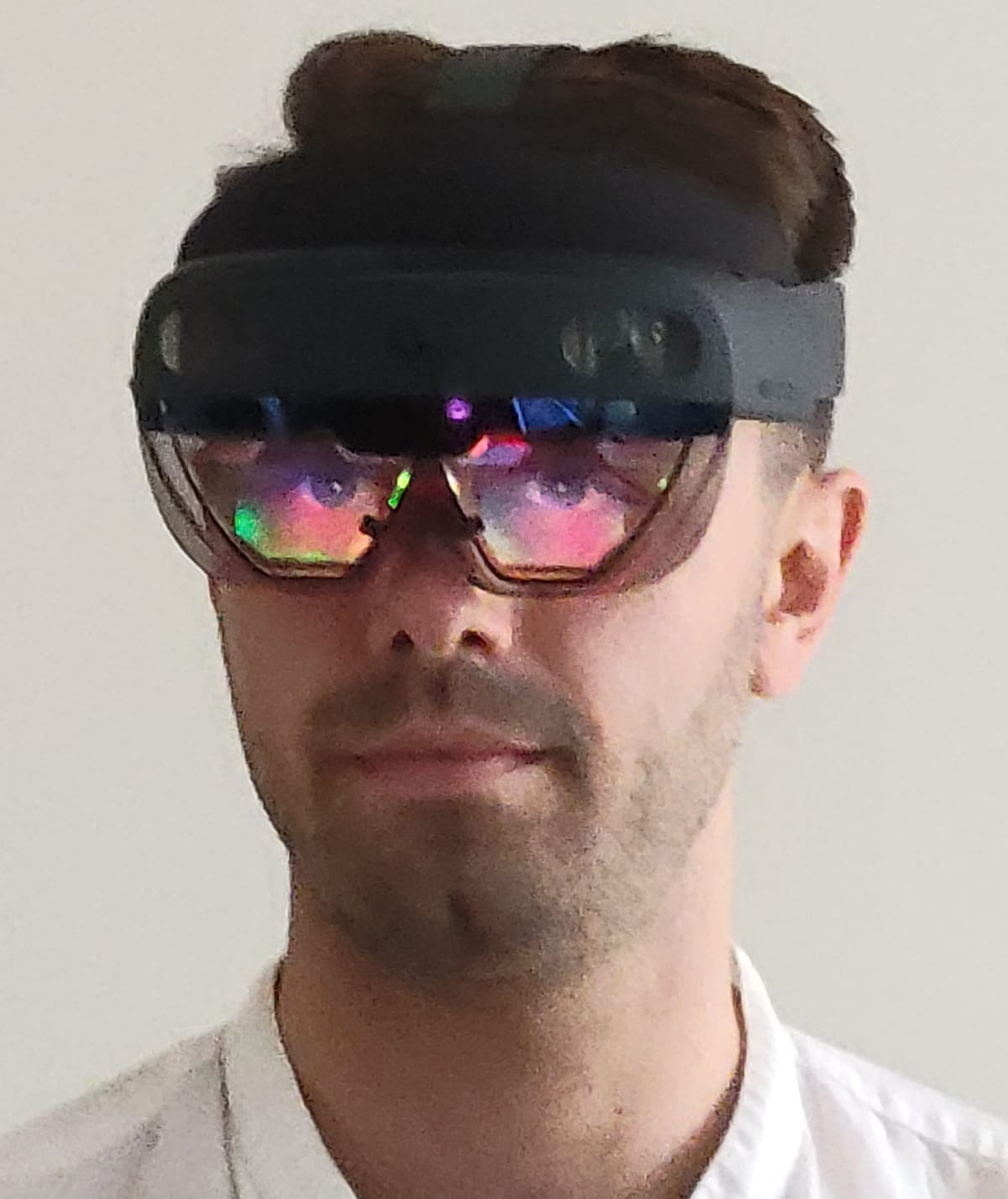
How do we tell stories audiences can step into?
Learn Immersive Storytelling
A two-part collaborative workshop for creators who want to move beyond the frame—building the mindset, language, and practical tools to conceive stories audiences can step into, using virtual and mixed reality (XR) as the medium, not just the delivery format.
The workshop covers foundational XR theory and precedents, breaks down capabilities unique to immersive storytelling, and puts that knowledge to work through structured collaboration. Breakout teams develop an immersive narrative across both sessions using the XR Toolkit: templates for scene drafting, spatial storyboarding, and audience journey mapping.
No prior experience with extended reality is required. This is a creative and conceptual workshop, not a technical one.
Part 1 — Reframing Narrative for Immersive
Shift mindset from shots and scenes to presence and place. We survey the immersive landscape—select precedents, platforms, and capabilities—to establish a shared language and methodology.
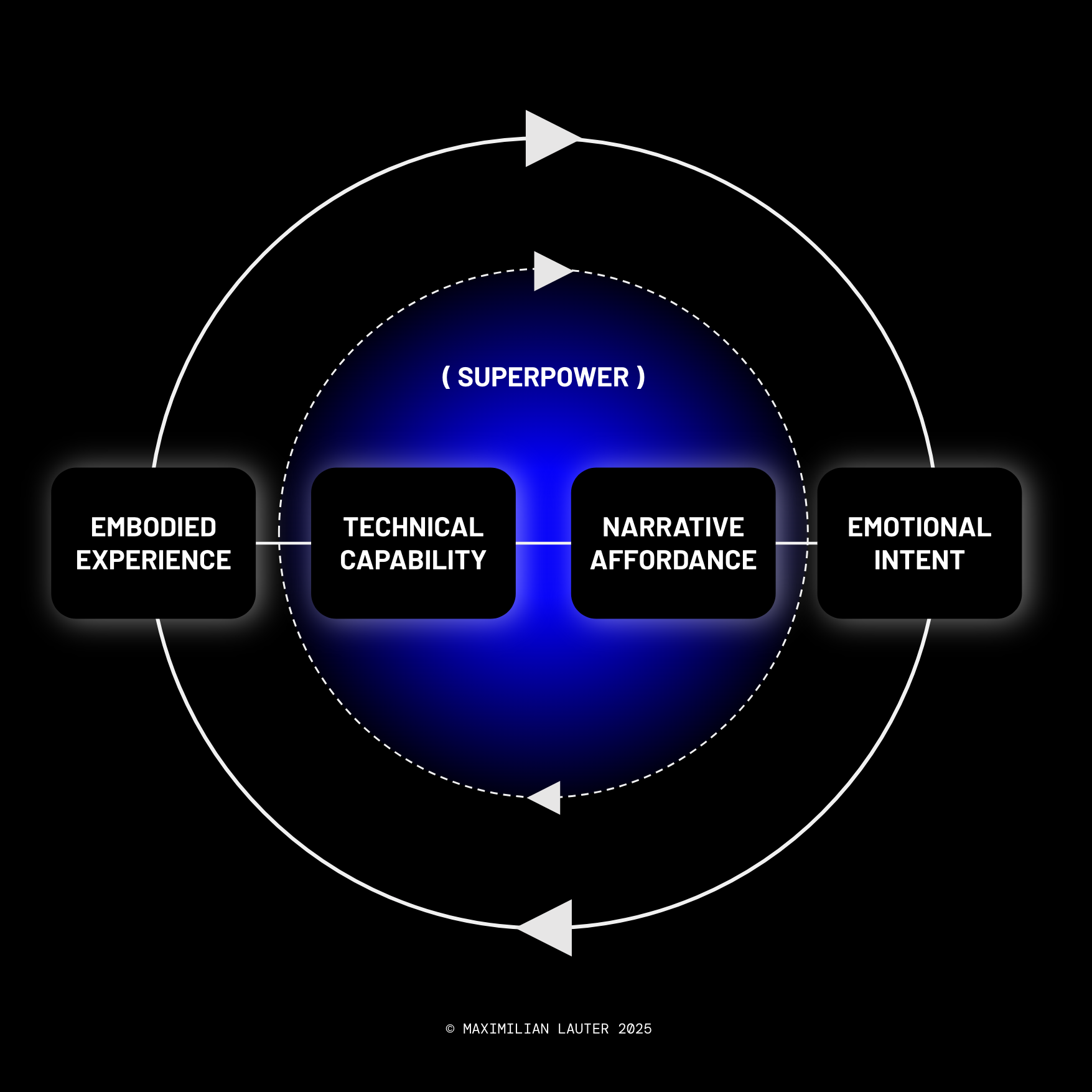
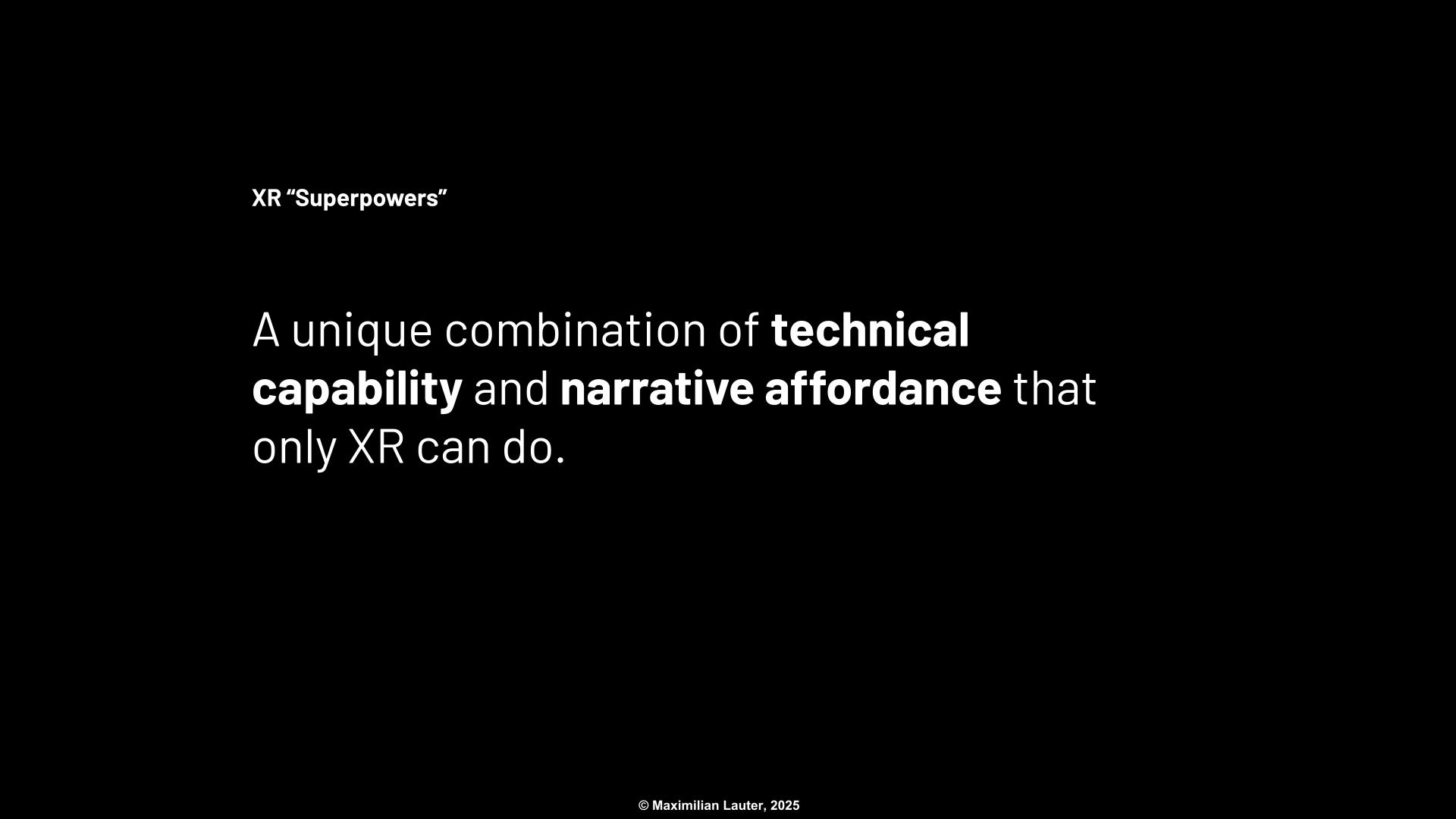
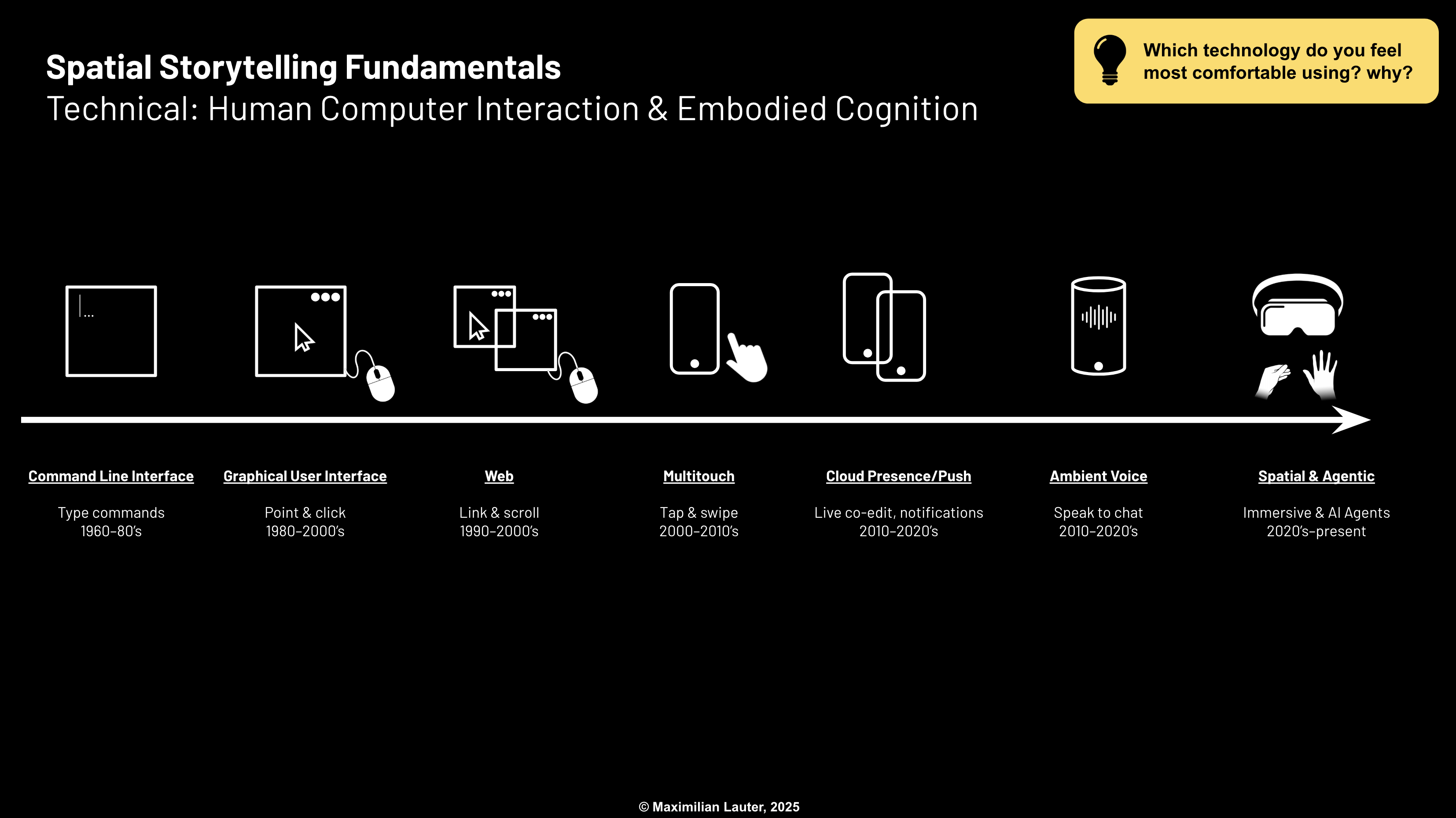
XR’s “superpowers” come into focus: what it can do that traditional media cannot, and how to build narrative around those affordances. A brief history of human-computer interaction situates where XR and AI live today. By the end of Part 1, each team has identified a narrative and experiential hook to develop into a story concept.
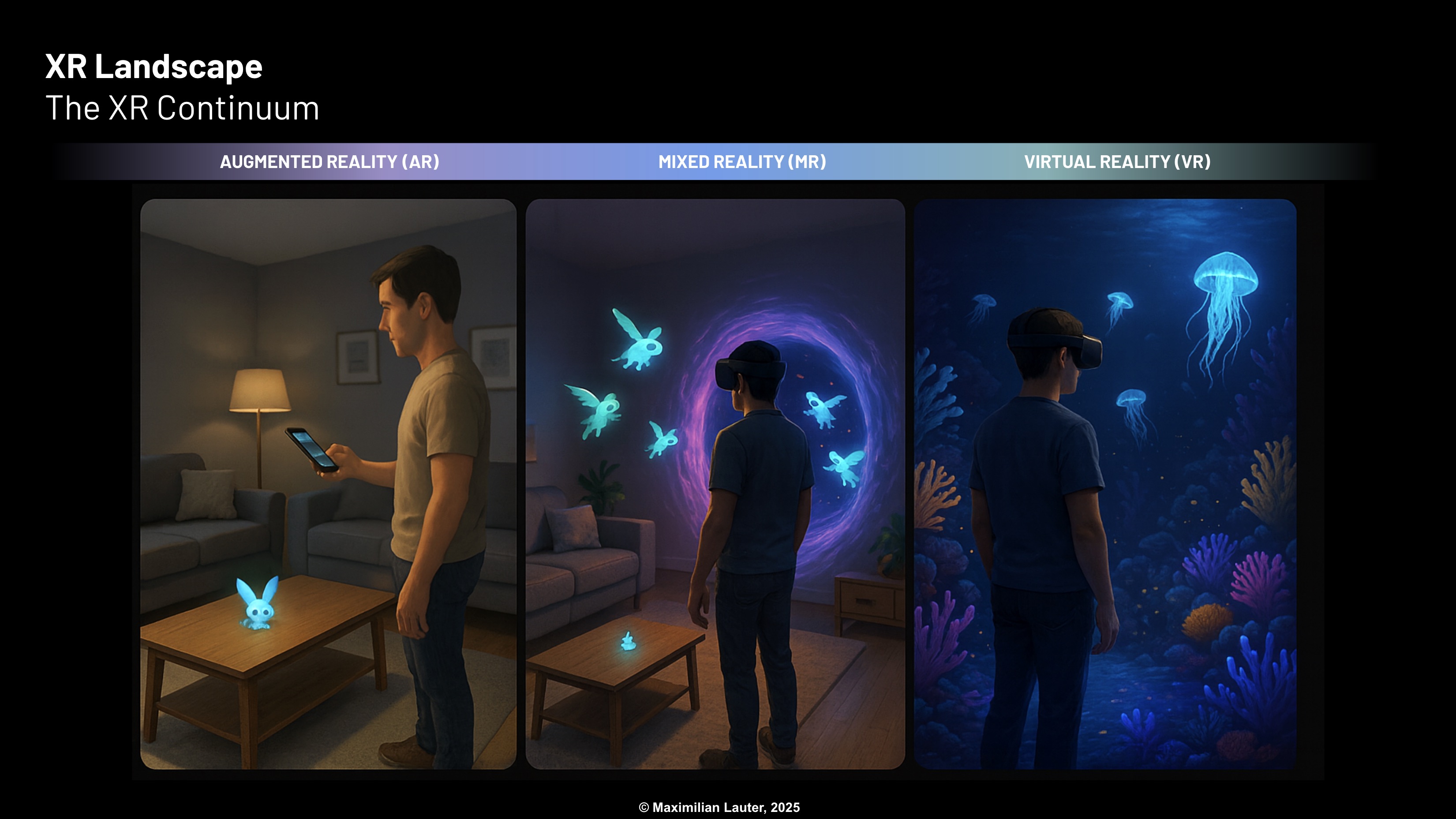
Mapping the immersive landscape
The toolkit frames the three primary types of immersion—augmented, mixed, and virtual reality—and how each shapes what a story can ask of its audience. XR is a unique context for bridging emotional intent and embodied experience; the templates help teams translate that into spatial story structure.
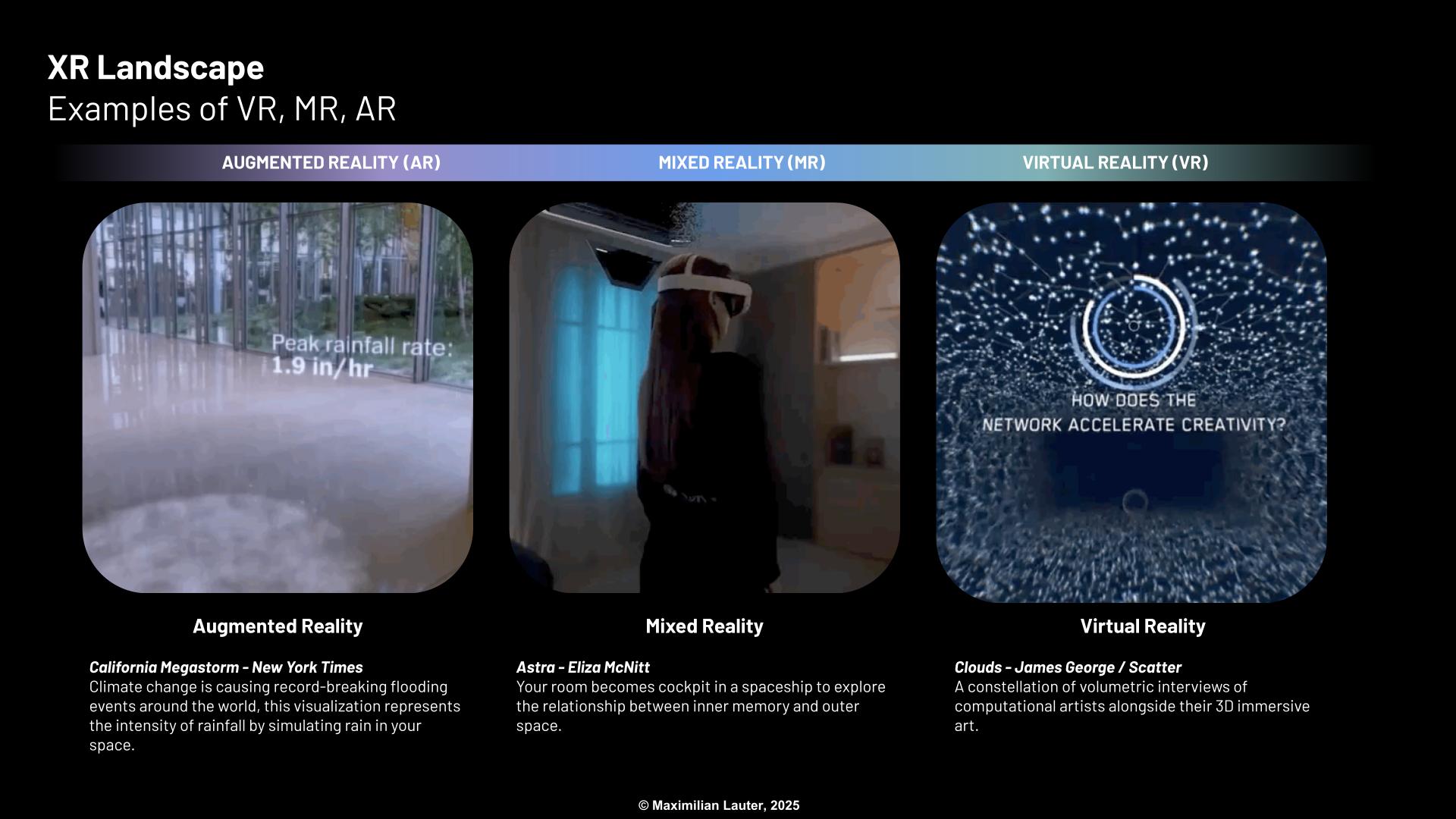
Part 2 — Telling the Story in VR & MR
Building on Part 1, breakout groups take their story worlds through two formats: first as a virtual reality experience, then as a mixed reality experience anchored to the real world.
Development focuses on audience journey, clarity of role, and key experiential mechanics. Participants examine how a single story transforms across formats—and how each format shapes what the narrative can do.
What you leave with
The XR Toolkit templates travel with you: the same structure supports a storyboard and an immersive layout for full VR, room-scale MR, and world-scale MR.
Participants leave with methods, frameworks, and templates they can draw on independently—plus a working grasp of the immersive landscape, a toolkit for mapping XR capabilities to narrative beats, and the language to articulate why a story works better in XR than in traditional media.
Who this is for
Designed for emerging-to-mid-level creators across disciplines—writers, directors, producers, designers. Available to studios, schools, accelerators, and cultural institutions.
Formats flex from an intensive two days to spaced modules or hybrid delivery. Contact me to align on cohort size, outcomes, and schedule.
This program first ran as Crafting Immersive Story Experiences at the Canadian Film Centre (CFC), taught three times in Fall 2025 and hosted by Laura Mingail of Archetypes & Effects.
Project Credits & Information
- Project type
- Teaching
- Partner
- Canadian Film Center
- Agency
- —
- Role
- Teaching, Course Design
- Credits
- Maximilian Lauter
- Press
- —
- Website
- —
- Date
- 2025

